
The university conducted pulmonary function tests (PFTs) on 38,517 healthy non-smokers. The participants came from 17 countries including India and were matched by height, age, and gender. The results revealed that ‘healthy’ Indians had the poorest lung functions in the group. These findings in the Indians for all intents and purposes can be extrapolated to reflect the lung functions in Nepalis.
In many Western hospitals, there is a separate department for PFTs. Often technicians in the department can be heard exhorting patients to blow hard into the spirometer (an apparatus used to measure the volume of air inhaled and exhaled by the lungs). Since this test is dependent on good effort, it is important for the technician to give clear instructions to patients.
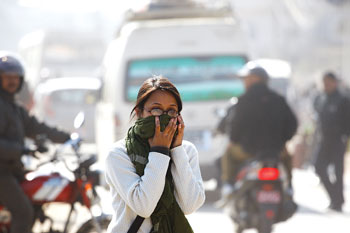
Unfortunately, this simple but useful test is not commonly performed in most of our hospitals or clinics even though the number of Nepalis suffering from lung diseases is rising quickly, thanks to worsening air quality in the cities and a high prevalence of smokers in the population. Even where spirometer tests are performed, technicians only half-heartedly instruct patients to blow into the machine thus compromising the results. Because our region clearly has such poor lung functions even in healthy people, it is imperative that PFTs be carried out properly in order to guide therapy.
There was a time when abnormal lung functions in healthy people from the sub-continent were attributed to bad genes. However, a cleverly done study in 2010 clearly challenged this notion. Children of Indian immigrants, who were born and raised in the United States, had far better lung functions than those born and raised in India. So what accounts for this difference if genes are not blameworthy?