
|
|
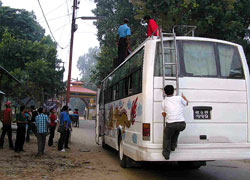
The new Kathmandu-Delhi bus route is making monitoring trafficking more challenging than usual. It's also the newest way for women, egged on by manpower agents who dupe them, to try and illegally make their way to Kuwait.
In mid-September 15 young women from Rasuwa, Solukhumbu, Okhaldhunga, and Khotang were stopped at the Jamunaha checkpoint near Nepalganj. They said they were going to Kuwait via New Delhi.
These women were stopped when police and Maiti Nepal workers were conducting a regular check of public transport. Most of them, between 16 and 22, were turned over to their relatives, since they had neither the papers nor the finances necessary for their alleged journey to Kuwait.
Such women are considered high-risk for being sold, and in the last two months more than 100 women from Sindupalchok, Nuwakot, Banke, Rasuwa, Salyan, Jhapa, and Gorkha have been sent back from the border.
When the direct Kathmandu-Delhi bus route opened three months ago, more and more groups of women began crossing the border, and police sources say they stepped up vigilance at checkposts. Rita Bhattarai, coordinator of Maiti Nepal's Nepalganj office, says traffickers also make frequent use of the open border in Banke, Bardia, Kailali, and Kanchanpur.
Nepali women are not allowed to travel to Kuwait to work, except in the organised sector, yet manpower agents continue to offer them work as well-paid domestic help. Often this is a trap, and the women end up being trafficked in India.
Until now, women being trafficked crossed the border in rickshaws and horse carts, travelling alone or with a watcher, who often kept their distance. Groups of women on the buses now say they are out on a shopping expedition or, increasingly, that they are going to Kuwait.