|
|
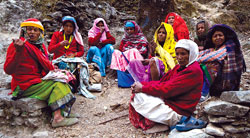
| A RARE CHANCE: Nanu Devi Joshi, of Bajedi Bajura suffered a uterine prolapse 18 years ago but lived in shame until the mobile health camp doctors sent her for surgery in Nepalganj. Local women from Melbisauna (right) share their experiences after a check-up. |
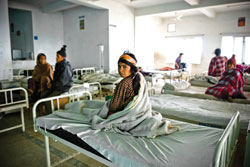
Hira Thapa, 66, suffered a uterine prolapse 15 years ago. Mother of 10 children, she gave birth to them at home in Rilu village.
"My uterus was hanging, the pain I experienced every day was excruciating," she says. She decided to seek treatment and walked for several hours in the winter sun to get to the mobile health camp.
The doctors at the camp inserted a pressary ring to stop the uterus from descending. Unlike some of the other women who came to the camp, Thapa only suffered a second-degree prolapse, not the most severe form, and would not require surgery.
"If the woman is under 50 and suffers from a third-degree prolapse, we would advise that she undergo surgery to remove the uterus," explains Sita Jirel, Auxiliary Nurse Midwife (ANM) with the Adventist Development and Relief Agency, Nepal (ADRA)"but she is over 50 and may not be able to overcome the risks associated with the surgery."
ADRA is running five four-day camps in six districts of far west Nepal with UNFPA and the European Commission's Humanitarian Aid department (ECHO). A 2006 study estimated that 10 percent of Nepali women between the ages of 15-49 years suffer from uterine prolapse. There are many factors behind the high incidence in Nepal: women marry young and bear children at an early age, they give birth to many children but receive almost no pre- and post-natal care, they do heavy work immediately after delivery.