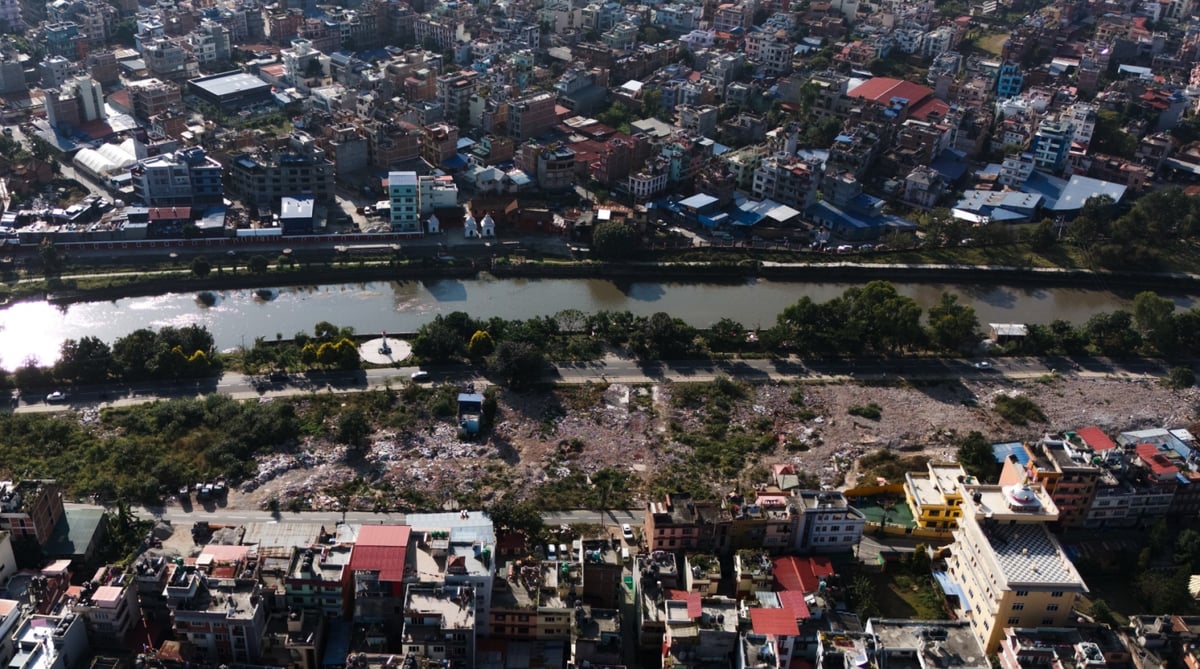
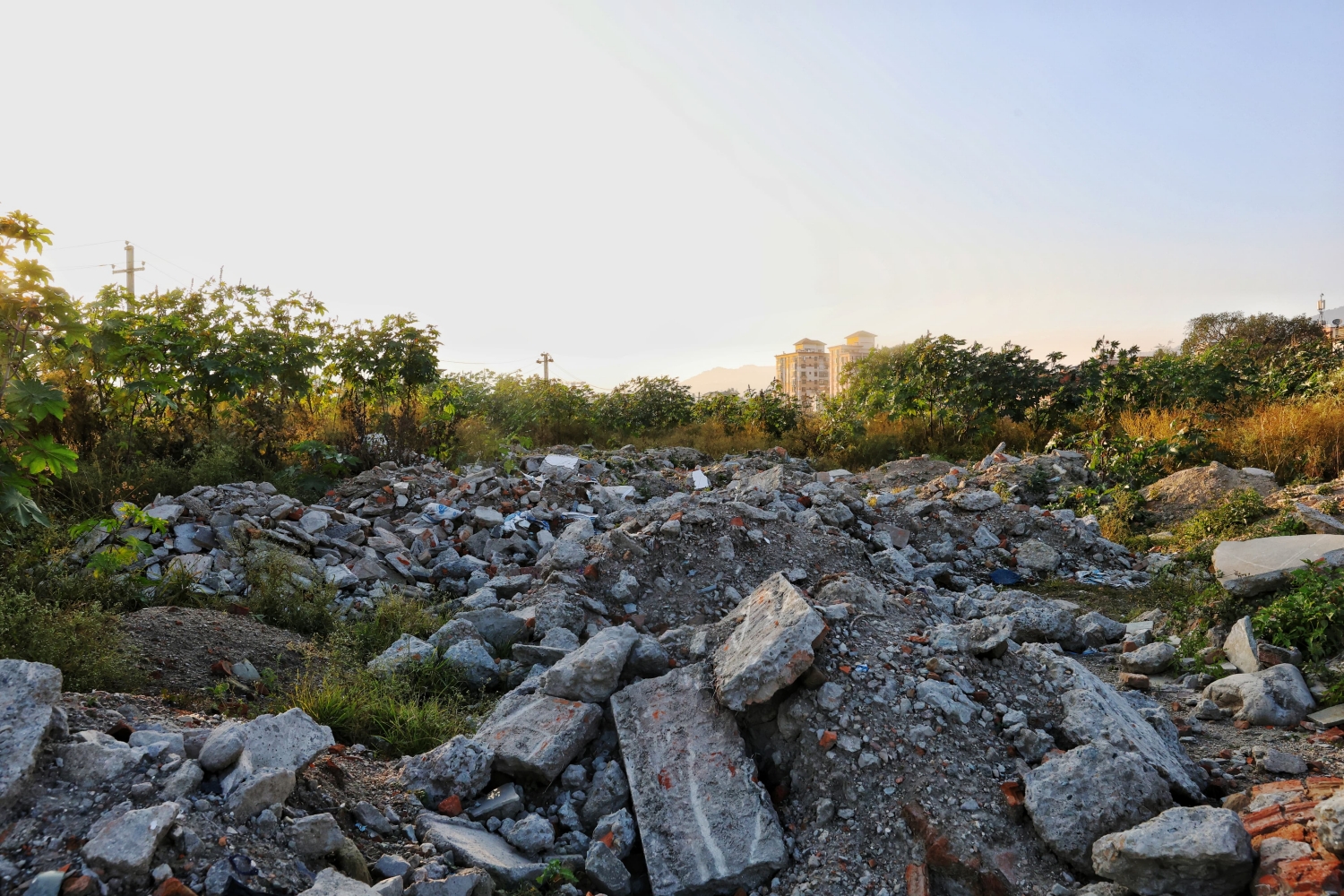
A month after he assumed office, Prime Minister Balen Shah ordered the forced eviction of about 20,000 people and demolition of 3,500 homes along the banks of the Bagmati.
Six months later, only 300 of them remain in holding centres. The rest marked their Dasain and Tihar scattered across the city, their plight overshadowed in the national psyche by the tens of thousands affected by the Trisuli Valley catastrophe in August.
The government’s underlying intention in its 100-point plan was to resettle landless peoples. But the abrupt move in April to send in bulldozers polarised Nepali society, media, GenZ activists, and the prime minister’s RSP.
“Eviction should never have been an option,” says advocate and co-founder of Aalawya Nepal, Kabita Bahing, who has been fighting the evictions in court. International human rights groups like Amnesty International agree, stating that the evictions ‘demonstrate a blatant disregard for […] the rule of law’.
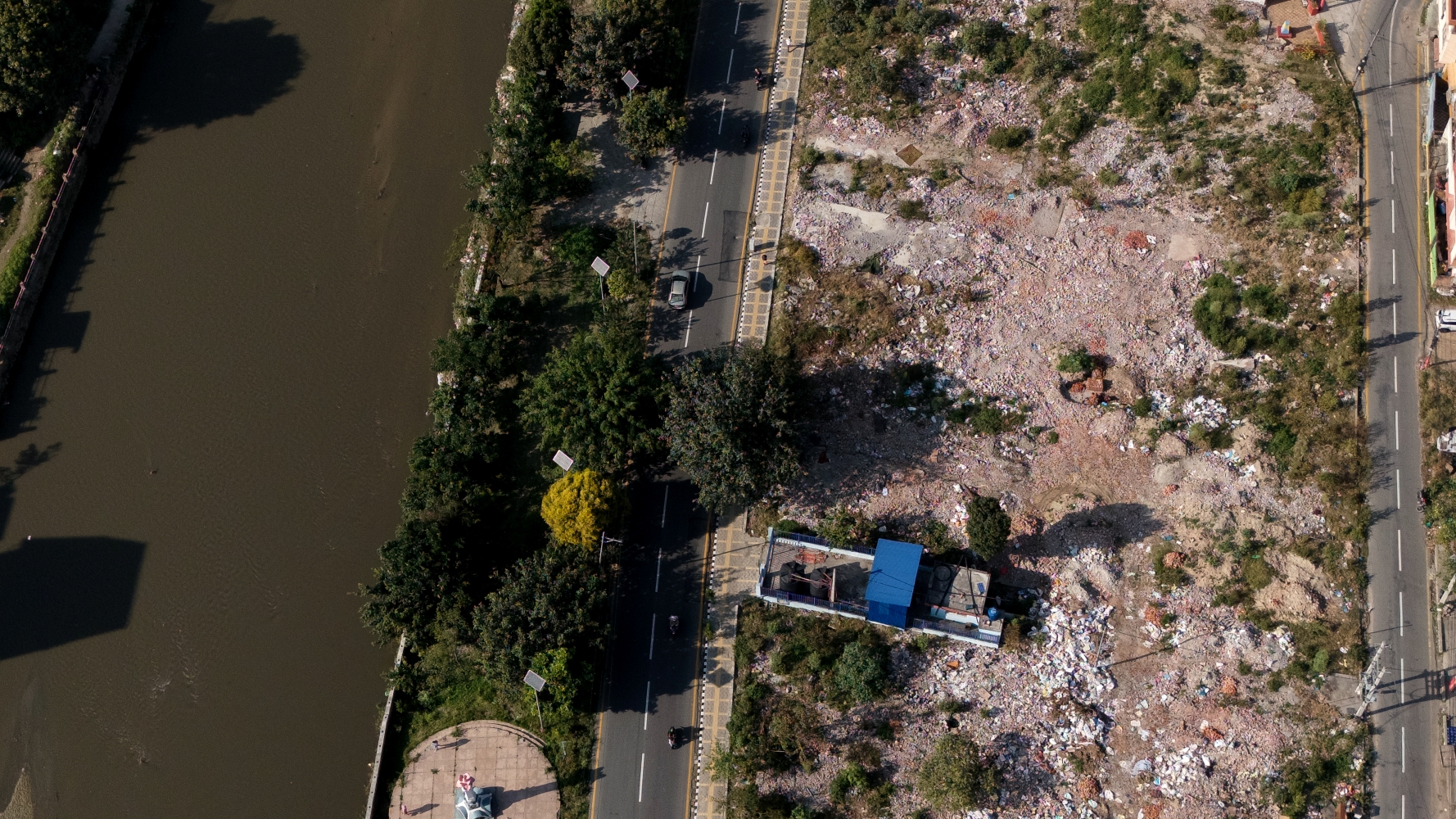
Some public officials described the evictions as a first step toward restoring public space to the Bagmati floodplain. Citing the waterway’s filthiness and frequent floods, Shah envisioned a corridor worthy of the Bagmati’s central place in Kathmandu Valley’s civilisation.
This has been a subject dear to his heart since he was mayor, but he was thwarted by opposition from the coalitions in charge of the federal government at the time.
Cynicism abounds regarding how realistic such restoration is, both ecologically and politically. Yet, with the river front-of-mind for the Prime Minister and thousands rendered homeless, it is worth asking: What script will the Bagmati’s restoration follow, and how and where will the thousands displaced be resettled?
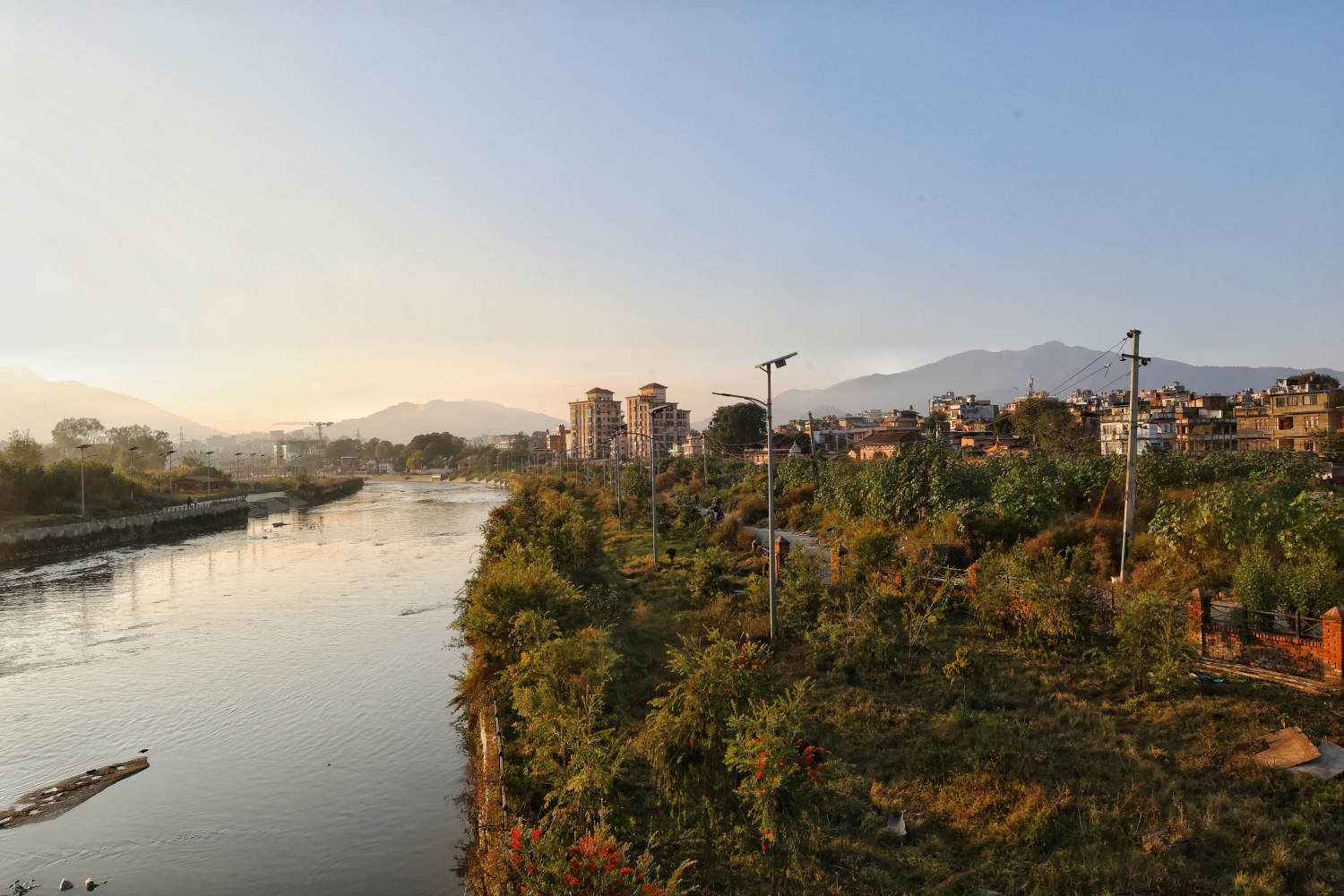
Many cities around the world are established on an economic and cultural relationship to a waterway. Urbanisation, industrial development, and inadequate infrastructure have denigrated many of these waterways, calling the economic and cultural foundations of urban development into question.
There is a well-established narrative for future restoration, justified through appeals to a romanticised past when the river flowed clean and wide through Kathmandu. It was ecologically pristine, and more importantly, the city was economically and culturally stable.
When the restoration script goes according to plan, it produces a ‘world-class’ waterfront that taps into cultural nostalgia while demonstrating a distinctly modern sensibility – one capable of adeptly managing both nature and people.
Many Nepalis supported the evictions, saying most of those whose homes were demolished were not landless at all, but brought in decades ago to bolster the vote banks of political parties. Some heritage conservationists also welcomed it, saying it would restore the Bagmati to its sacred state.
AN EXAMPLE FROM INDIA
India’s Ahmedabad in the 1990s had let the Sabarmati river deteriorate just as Kathmandu did to the Bagmati. Once a sacred water source, the river was polluted with urban effluent, and treated as a garbage dump. Informal settlements had sprung up along the banks.
After more than three decades of proposals, a multi-dimensional effort to turn the waterway into a ‘major urban asset’ began in 1997 with the establishment of the Sabarmati Riverfront Development Corporation Limited (SRDCL).
Having made significant progress in improving ecological health and public access, SRDCL has been awarded and cited as a precedent for future waterfront restoration projects like those proposed along the Yamuna River in Delhi.
Will a restored Bagmati follow that script? Looking back on past efforts to envision a transformed waterway, the answer could be a cautious ‘yes’. The Bagmati River Basin Improvement Project (BRBIP), established in the early 2010s, envisions ‘a clean, green and healthy river system that is full of life and valued by all’.
Yet, the Bagmati’s restoration has already necessitated eviction and social exclusion for many. At least two people whose homes were demolished have died by suicides. Some of the residents had been living along the Bagmati’s banks for more than a decade.
“The idea of a park made possible by evicting people is a big problem, and one that reflects how cities are made more generally,” says Bahing. “Cities are made for the elite, while the people who make them are not even seen as people.”
This dissonance in BRBIP’s vision raises questions about who is included in the public that Nepal’s government serves. How can a river system be ‘full of life’ for some while being restored through the death and dispossession of others?

A Sadak Bahas (;8s ax;) rally organised by Aalawya at Kathmandu’s Mandala on 20 September explored these questions. The conversation centred around ‘Dastavej’ (b:tfa]h), a photo zine documenting the story of April’s forced evictions and co-created by Rohan Shrestha and Sanatan Timalsina.
The publication creates a counter archive of the forced displacements, answering the question posed by Bahing at the rally: “Where is the record kept?”
Insurgent settlements are not primarily responsible for the river’s pollution, which results from its use as an open sewer that continues to receive waste from industry, businesses, and households. Still, Prime Minister Shah has framed the evictions as a necessary first step to take back public property and restore the river.
When people’s homes are viewed as an unnatural infringement on the river’s banks, making them go away is itself an act of restoration – and a small cost to pay for a world-class waterfront.
However, people who are dispossessed of their homes to beautify a city do not just go away. Relocation is not an event that begins and ends for people displaced by restoration, but rather an ongoing way of life.
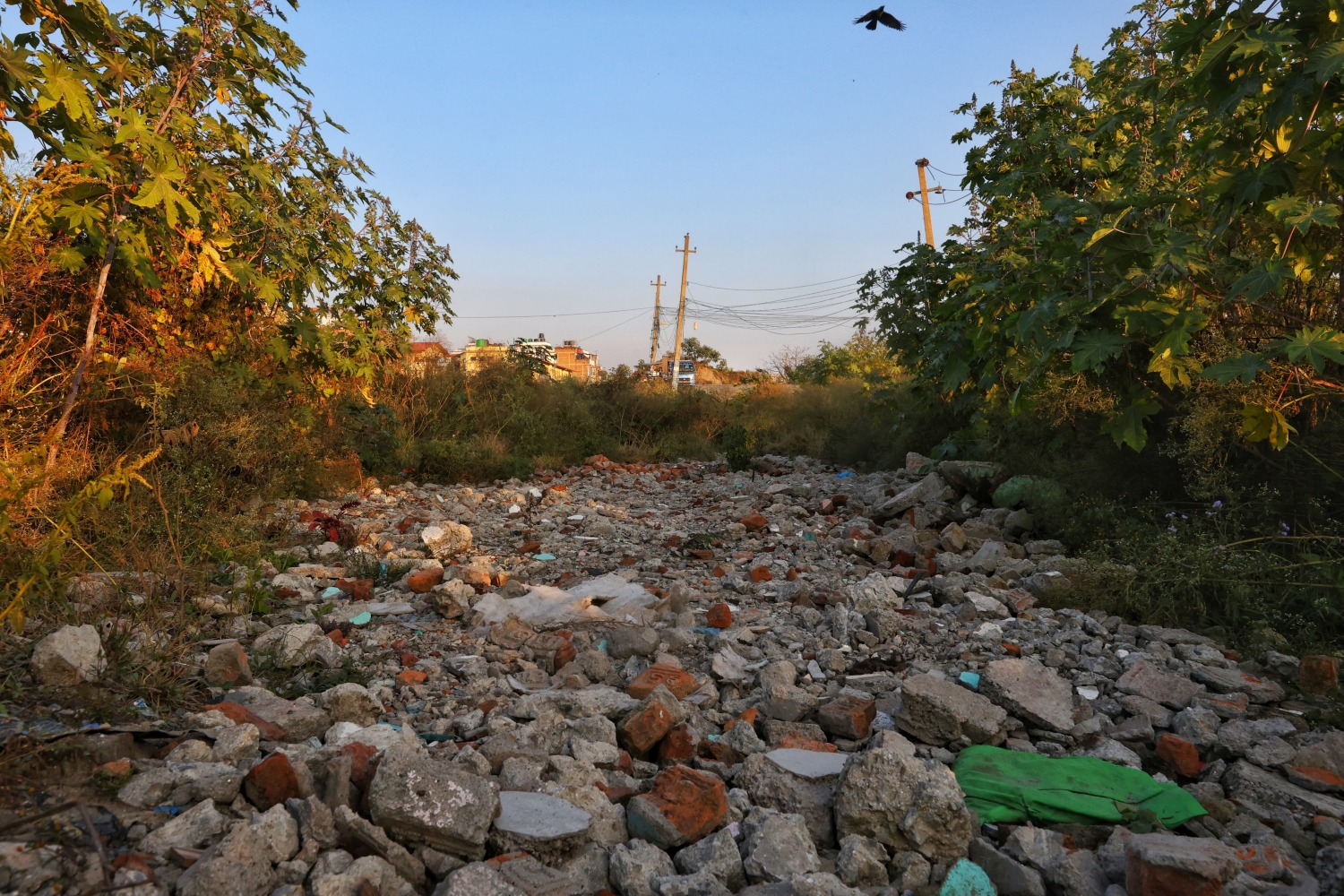
In the case of Ahmedabad’s Sabarmati Riverfront, nearly 1,000 people were displaced for a project celebrated for its role in the city’s neoliberal transformation. Now, many are being asked to move again as the housing they were relocated to falls into disrepair.
As time passes, the restoration project itself is no longer expected to answer for what the people that it forcibly displaced are experiencing. Its focus has re-centred on the largely middle- and upper-class residents who are now able to access a clean, green waterfront. It may even enjoy an award or two for its ecological wins.
Yet, landless people in Kathmandu Valley have long made their voices heard and some NGOs, academics, and activists have answered their calls for solidarity. However, there does not seem to be a participatory, or even legally compliant, plan for relocation.
The Bagmati has been asked to shoulder an ecological burden that it cannot carry, a dramatic re-commitment to responsibly stewarding the waterway needed. Yet, the forced evictions were not a new beginning for restoration, but the most recent in a long string of ecological and cultural abuses foisted onto Kathmandu’s central waterway.
Bahing outlines three priorities:
An end to the pattern of forced and illegal evictions before it is emulated in other cities in Nepal
Assurance that the constitutional rights of those who have already been evicted (including their right to land) are respected, and that they are relocated within the city they have lived in for years instead of the villages that they fled for various legitimate reasons
Material and emotional compensation for those who have been evicted, losing years of material possession and, in some cases, loved ones
If any restoration efforts intend to truly deliver on a Bagmati that is ‘full of life and valued by all’, it should keep its rippling impacts in mind, asking what contemporary residents of all backgrounds need from the river and seeking to meet those needs.
Maybe then, Kathmandu Valley will write a new script – one that centres a just and radically accessible waterfront rather than a pristine, ‘world-class’ one.
Kaede Polkinghorne is a multidisciplinary designer based in Boston, Massachusetts.