
|
|
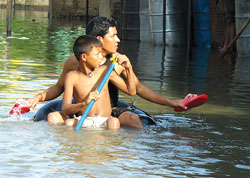
Every year it is the same story: monsoon rains gushing down the mountains create floods downstream in the plains. The government is blamed for not rushing relief fast enough. The Indians are blamed for building embankments across the border. The Biharis blame Nepal. And everyone blames god for unleashing a natural disaster.
Lost in this post-event flood of recrimination is the fact that there is nothing natural about the annual loss of life and damage to crops and property. Granted, the Himalayan arc is a region prone to water-induced disasters: this geologically young and fragile mountain range itself acts as a monsoon trap, setting off the highest precipitation rates in the world in the most-densely populated mountain region in the world.
Combined, the topography and climate make the Nepal Himalaya vulnerable to landslides and floods. But these are givens, and generations of our forebears have learnt to live with the dangers. Himalayan habitations are mostly situated along ridgelines or protected river banks, in the plains traditional homes are built on stilts and farmers depend on nutrients washed down in the silt to fertilise their fields.