
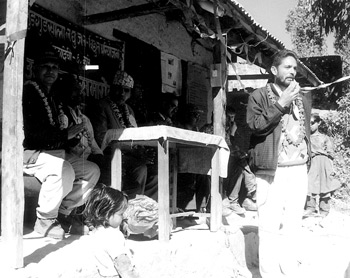
That was in 2000, and Bhim Neupane (pic, right) had been re-elected chairman of Kushadevi VDC. He told me then: “People are now aware, they are able to plan and work together to improve their living standards.”
Fifteen years later, I was walking again with Bhim Neupane along the same path, which is now a motorable road. VDCs were dissolved by Sher Bahadur Deuba government in 2002, local bodies across Nepal have had no elected councils since. Even so, Neupane is approached by families who want citizenship papers certified, and he is still asking them about their cattles.
After visiting Kavre, Dang, and Rupandehi in 2000 to meet elected village leaders like Neupane, it was clear grassroots democracy was finally delivering development. Cynics who said democracy was a luxury for a poor and illiterate country like Nepal could not have been more wrong.
To be sure, national level politics was a mess back then, as it is now. The Maoists were impatient for regime change, their bloody insurgency had entered its fourth year. Local elected officials were their first targets, and by the end of the conflict three-fourths of the 3,900 VDCs across Nepal had been destroyed.
Kushadevi’s VDC block which also housed a health post and training centre was bombed twice, and the Maoists killed charismatic and respected local leaders like Krishna Sapkota in 2002. Sapkota was tortured and decapitated, his head displayed in the village square to terrorise others. Neupane stayed in Kushadevi through it all.
Today, there is little sign that there was ever a war here. The VDC has been rebuilt, Kushadevi has prospered because of its proximity to Kathmandu. Bhim Neupane surveys his scenic village from a hilltop, and says: “This is what local democracy can do, we made this happen.”
Indeed, it was during his two five-year tenures as VDC chairman that Neupane upgraded government schools, added a 10+2 campus, rehabilitated health posts, built 50 km of roads that today provide access to markets for Kushadevi’s dairy and vegetable farmers. He brought drinking water to far-flung wards, irrigation for off-season vegetables, and Kushadevi was lit up at night with microhydro power.
The VDC also stood guarantee for insurance so farmers were not ruined if the costly livestock died. “Buying a buffalo was a gamble, but insurance reduced the risk and it lifted many farmers here out of poverty,” Neupane recalls.
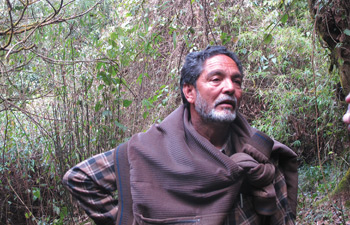
“Nothing has been built here in the last 12 years,” says Laxman Humagain, a Kushadevi native. Kathmandu-based quarry tycoons have bought off entire mountainsides to feed the capital’s construction boom. Families have been displaced, springs have gone dry as excavators claw at the slope and tipper trucks groan through clouds of dust. Neupane says the quarries would be strictly regulated if there was an elected village council.
Neupane gazes out to the east at folds of mountains in fading shades of blue, and says wistfully: “We were elected then, we were accountable to the people, and there was a sense of collective destiny. Without elections there is no accountability, and people have no motivation to work together.”
Read also:
Centre against periphery EDITORIAL
All politics is local, Ashutosh Tiwari
Think nationally, act locally, Damakant Jayshi