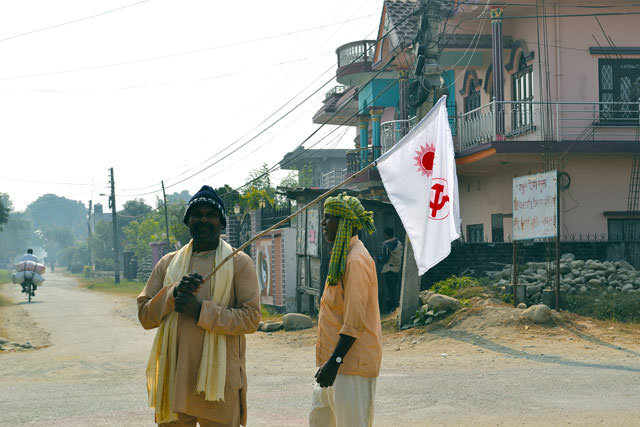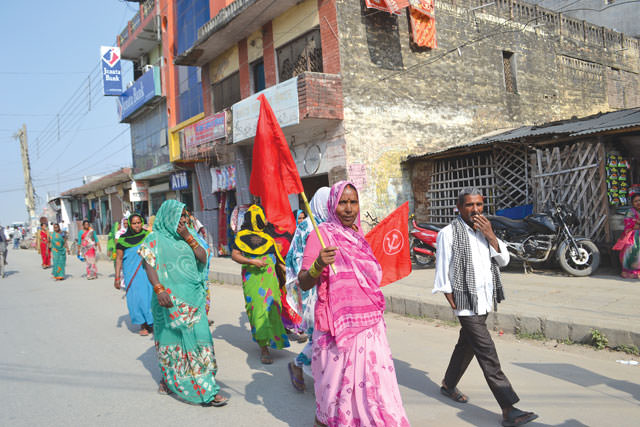
Nandini Pandey, 50, was killed by police in September 2015, days before Nepal’s new Constitution was promulgated amidst violence in the Tarai.
She was inside her own roadside house when police opened fire on protesters obstructing a supply convoy. A stray bullet hit her in the hip, and she died four days later.
Four other people in Bethari, a village 17 km east of Lumbini – including two children – were shot dead by police on the same day. Their funeral pyres were burning on the banks of the Tinau River when people were celebrating the new Constitution in Kathmandu.
Two weeks after the Bethari shooting, a government official called Nandini’s husband, Shashi Dhar Pandey, to ask if he would like to meet and share his grievances with PM Sushil Koirala, who was in Bhairahawa for a day.
“No”, he said, before angrily hanging up the phone. Two years later, even as Nepal is poised to fully implement the Constitution after successfully holding local, provincial and federal elections in 2017, Shashi Dhar is still seething with anger at politicians whose quarrel over the Constitution left his wife dead.
But he is not boycotting elections. Pandey voted in local polls in June and is casting his vote again in parliamentary and provincial elections on 7 December. “You may be angry with politicians, but you should not abstain from voting in a democracy,” he says.
Most voters share that sentiment: politicians are liars, self-centred and indifferent to people’s sufferings – but that won’t stop them from voting. They know they might not be able to change anything if they vote, but they are certain they won’t be able to improve things if they do not.
This is why over 65% of voters turned out in the first phase of parliamentary and provincial elections in 35 districts early this week, despite a series of bomb blasts and adverse weather in high mountain constituencies. Voter turnout is likely to increase in the second phase in 45 districts early next week.
More bombs have exploded since the first phase, killing a temporary policeman and injuring many candidates and their supporters. This week, when Prime Minister Sher Bahadur Deuba flew to Rupandehi to campaign, he was greeted with an explosion. All these blasts are believed to be the work of a group of Maoist dissenters who want to thwart elections, led by Netra Bikram Chand.
Even in 2013, when Nepal elected the second Constituent Assembly, many areas were rocked by blasts carried out by a larger Maoist faction led by Mohan Baidya. But voters turned out in large numbers to exercise their democratic rights, eventually forcing Baidya to rethink his strategy and take part in the polls.
“Our democracy is very strong, and electoral violence cannot weaken it,” says Naresh KC, editor of Lumbini Khabar, a biweekly newspaper in Bhairahawa. “Blasts can scare away a few voters, but they cannot sabotage elections.”