
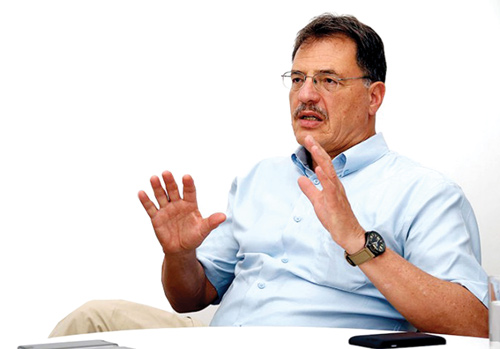
Translated excerpts of interview with Stanford University political scientist Larry Diamond in Kantipur, 16 August
Kantipur: Why is it so difficult for democracy to work in Least Developed Countries like Nepal?
Larry Diamond: Democracy often fails to take root, and gives way to instability, polarisation, secession, military coups, dictatorships and violence in countries where corruption is rampant. Corruption weakens laws, erodes the people’s faith in government institutions, divides society, and increases nepotism. As a result, democracy becomes ineffective, and eventually fails. To strengthen democracy, we need to have good governance, the judiciary and bureaucracy must function properly, and strong measures must be taken to curb corruption.
But in Nepal the anti-corruption watchdog has been accused of being the source of corruption, with its Chief Commissioner accused of abusing his constitutional authority.
Who appointed him? Countries that have good governance do not just set up an anti-graft body but also an independent agency to watch the watchdog. If the head of the anti-corruption body is appointed by political parties, curbing corruption cannot be effective, because a political appointee is usually not accountable to the people.
Only someone whose career is not tainted and who cannot be tempted deserves to head an anti-corruption agency. And the head of such a body should not be beyond being investigated and monitored himself. If he is given unlimited authority, there is always a chance that he can abuse it.
I think this is what must be happening in Nepal. If the chief of the anti-graft body is accused of abusing his authority, he must be investigated, and punished if found guilty. Civil society, NGOs and the media must play a role to put pressure on the government to do that.