
Since 1 February 2005, Nepal's bilateral relations with key donors have deteriorated. Aid has either been delayed, suspended or cancelled, few new agreements have been signed and the future of foreign aid remains uncertain.
Nepali Times talked to J?rg Frieden of the Swiss Development Cooperation (SDC) and Armin Hofmann from German Development Cooperation (GTZ) about the impact of recent political events on aid.
Nepali Times: How badly has the royal takeover affected aid flows?
J?rg Frieden: Commitments of resources to Nepal are clearly down. To my knowledge no European country has had new formal aid negotiations since 1 February.
But how do you send the message about restoration of inclusive democracy without punishing the people?
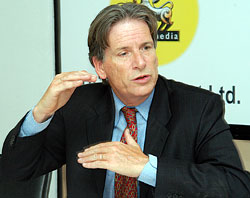
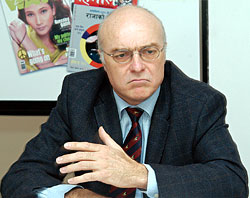
PICS: MIN BAJRACHAYRA
Frieden: We are not here to send messages to anybody. We are guests in your country and we are here to help thepeople and support local initiatives. We have the Basic Operating Guidelines that really define the reason why we are here. There is a sense in some quarters that the donors would like to punish somebody to send a political message. I think that is not true. The aid agencies want to remain committed to Nepal and its people. Our parliaments might have different perceptions and what they think will impact the level of resources. But we have certainly witnessed a deterioration in the relationship between the donor community and the government over the last 13-14 months. When looking at the financial relationships, one has to distinguish between commitments of funds for new projects and the disbursement of funds for the implementation of existing projects. The significant reduction in new commitments will translate into less disbursements, less investments from the next fiscal year on. However, the implementation of existing projects started before 1 Feburary has continued as much as possible, maintaining temporarily the aid flow at the same level.
We haven't seen much change in the Maoist attitude since 1 February. But we have had contradictory messages. On one side, if you look at the declarations over the last two years, we have seen more interest for development work coming up and more willingness to discuss development issues. That is a positive fact.
The climate created by the four-month ceasefire led to the declaration by Prachanda on 22 December that the CPN-M would recognise the Basic Operating Guidelines. Although problems continued, the acceptance of those principles allowed bilaterals through the UN system to see the leadership intervening to solve problems at the local level and demonstrating also a capacity to a certain extent to maintain discipline among the rank and file. Unfortunately, we still face a lot of difficulties in many areas, more in the east of the country on the issues of formal registration of development actors with the people's government and taxation, which remain very pressing. These are demands we cannot accept and each time the CPN-M cadre have pushed too much in that direction we had to stop working.
On the government side, there is less change because the CDOs and LDOs are pragmatic and interested in development as a rule and local bodies and district authorities continue to be concerned about development.
The reality in many districts is that we are in a situation of stop and go. Development work stops when development partners and projects are asked to contribute to the insurgency. We must indeed make sure that our taxpayers' money should not flow into the pocket or treasury of one of the warring parties.
Has Nepal's image taken a dent in Switzerland and Germany?
Armin Hofmann: Europe is a media society and the tsunami and Kashmir earthquake got a lot of publicity there. So there was overwhelming, huge support to the victims of those two natural disasters. But because there was so much focus on that, Nepal's difficulties have been sidelined. Also, we need encouraging news from Nepal so people back home will say ' let's not forget Nepal'.
But if you look at the domestic problem in water and energy, the lack of investment compared to last year is now hitting the people and will hit them even more in the coming years. These are processes of decline that will get worse and worse in the future. The macro-economic fundamentals are worrisome. One is that everyday we have an average of 450 people leaving the country and the trend is going up. Somehow, these people are the more skilled people. Ok, they send back remittances but there is the risk of imported inflation when monetary growth increases more than the rate of GDP growth as seems to be the case now.
Foreign direct investment is almost zero. We would like to support and stimulate it but there are questions of sustainability. Looking ahead three, five or 10 years, there is a lot of room for concern because we have demographic growth and we will not find qualified jobs in the domestic market or the people required may be working abroad. Even the overseas job market has limits. Some Middle East countries already have already stopped taking Bangladeshis, and Nepalis will also be hitting a cap after some time.