
A career bureaucrat with the government of Nepal, Bhojraj Pokharel came out of retirement to chair the Election Commission overseeing the CA elections in April 2008. He was recently appointed to a UN Panel to monitor the upcoming self-determination referenda for Southern Sudan and the Abyei area. Nepali Times spoke to Pokharel before he left.
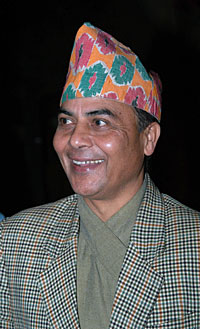 MIN RATNA BAJRACHARYA |
Nepali Times:Tell us about your recent appointment.
Bhojraj Pokharel: Sudan is home to the longest running conflict in the world. In Southern Sudan alone, two million people have lost their lives, and four million have been displaced. Darfur in Northern Sudan is another hotspot. The Khartoum government and the Sudan People's Liberation Army (SPLA) signed a peace agreement in 2005 which stipulated that Southern Sudan would hold a referendum to decide whether it would remain part of Sudan. Another referendum will be held in Abyei on whether it will remain with Northern Sudan or become a part of Southern Sudan.
The panel will assess the political situation leading up to the referendum on 9 January, use the good offices of the Secretary-General of the UN to build confidence among the parties, and maintain credibility during and after the referendum in order to prevent an adverse environment.
What lessons might be drawn from your own experiences here?
Obviously it's a different context, even though it's also a conflict situation. I can share examples and we can copy the modality of the processes.
President Bashir was charged with war crimes by the International Criminal Court, and there are fears the peace process could break down. How will that affect your work?
There are two parties in the peace process: the SPLA and President Bashir's National Congress Party. We can't have a successful referendum if they don't work together. The rapport international players build with the parties will be important.
You are the first Nepali chosen for a UN panel of this stature. What was your reaction when you first heard the news?
I was delighted that the international community recognised Nepal and thought we might be able to help others in their peace processes. Whether this trust will continue will depend on my work. That is more humbling. There is a huge international interest in Sudan, including superpower interest. Add to this the complexity of Sudan's internal politics, then the work becomes very challenging.