
 |
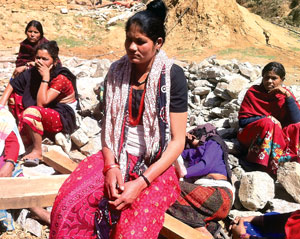
Mansara Sijapati smiles as she poses for a photograph, but then breaks down and cries when she tells her story.
Four years ago, her husband killed himself after strangling their three-year-old when he found out they both had HIV. Mansara was kicked out by her husband's family and even her own mother refused to take her in.
"But I still want to live," says the 31-year old Mansara even though she is landless and homeless. Her brother-in-law has given her refuge, but she can't even afford food or pay for visits to Surkhet for her CD4 count to measure her immune strength.
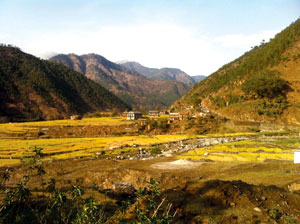
 MIDDLE OF NOWHERE: The village of Rakam in Dailekh which has been ravaged by AIDS. |
According to the District Health Office (DHO) there are 185 people, mostly widows and children, living with HIV in Dailekh. A majority of them are here in the village of Rakam, but they get no help from the government. Their only hope is a local group called Parivartan Ko Lagi Pahuch (Access for Change) which distributes antiretroviral drugs once every two months.
There are only two voluntary counseling and testing centres in Dullu Bajar and Chukla, both several days walk far away from remote VDCs with high HIV rates like Rakam. But even these two centres have neither the budget nor the support to take care of the epidemic in Dailekh.
"After detection we worry about breaking the news to them, and we try our best to console them," says Sushil Bikram Thapa from the Nepal STD and AIDS Research Centre (NSARC). There are many cases of suicides after being detected with the virus, and there is a dire need for new centres in the district.
 PICS:NARESH NEWAR |
"We are desperate for help, please help us communicate this message urgently to the central government and the UN," says Gehraj Khanal, chief of Rakam Karnali Sub-Health Post, who is the only health official in the VDC. "It is not the disease that is killing patients, but the mental stress and poor nutrition."
Mid-western Nepal is an AIDS hotspot mainly because infected male migrant workers spread the virus on returning from India infecting, wives and new-born babies. The high-risk group in Nepal's concentrated HIV epidemic is now no longer injecting drug users but the male labour migrants.
"I don't understand why international aid agencies and the National Centre for HIVAIDS and STD Control have abandoned these people, at least they could help the children," says Deepa Bohara, an activist with Parivartan Ko Lagi Pahuch.
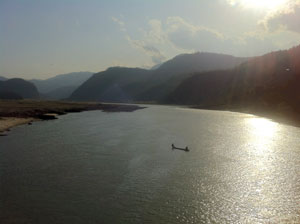
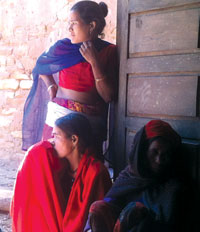 Mansara Sijapati tells the story of a husband who committed suicide after strangling his HIV-positive daughter. The scenic beauty of a Karnali sunset masks the suffering of this neglected land. |
So far, the NCASC provides only Rs 200,000 per year to support all people living with HIV and AIDS in Dailekh, but care and treatment for each person costs at least Rs 25,000 annually. There is also a crucial need to support HIV positive children and orphans who need help with nutrition and education.
We are very disappointed and frustrated with the people running the Global Fund who have totally abandoned this district," says Dailekh's Local Development Officer, Dil Bahadur Shahi.