
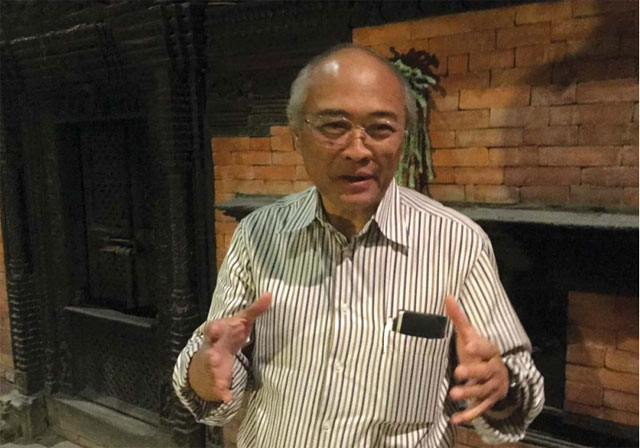
Kuntoro Mangkusubroto led a complex reconstruction effort in Aceh-Nias, the region of Indonesia that was devastated by tsunamis and earthquakes, from 2005 to 2009. Excerpts from his conversation with Ashutosh Tiwari:
Nepali Times: What have your observations been on the pace of Nepal’s formal reconstruction efforts?
Kuntoro Mangkusubroto: I do not know Nepal’s geography and culture well, but given the devastation caused by the earthquakes, I am surprised that things seem peaceful here. After meeting with government representatives, I did not get a sense of urgency, that “let’s forget everything else and concentrate on rebuilding” attitude. If this happened in Indonesia, there would be thousands of people outside shouting and making our lives miserable. Maybe Nepalis are too nice.
Speaking of urgency, how did you approach the reconstruction work in the Aceh-Nias area?
I made some good decisions. First, I left Jakarta and moved to the affected area with my family. By living in the community, I saw that new problems came up all the time but I was also able to deal with issues right away. This reduced surprises and uncertainties and sped up the recovery work.
We also planned as we proceeded, there was no master plan. We did not wait for perfection. We started building houses, without worrying about mistakes, which we knew we could fix later. We said that each house should be built to withstand a seven magnitude earthquake, and that it had to cover an area between 36 and 54 square meters. These broad guidelines worked.
Because we were delivery-focused from day one, we were soon able to point to what we built instead of merely talking about what we were planning to do. If we had not delivered, we would not have been able to protect ourselves against criticism or show that we were on the right track.
How did you work with such diverse stakeholders -- community groups, countries, donor agencies, NGOs, contractors?
We had them write a concept note in which they had to explain what they would do, where the money would come from, how they would procure materials, and how they would staff the projects. That note was then vetted by local villagers, who decided what got built where. Sometimes, I had to step in to make the final decision, but once the concept note was turned into a village plan – with input from the villagers - it was time to start rebuilding that village.
Since the villagers helped plan, conflicts related to land disputes were minimised. Donor agencies and NGOs that wanted to rebuild had to go through this process, which streamlined coordination.