
After his 1991 arrest in Bhutan, he fled to Nepal, but was re-arrested in 1997 while travelling in India. He was jailed for a year at Delhi's Tihar Jail and released last year. Nepali Times spoke to Dorji in Kathmandu recently.
Nepali Times: Why did the Bhutan Government exile you? 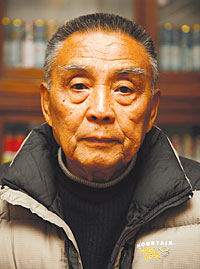
Rongthong Kuenley Dorji: In 1991, the royal government of Bhutan had me arrested and tortured for 50 days at the Royal Bodyguard headquarters at Dechencholing palace, Thimphu, for extending my support to the Lhotshampa agitation. After my release, I fled Bhutan and took refuge in Nepal for fear of re-arrest, torture, and elimination. The royal government feared the possibility of a joint rebellion by the Sharchop and Lhotshampa communities, and made an example of me to pre-empt this.
Did the Indian Government give any reason for your detention in 1997?
Initially the Foreigner Regional Registration Offices arrested me for travelling in India without valid documents, even though I had documents from the Nepali Government. In any case, Bhutanese nationals don't need documents to travel in India, according to the Indo-Bhutan Friendship Treaty of 1949.
Later, the Bhutanese Government produced fabricated charges against me and requested my extradition. I was imprisoned in Tihar Jail for a year. I was released on bail, though my movements were restricted to Delhi, and on 21 April, 2010, the Indian Government dropped extradition proceedings against me on instruction from the Bhutanese Government.
The regime in Bhutan claims the eviction of the Lhotshampas is not ethnic cleansing. What is your view?
I agree that it was not a case of ethnic cleansing. There was an issue of non-Bhutanese ethnic Nepalis in Bhutan. The confusion was greater because one could hardly differentiate between genuine Bhutanese of Nepali origin and non-Bhutanese of Nepali origin. Innocent people preferred to flee Bhutan than stay. During the day, the Bhutanese king would appeal to the Lhotshampas not to leave their ancestral land but at night the army would forcefully evict them. The demand for human rights was totally unacceptable to the king.