
|
|
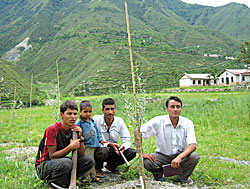
It sounds like the whim of an eccentric Mediterranean magnate: ship 635 olive trees from Italy to plant in poor soil in the hills of a remote, 'food deficit' district in Nepal; but it's a project that the UN Food and Agriculture Organisation (FAO) takes seriously.
The two-foot saplings, of 28 imported and two local varieties, were planted in June on three hectares of land considered unproductive by local farmers
next to Kolti airfield. It's hoped that in about five years they will bear fruit, proving that European olives can survive in the far- and mid-west both as a cash crop and a source of healthy fat for villagers.
In late July and early August, the UN World Food Programme helicoptered more than 200 metric tonnes of emergency rice to Kolti to feed locals in eight nearby VDCs who must survive an annual 'food gap' between crops and who last year were additionally whacked by drought. The white, 40kg sacks of rice piled on the airfield were part of a larger WFP plan to feed 225,000 people living in 10 districts.
"Compared to an apple plantation, growing olives is very easy. It doesn't need much water or very fertile land. It's not plagued by insects or disease," says the FAO's BR Dhakal, manager of the million-dollar pilot project.
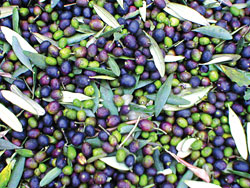 Experiments grafting European olive species onto local wild olives-known here as launtho-are encouraging, and these trees could bear fruit within three years, adds Dhakal. Local olive trees grow in a handful of these districts and FAO, working with Tuscia University in Viterbo near Rome, has established another smaller plantation at a higher elevation in Dolpa.
Villagers use the olive trees mostly for fodder and firewood but the project aims to educate them in the benefits of consuming olive oil, the cornerstone of the celebrated 'Mediterranean diet'. And local managers of the Kolti
plantation have already calculated the potential value of their crop. A mature tree can produce 25kg of olives, which is processed into 5 litres of oil which can sell for more than Rs1,000 per litre, explains supervisor Janesh Bhandari.
In 2004-05, Nepal imported more than Rs 28,000,000 worth of olive oil, according to Dhakal.
This is not the first time that olives have been suggested as a niche crop for the country. More than two decades ago, an EU project imported and planted trees in Kirtipur, Jumla, and Marpha. Two are surviving in the Mustang village and bear fruit annually.
In the late 1990s, an Italian team planted other trees at Mugu's Rara Lake-five remain and are flowering now, according to Dhakal. But the best-known endeavour, one that continues today, is the private Himalayan Plantation near Kathmandu.
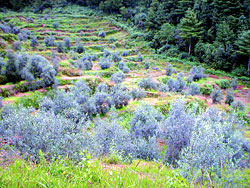 It was just over a decade ago that Hartmut Bauder's team strapped on dokos and carried 2,000 olive saplings, bamboo stakes and other materials weighing about 170 tonnes in total into the new Himalayan Plantation in Chitlang.