
Sarmila was 19. She already had three daughters and was four months pregnant with a fourth child.
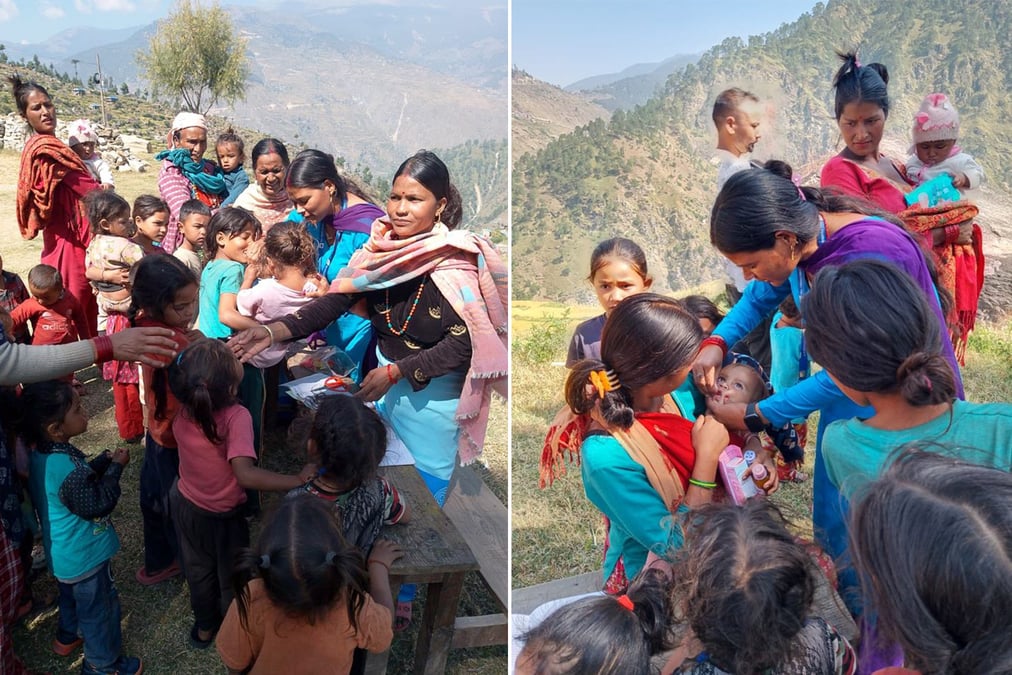
She was thin, in ragged clothes and worn-out slippers, but with thick dark hair, comely in a way hard work slowly tries to erase. Her youngest child, 13 months old had been identified as underweight earlier that morning during the monthly mothers’ group meeting at the health post.
When the nurse asked what the baby had been eating, she smiled softly. Rice and dal, she said. Sometimes nettle soup. Why hadn’t she fed the child better? She said she was always tired. Her husband had been working in India for four months, and there was no one to help at home. She had eloped at 14.
When tea and millet bread were passed around in the meeting, another woman pressed an extra piece of bread into her hand and told her to take it home. Sarmila refused. She still had some pride left.
I have sat in circles like this across the Karnali for years. The faces change, but the story remains the same. What strikes me every time is how ordinary it all looks.
They are sitting in a circle on the health post’s green grass. Birds are chirping in the trees. The sky is bright blue, the mountain air is clean, and there is no traffic or smoke.
It can look peaceful. But that is deceptive. More than one in three children under five in the Karnali is stunted, the highest rate in Nepal. Nationally, child stunting has fallen dramatically over the last two decades. But here, progress has slowed, and in some places even reversed.
Health workers in districts like Kalikot now speak quietly about severe malnutrition cases rising again. What they are describing is not simply hunger.
A stunted child is not only shorter than average. When a child is undernourished during the first thousand days of life, from pregnancy until age two, it affects brain development as well, impacting attention, memory, and learning capacity even before the child enters a classroom.
Some recovery is possible later, but the greatest opportunity is prevention during those early years before the damage settles in.
EMPTY STOMACH
Growing up in Kathmandu in the 1990s, I did not really understand this. Hunger to me meant an empty stomach. We ate simple food at home, but there was always enough of it.
The first time I understood malnutrition differently was in Sindhuli in 2007, just after the Maoist conflict had ended. Children from the Majhi community near the river were not just thin, they seemed to be motionless. They had pale hair, severe pallor and no energy. That listless stillness has stayed with me ever since.
The quiet hunger emergency of the Karnali is not an accident. Even today, it follows caste and class, geography and gender with brutal consistency. Dalit families are more likely to be landless or cultivating marginal terraces.
Pregnant women often survive on repetitive diets of maize, millet, rice and wild greens with very little protein. Reaching a health post may mean walking for hours. And even when women arrive, many describe being treated with indifference or contempt by staff.
Nepal once showed that this could change. Between 2001 and 2011, child stunting fell rapidly across the country, including among Dalit communities, as better sanitation, maternal education, community health programs, and rising household incomes all worked together.
But progress is fragile when the state’s attention span is short. This year, the government suspended the fortified flour program across Karnali because of budget cuts. For years, pregnant women, new mothers, and young children had received small quantities of fortified flour every month.
Health officials now admit that some of the gains may already be reversing. The tragedy is that the amounts involved are tiny compared to what Nepal routinely spends in other sectors.
At the same time, a different nutrition crisis is sweeping through even remote villages. Cheap instant noodles, sugary biscuits, and sweet drinks are replacing many traditional foods. Children can now consume enough calories while still lacking the nutrients their bodies and brains need.
And even when families manage to feed children properly, the body often struggles to use those nutrients. In the Karnali, most households still lack reliable access to safe drinking water.
Repeated diarrhea and parasitic infections quietly strip nutrition away from children already surviving on poor diets. Empty calories and unsafe water reinforce each other. Yet our national health conversation remains dominated by hospitals, surgeries, and specialized treatment.
These things matter. But by the time severe malnutrition reaches a hospital ward, much of the developmental damage has already been done. Hospitals can treat complications, they cannot fully restore lost early childhood development.
That prevention is rarely glamorous. It means food during pregnancy, clean water, delaying early marriage, and keeping girls in school longer so they enter motherhood healthier and with more control over their lives. It means confronting the quiet discrimination that still shapes who eats first, who leaves school early, and whose suffering is normalised inside poor households, especially among Dalit families in deeply patriarchal communities.
It also means treating nutrition as a responsibility of the local governments, not an occasional act of charity. Wards and municipalities have increasingly prioritised visible curative services, hospitals, equipment, and specialised care, while neglecting the slower, less visible work of public health prevention.
Mothers groups and Female Community Health Volunteers remain among the few institutions capable of reaching deeply into communities, yet many operate with little support and aging workforces despite the growing demands placed upon them.
In Kalikot, I have seen modest interventions work. Eggs, beans, ghee, regular follow-up visits, nutritional support for mothers after childbirth — none of this is revolutionary. But it only works when families can rely on it year after year. Not as short-term programs tied to donor cycles or political attention, but as part of a basic contract between citizens and the state.
Nepal is reforming its education with an important push towards foundational learning. But if we ignore nutrition, those reforms are too late. We are debating the quality of seeds while the soil has already gone dry.
I still think about Sarmila who refused the extra bread. The young woman had smiled politely, sat quietly through the mothers’ group meeting, and then returned home to her underweight child and the baby she was still carrying.
Maybe the support around her will be enough. But it should not come down to maybe. Not for her, and not for the thousands of women across the Karnali whose children are permanently diminished by a crisis Nepal already knows how to prevent.
Shalav Rana has worked in community development and education support across Nepal for over two decades, including in the Karnali.