
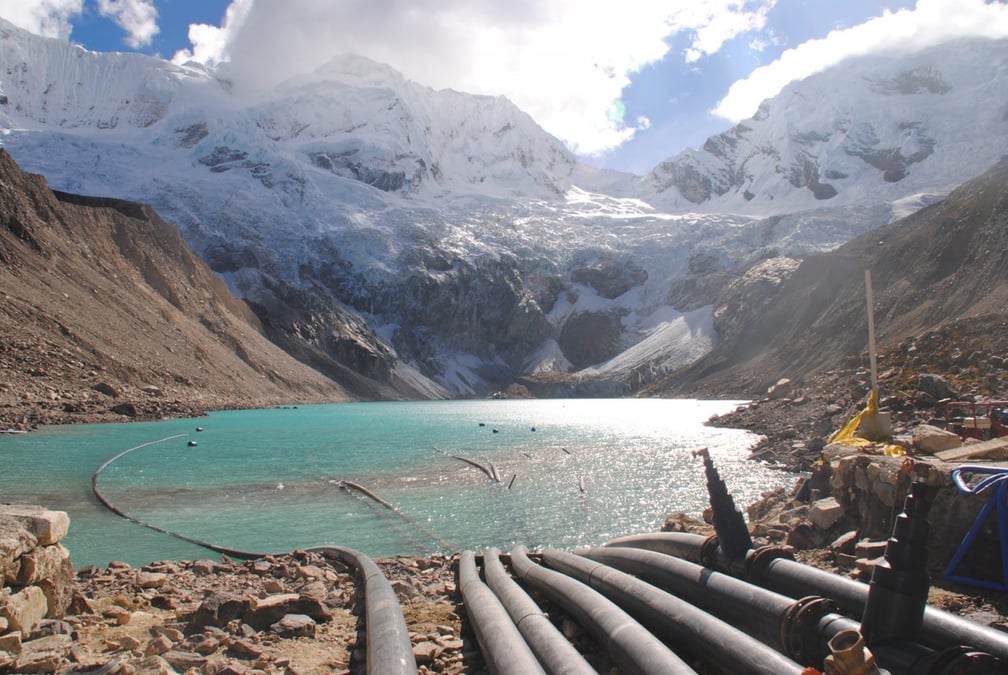
The Trisuli Valley flood on 26 August has led to a renewed sense of urgency in addressing Glacial Lake Outburst Flood (GLOF) risk in the Himalaya. While there were geological forces at play in the Langtang Lirung slope collapse, GLOFs present a looming danger exacerbated by rising global temperatures.
On the other side of the planet, Peruvian communities have been coping with GLOFs since the 1940s – more than three decades before the first recorded GLOF in Nepal. The history of GLOF management in the Andes reveals lessons about what works and what doesn't.
The first, and perhaps most important, lesson from the Andes is the primary importance of consistent funding and public oversight when it comes to GLOF risk reduction.
In 1941, a GLOF from Lake Palcacocha in Peru’s Cordillera Blanca mountain range killed thousands of people in the city of Huaraz, motivating the Peruvian government to study and control glacial lakes. Over the years, public hydropower companies began to support that work, recognising its importance to the success of their industry.
In 1970, a debris avalanche and mudflow similar to what happened in Nepal last month was triggered by an offshore earthquake. The disaster destroyed the Peruvian town of Yungay and killed 30,000 people, making it the deadliest glacier-related disaster in history,
By the 1990s, Peru had completed a survey of glacial lakes in the Cordilla Blanca, identified which ones were hazardous, and intervened at 34 of them. Researchers and engineers developed a suite of strategies to manage lakes, from simple channels and earthen dams to complex valve systems.
However, neoliberal reforms beginning some 25 years ago led to the dissolution of state-run agencies and the privatisation of hydropower in Peru. Projects were underfunded and stalled even while global warming exacerbated the risks posed by glacial lakes in the Andes. In 2024, Lake Palcacocha flooded Huaraz for the first time in more than 80 years.
Even as Peru’s policy infrastructure for reducing GLOF risks began to decline, scientists found ways to exchange knowledge – including through a series of three USAID-funded workshops in Nepal and Peru hosted by Alton Byers, a mountain geographer at the University of Colorado Boulder.
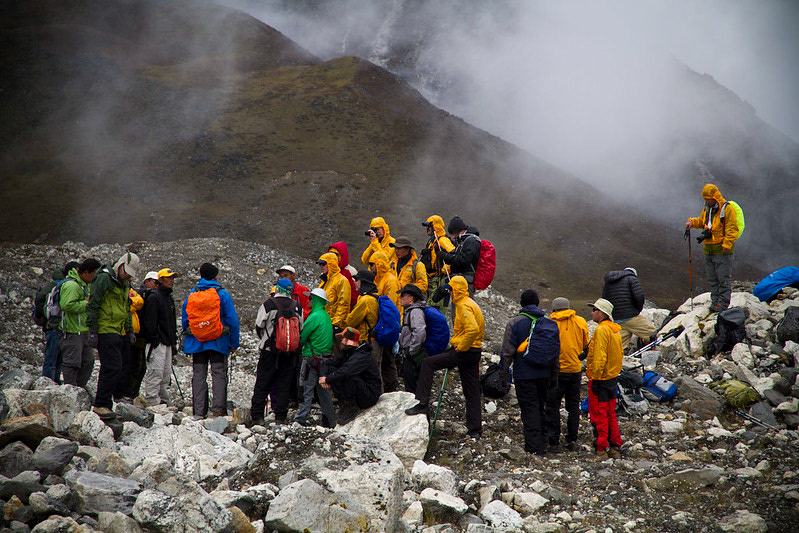
Dr Byers says it was important that the workshops didn’t resemble stale conferences: In 2011, 25 participants set out on a five-week trek to observe Imja Tso firsthand. One of them was Peruvian civil engineer César Augusto Portocarrero Rodríguez, who became invested in Nepal’s GLOF risk reduction efforts and would later contribute to projects like the draining of Imja Tso.
Tso Rolpa and Imja Tso were lowered by about 3m each in 2000 and 2016 respectively, and Nepal is planning similar projects on four other potentially dangerous glacial lakes with support from the Green Climate Fund (GCF): Lumding Tso, Hongu-2, Lower Barun and Thulagi.
Still, while Nepal continues to implement GLOF risk reduction strategies from Peruvian pioneers, the Andes and Himalaya are dramatically different contexts.
Byers recalls Portocarrero telling him: “The first step to controlling a lake is building a road to it.” Building a road to a glacier is a relatively straightforward task in the Andes, where mountains jut upwards from grasslands, but is much more difficult and expensive across much of the Himalaya. These limitations have meant relying on straightforward techniques, like open channels, as opposed to the more elaborate siphon systems that are common in Peru.
With Nepal demanding climate reparations to rebuild after the Trisuli Valley flood, Peru also sets an example in reallocating accountability from the places most impacted by climate breakdown to the actors causing it.
A decade before Lake Palcacocha’s 2024 flood, Peruvian farmer and mountain guide Saúl Luciano Lliuya filed a lawsuit against RWE AG. With support from Germanwatch, Lliuya argued that the German energy provider has contributed 0.47% of the emissions causing climate change and should therefore be responsible for 0.47% of the costs associated with protecting his Huaraz home.
In 2017, Lluyia won an appeal determining that major emitters can be held liable for risks resulting from climate change under German civil law. Ultimately, however, his case was dismissed. The court did not consider his home to be at high enough risk of flooding. Even though a GLOF from Lake Palcacocha would most likely inundate his property and such an event is highly likely to occur at some point, it is highly unlikely to occur in any given year.
Byers says that similarly contradictory calculations of risk account for the prevalence of ill-fated hydropower infrastructure on Nepal’s rivers. But, he adds, if an area has “been under water once from a GLOF, it will be underwater again.” Modeling and field observations – from both scientists and local elders who are intimately familiar with recurring flood patterns – can help keep this reality front-of-mind.
EARLY WARNING
Like experts from Nepal, Byers points to early warning systems that combine real-time lake and glacier monitoring with community-based preparedness strategies as a priority, especially post-Rasuwa.
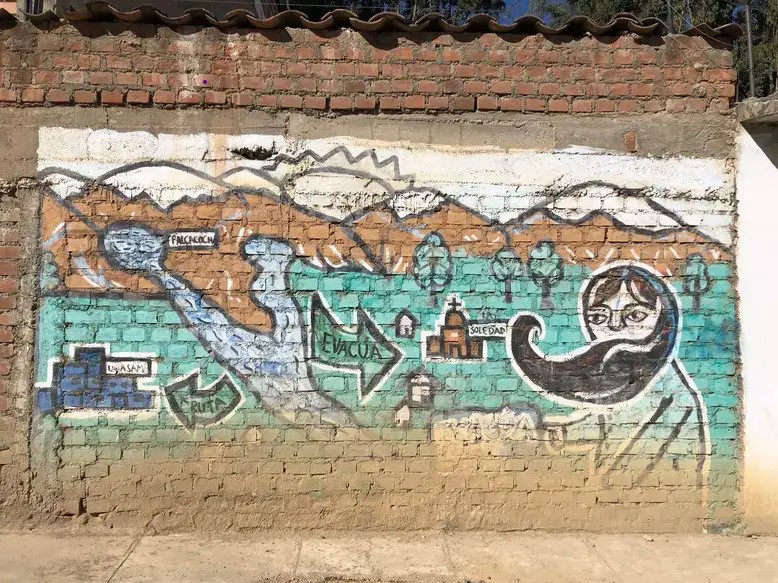
Peru is developing early warning systems, too. Strategies include identifying which environmental variables are both critical to early detection and measurable by sensors, targeting text alerts to community leaders like school principals and hospital chiefs, and hosting workshops along catchment areas to understand how different communities perceive risk. In Huaraz, a mural depicting evacuation routes demonstrates how embedded knowledge of GLOF risk has become in the local community.
Byers highlights the importance of participatory and place-based system design: “Every lake is different, every hanging glacier is different, and every warning system will be different.”