
When Nepal promulgated its new Constitution in September 2015, Madhesi politicians blockaded the border. However, Nepal’s sexual minorities hailed the document which explicitly guarantees equal rights for them.
Nepal became the first nation in Asia and the third in the world, after South Africa and Ecuador, to ensure equal constitutional rights to people from the lesbian, gay, bisexual, transgender and intersex (LGBTI) community.
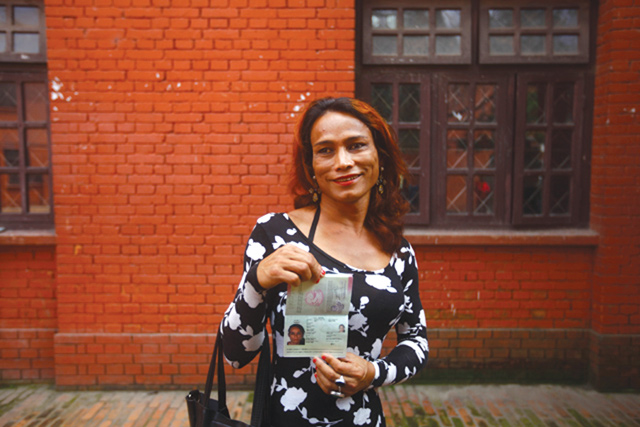
The rights of Nepali citizens to choose their gender identity on citizenship and passports -- male, female or other -- is enshrined in Article 21 of the Constitution. The Department of Passports has already issued its first passport under the “O” category to Monica Shahi, 37 (pictured), a transgender activist.
Article 18 forbids discrimination against gender and sexual minorities by the state or judiciary, and Article 42 safeguards the right of gender and sexual minorities to participate in the civil service and state mechanisms. Transgender activists have applauded the government’s efforts to protect the rights of sexual minorities, but they say implementation is slack.
“We are very happy that the government has explicitly guaranteed our rights in the Constitution. Now the government should implement them,” says transgender activist Bhumika Shrestha. She says the government needs to address issues of same-sex marriage, right to property, right to adopt children and affirmative action.