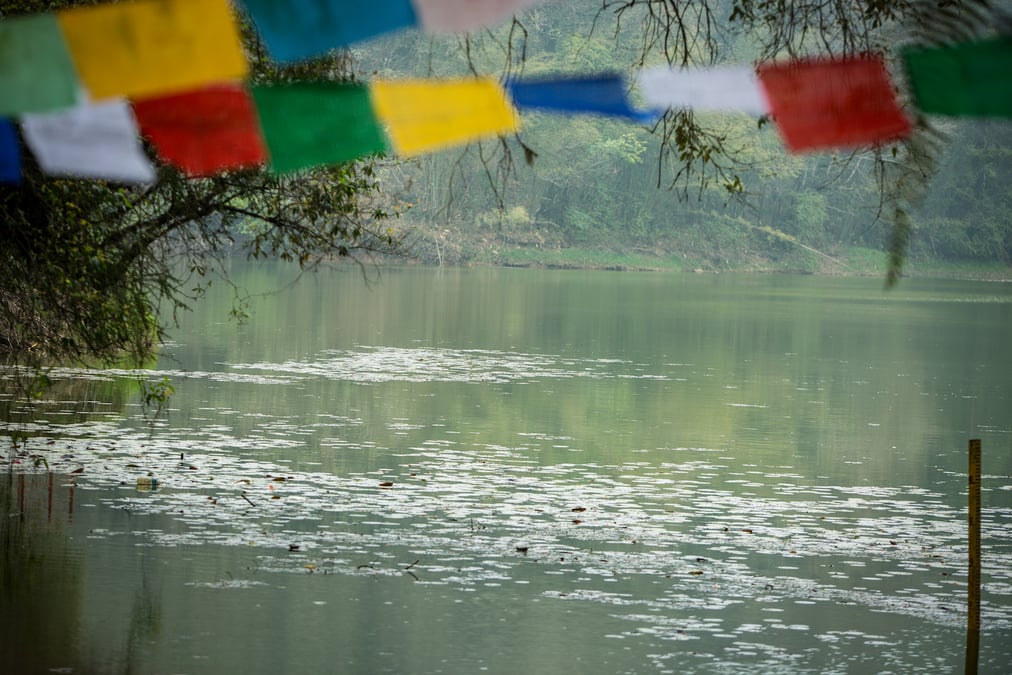
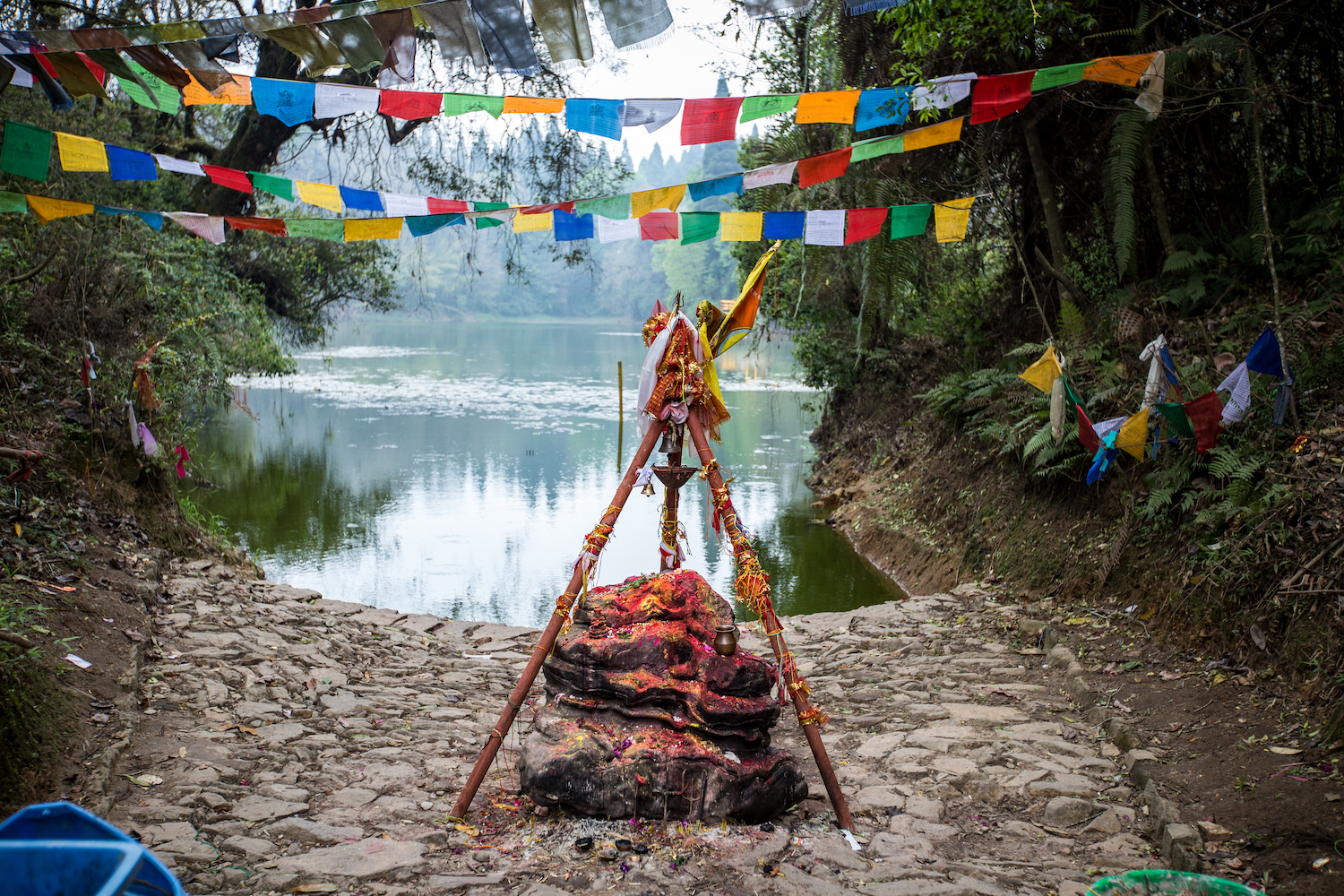
On full-moon nights in October and the Nepali New Year in April, hundreds gather to worship at the sacred pond of Mai Pokhari in Ilam. According to legend, the pond was born thousands of years ago from the union of the holy Mai and Tamur rivers in eastern Nepal.
Another story tells of an elderly couple whose death gave rise to a life-giving pond meant to quench human thirst. The nine corners of the pond are each believed to house a goddess capable of granting health, fertility, good harvests, and protection from landslides and storms.
In every version, one message is constant: when people polluted the water, the goddess moved away. Fear of losing her protection still shapes how people treat the sacred water body today.
Besides ponds, wetlands are areas that are saturated with water, permanently or seasonally, including marshes, swamps, and bogs – representing some of the world’s most biologically diverse ecosystems, with distinctive soil, plants and animals.
In 2008, Mai Pokhari earned the status of a Ramsar site – a wetland of global importance – for its ecological significance.
Its mid-elevation broadleaved forests provide habitat for many epiphytic orchids that grow without soil, attaching themselves to trees, and protected species such as the white-rumped vulture (Gyps bengalensis), leopard cat (Prionailurus bengalensis) and Eurasian Otter (Lutra lutra).
For the people of the area, this is more than a wetland. It is a living mother, an ancestral guardian, and at the heart of their cultural identity. But long before it was recognised internationally, it was already being protected through belief, respect, and traditional knowledge passed quietly from one generation to the next.
This pattern of faith-based stewardship is repeated across the Himalaya. Spirituality has shaped conservation in ways no law ever could. Fishing, hunting, and polluting wetlands and rivers are strictly forbidden, not by force but by faith.
When erosion threatened the pond in the 1930s, villagers planted pine trees along its edges. As forest degradation increased, the community organised itself, establishing community forests in 1992 and 2001. In 2004, the area surrounding the pond was formally recognised as a religious forest –- a recognition based on local devotion rather than outside instruction.
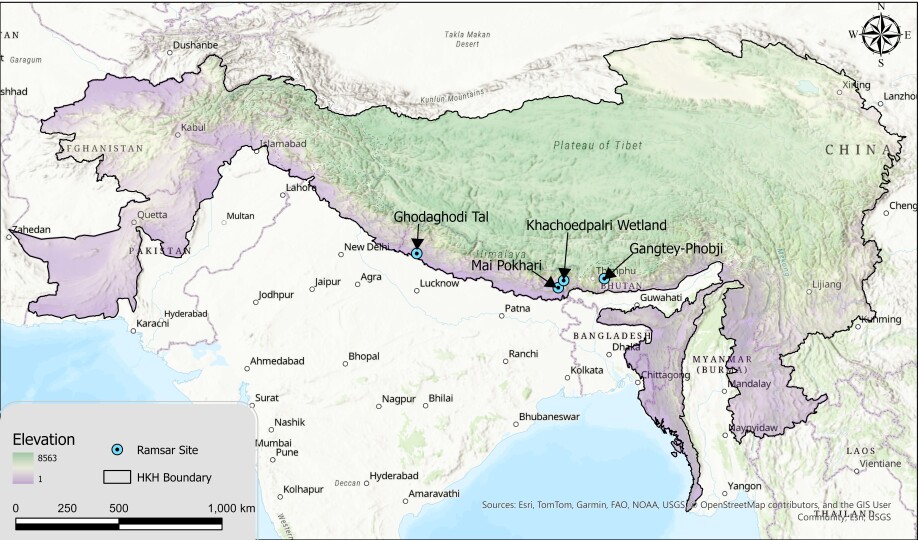
In the lowland forests of western Nepal, lies Ghodaghodi, a wetland complex consisting of large and shallow oxbow lake with 13 associated marshes and meadows surrounded by tropical deciduous forest on the lower slopes of the Siwalik range along the southern edge of the Himalaya. These wetlands and forests serve as a critical wildlife corridor between the lowlands and the Siwalik, supporting several globally threatened species of plants and animals, and rare wild rice.
To the people who live around it, especially the Indigenous Tharu, Ghodaghodi is alive – a sacred presence shaped by gods, ancestors, and centuries of belief. The name Ghodaghodi, which means horse and mare, carries ancient memories. Elders tell stories of divine beings who once moved through the landscape in animal form, leaving behind a lake infused with spiritual powers.