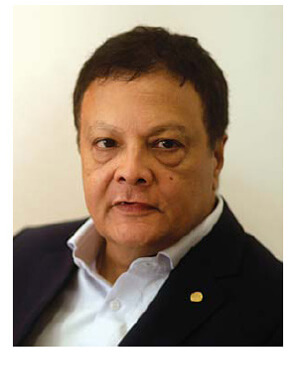
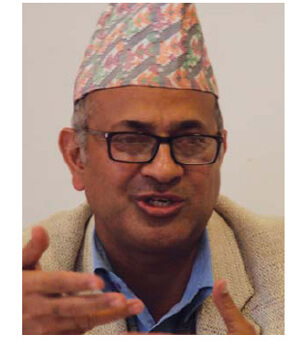
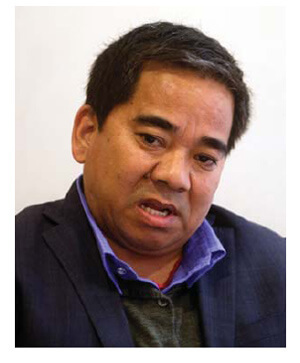
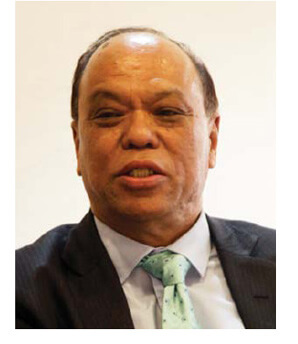
Bankers met at a Himalmedia Roundtable last week to discuss the recurring credit crunch
Nepal’s cyclical credit crunch has re-emerged yet again, putting the economy in the doldrums and portending that the country is not likely to achieve its target of 8% growth this fiscal year.
Banks are not lending any more, bankers are avoiding big loan seekers and new infrastructure projects are not taking off. Hydropower investor Gyanendra Lal Pradhan says: “Almost all banks have shut the door on borrowers.”
Commercial banks have already lent Rs157 billion in the first quarter of the current fiscal year, and they do not have any more loanable funds. One of the major reasons behind the current liquidity squeeze is the government’s failure to spend its development budget.
When Nepal got a strong and stable government after years of war and political instability, banks had hoped that development budget would now be mobilised more efficiently and they would not face a crunch in the middle of a fiscal year.
However, even the strongest government ever with a technocrat Finance Minister has failed to fix the problem of spending the bulk of capex only towards the end of a fiscal period. This has resulted in the scarcity of loanable deposits for the third year in a row, turning it into a chronic banking crisis.
Read also:
Banks biting off more than they can chew?, Suman Joshi
Why the private sector is spooked, Ramesh Kumar
The government has collected Rs303 billion in revenue so far this year, but only Rs245 billion has been spent. And the largest chunk of expenditure is for recurrent expenses, which does not help ease the credit crisis. Almost Rs58 billion remains unspent in the state exchequer.
But experts say the government’s inability to mobilise development budget is not the only major reason behind the recurrent credit crunch. At a Himalmedia Roundtable last week, bankers blamed the government for not spending its development budget efficiently. But they also admitted that there are other factors at play. Excerpts:
Ashoke SJB Rana
CEO, Himalayan Bank
The political transition may have ended, but the banking sector is still in transition. Banks have been forced to increase their paid-up capitals, and take stricter and even impractical measures to collect customer details to help the government combat money laundering. This has hampered deposits at a time when there is a huge demand for credit. And imports have surged like never before, further compounding the crisis. It has become the new normal to lend up to 78% of loanable deposits within the first quarter of a fiscal year. This is scary.