"I don’t think we get many tourists at this time of year.” The Mongolian airline official looked doubtfully at the lines of stocky Mongols lined up at the Hong Kong airport check in desks.
“Mostly only foreigners coming for business. Winter in Mongolia. It is cold.” In Ulaanbaatar it is dark when we land but the roofs and streets are white, and pavements packed with snow and ice. In the gloom, plumes of horizontal smoke gush from tall chimneys beyond the highway– the city is heated by coal, and there is an acrid taste in the back of my throat.
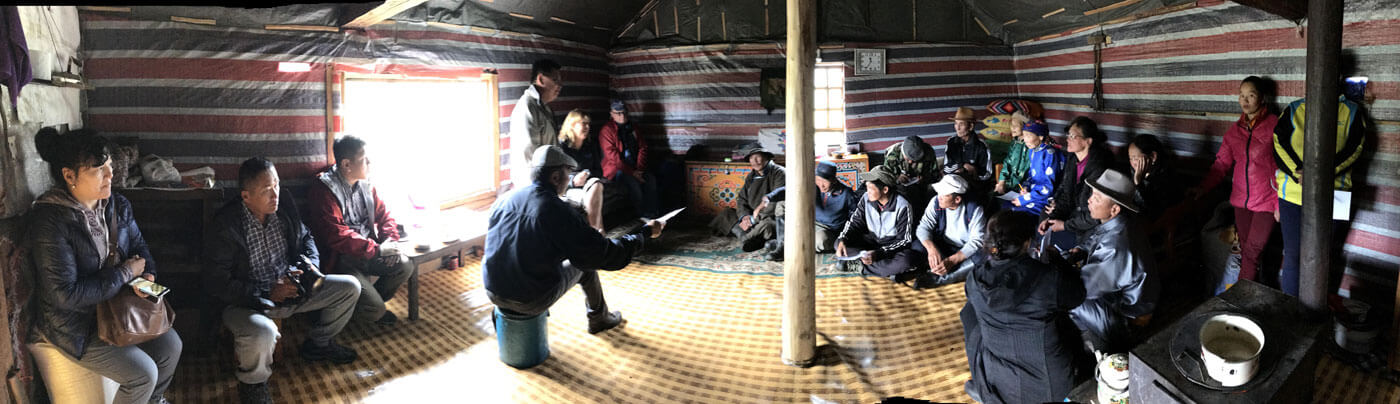
Actually it is almost always cold in Mongolia. “We have such a short summer -- the tourist season is only a couple of months in July and August.” says Shatra, swathed in cashmere fleece and fur as we head out of the city in the early morning dark to drive two days, yes two days, to the remote Mongolian town of Khankh, on the northern border adjoining Russia. Our task for the week is to train locals to help them improve ecotourism in the Khuvsgul Lake National Park. This settlement on the Siberian end of the lake is best accessible in winter when the lake freezes solid.
Our Mongol team, in a convoy of three warm SUVs, take their equipment seriously. They do not venture outdoors without layers of high tech clothing, big jackets, hats, gloves and scarves. Soon I discover why. The unforgiving temperatures are never less than 20C below zero and one night it reached up to minus 47C. Cold enough to send shooting pain through a carelessly ungloved hand and make my track-shoed feet ache.
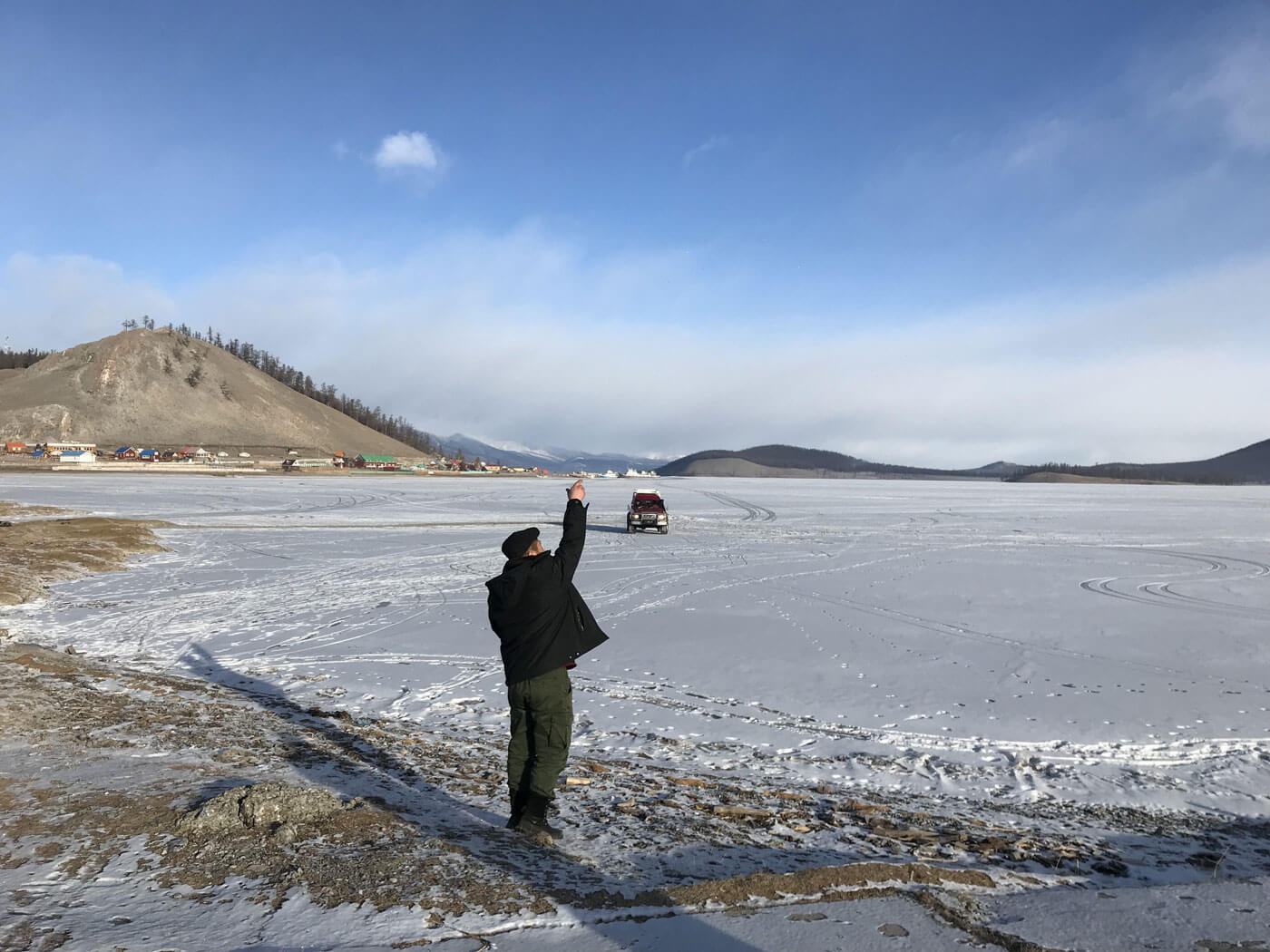
From then on I wear lined hiking boots and our leader Badral, indulging me with his impish smile, gives me some serious gloves to supplement my wool mitts. Even the vehicles wear blankets on their bonnets at night, and one diesel jeep had a brazier fire lit underneath to thaw the engine.
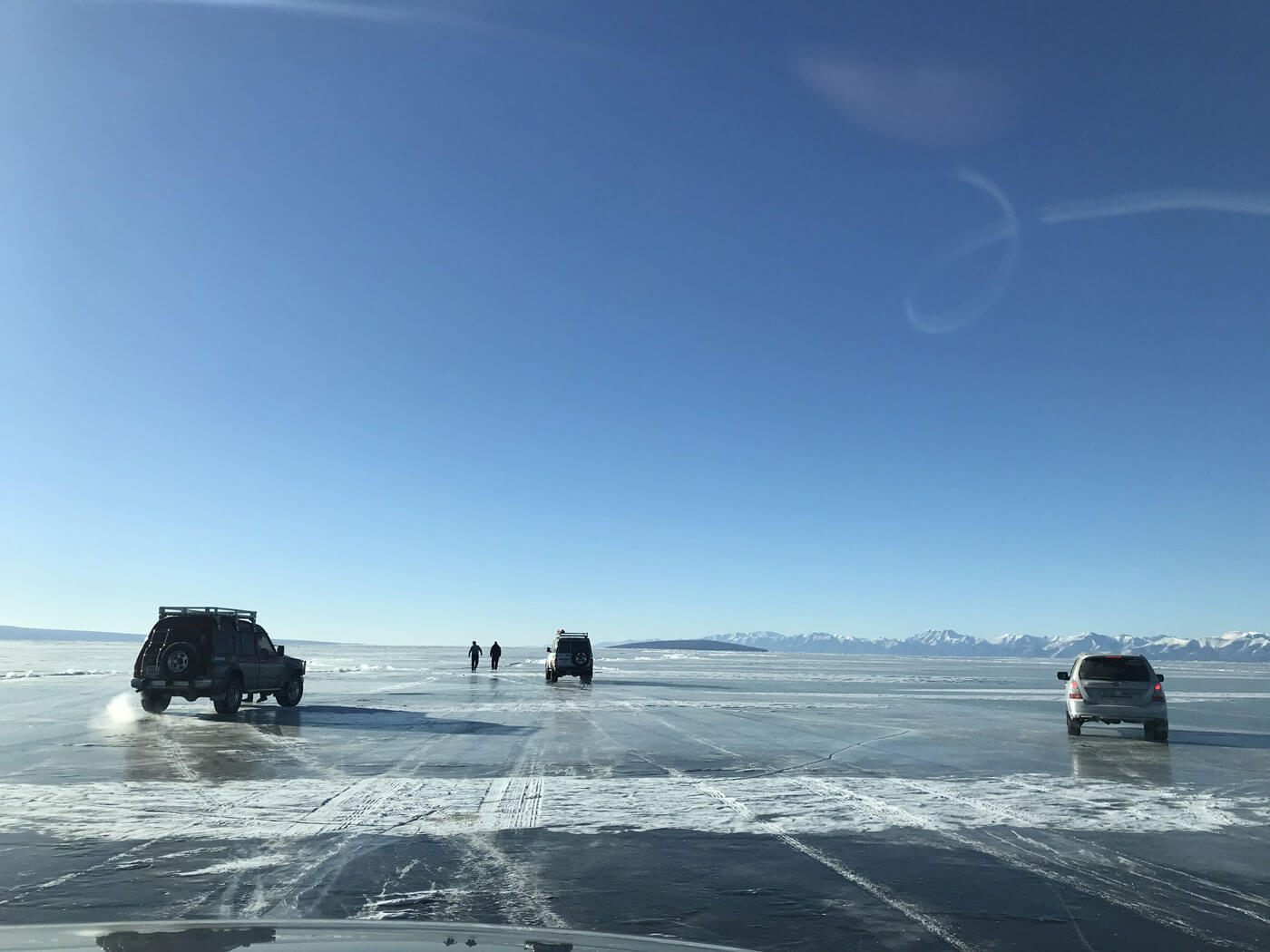
The huge wide open spaces of Mongolia release the soul and make the heart sing. The white snowy steppe reveals intricacies of shadows and colour as the low winter sun traverses the amphitheatre of the vast blue Mongolian sky. We drive north and west for 12 hours on a good road lined with packed snowdrifts, flurries of spun silver blowing across the surface and black ice lurking in treacherous corners. A frozen veil lines the inside of the car windows.
Our cavalcade stops for a snack –- boar and horsemeat -- and three well-kept mastiffs appear out of the empty landscape to politely beg for titbits. In the monochromatic landscape, a man in a crimson deel and turquoise sash pushes his car back from the ditch into which it had skidded. A flock of sheep pick their way through the snow, herded by a boy huddled on his brown pony. Herds of horses with shaggy winter coats fend for themselves, pawing at the unpromising ground to find something to eat.
The short days are framed with an insipid dawn and a lingering rosy sunset that sucks all colour from the countryside. As we pull into Murun with headlights blazing for the overnight stop, a sliver of new moon rises above the harsh black outline of the hills.