Diplomats are notorious for saying nothing at great length, so what a pleasure to find a festival devoted to those who commit to print and publish: the first Words Beyond Borders International Literature Festival gathered in Neemrana, Rajasthan.
The festival in India last month celebrated that specialist class, the diplomat who writes. This inaugural edition in collaboration with Raffles University and Neemrana Fort Palace, was hosted by FOCAL (Foundation for Culture, Arts & Literature) and Dr Dnyaneshwar Mulay Foundation with a range of sponsors.
A mixed bag of some 75 speakers comprised diplomats, civil servants, academics, authors, readers, thinkers, artists, filmmakers and literary voices from more than 30 countries, including India, Nepal, South Africa, France, Turkey, Spain, USA and South Korea.
Conversations ranged through fiction, history, poetry, politics, travelogue, memoir and international affairs. Sessions over the three days took place in the university precinct attended by undergraduates from around the region.
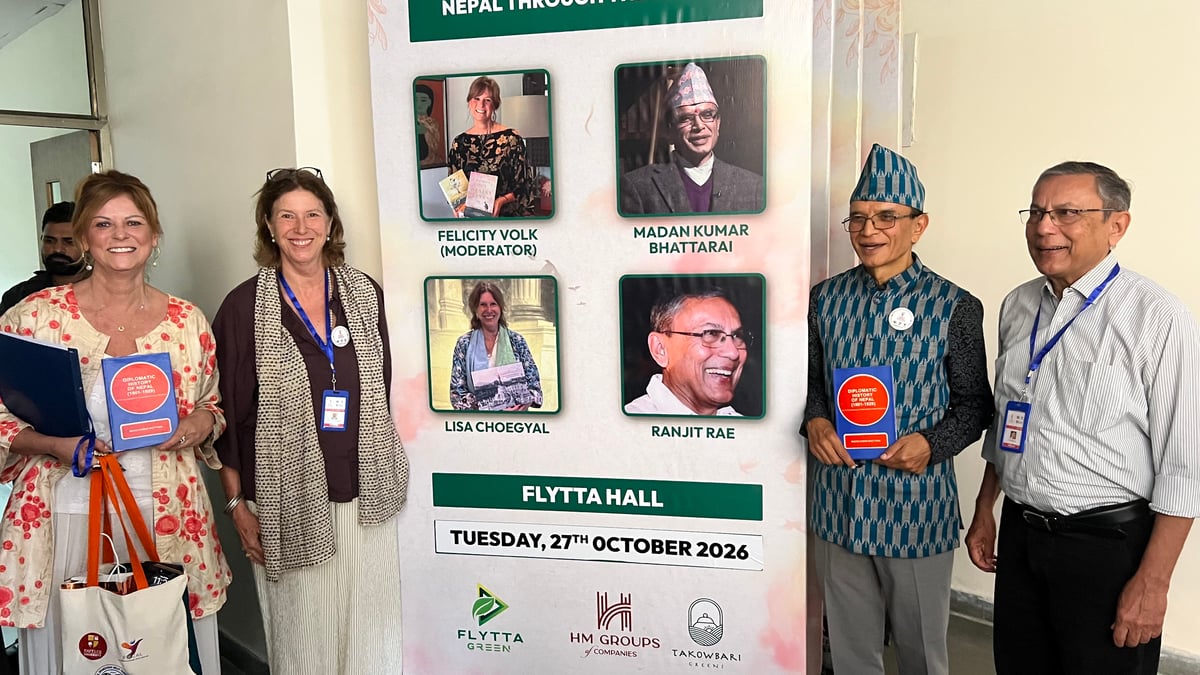
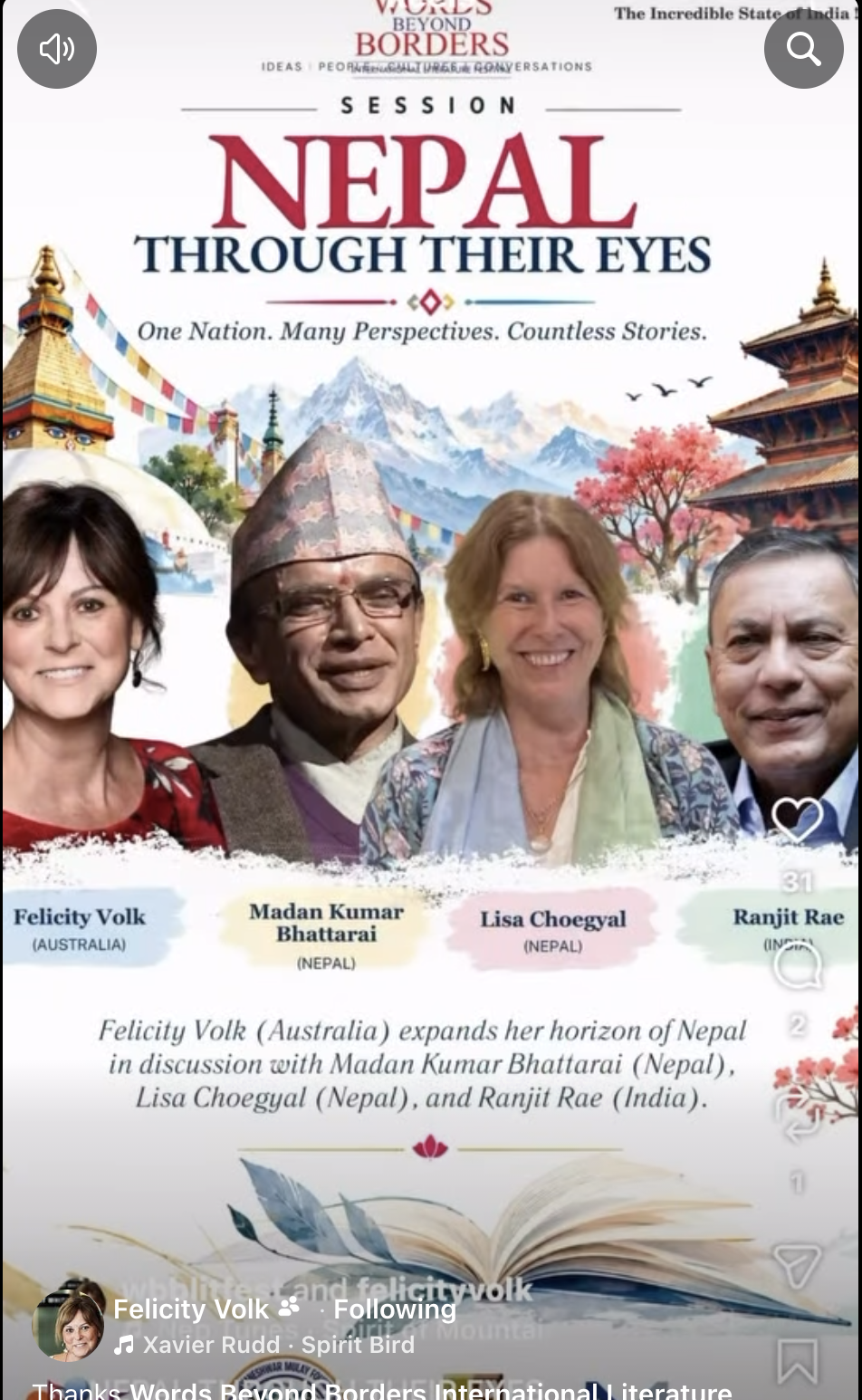
Despite my tenuous credentials amidst these intellectual luminaries, I was invited to participate in the panel ‘Nepal Through Their Eyes’. Chaired by twice published novelist and former Australian Ambassador to Nepal, Felicity Volk, other panelists were former Indian Ambassador to Nepal Ranjit Rae, and the walking encyclopaedia of Nepali history and former Foreign Secretary, Madan Kumar Bhattarai. Felicity had us addressing prepared questions that treated the audience to a masterclass of Nepal’s turbulent past, present and likely future.
Speakers were accommodated in the sprawling ramparts of the Neemrana Fort Palace, every room unique and quirky, a triumph of ambitious hotel restoration. Each evening we found our way through the fort’s labyrinthine levels of stone staircases, arches and passages to a historic terrace or courtyard where a Rajasthani banquet would be served by extravagantly turbaned waiters, entertained by dancers, singers, musicians and magicians. Festival director Dr Dnyaneshwar Mulay and the ubiquitous and meticulous event curator Rahul Jain were on hand to solve any issues.
The opening session was graced by the current Laureate for Irish Fiction Eilis Ni Dhuibhne, and the stories of far-flung guests ranged from a former Latvian Foreign Minister born in a Siberian gulag, to a North Korean deputy ambassador who defected to South Korea with his wife.
A stylish Spanish Consul came from Melbourne to talk about his espionage thrillers, an Italian professor managed a lively debate about Europe, and retired German Ambassador to Nepal Thomas Prinz was interviewed about his historical crime novels.
Closer to home we met Vikas Swarup, the Indian diplomat author of Slumdog Millionaire, as well as other Indian ambassadors, professors, soldiers, civil servants and state government representatives, including writers from Assam and Andhra Pradesh. The retired diplomats and officials far more forthcoming than their serving counterparts who joined in from New Delhi.
POETRY AND STATECRAFT
Diplomats have been writing books for as long as English literature has existed, which says something about the career that sends highly educated people abroad, hands them rare access to power, and leaves them with stories that cannot be told in official cables.
Since Geoffrey Chaucer wrote The Canterbury Tales after serving on royal missions to France and Italy, poetry and statecraft have been entwined. The Renaissance made the pairing explicit. Sir Thomas More, ambassador and later Lord Chancellor, wrote Utopia partly while on an embassy to Flanders.
Sir Henry Wotton, serving in Venice, produced the famous quip that an ambassador is ‘an honest man sent to lie abroad for the good of his country’, and Sir Philip Sidney blended courtier, envoy and poet. Machiavelli drew The Prince from his years as a Florentine diplomat.
By the 18th century, across the Atlantic Benjamin Franklin and Thomas Jefferson wrote voluminously from their postings in Paris. Franklin's Autobiography is a diplomat's reflection on life. As the foreign service professionalised, Harold Nicolson turned diplomacy itself into a literary subject.
Lawrence Durrell wrote about the Mediterranean while serving as press attaché, and the Alexandria Quartet drew on that world. At the zenith of the genre, diplomats Pablo Neruda, Octavio Paz, Saint-John Perse, Giorgos Seferis and Gabriela Mistral all won Nobel Prizes for Literature.
Today the tradition continues and memoirs by retired ambassadors compete with fiction in airport bookshops, but the intrinsic tension remains: a diplomat's loyalty is to discretion, but a writer's is to the truth.
Undaunted by these dilemmas, subsequent Words Without Borders literature festivals are planned across South Asia, in partnership with universities and colleges. Felicity Volk suggested at the closing ceremony that more relevant engagement with local students as participants as well as spectators would enliven and enrich the proceedings.
Festival guests seemed keen to see such a worthwhile initiative carried forward successfully into the future.
Lisa Choegyal has made Nepal her home since the mid 1970s, and is New Zealand's Honorary Consul in Nepal. She is the author and co-author of several books including Everest: Reflections on the Solukhumbu, Nepal Himalaya: A Journey Through Time, and Kathmandu Valley Style.