
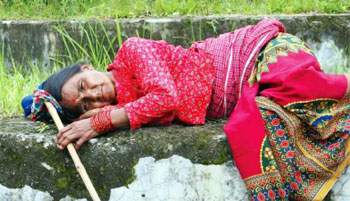
After leaving her children to the care of relatives, Parbati goes door-to-door to educate people about an upcoming health camp in Bhedabari of Kaski district.
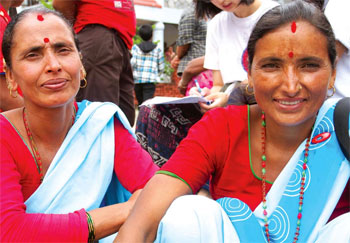
“They might be illiterate and poor, but their hearts are full of love,” says physician Narendra Kumar Shrestha about the female volunteers who contribute to the success of his mobile rural clinic at the Bhedabari Primary Health Centre.
“Prevention is better than cure,” says Shrestha, “and this is where the awareness and followup work by the female volunteers is crucial.”
Parbati and other volunteers tell local mothers about the need for clean water, hygiene and sanitation, nutrition and family planning. Indeed, most health problems in rural Nepal like prolapsed uterus or infections can be prevented. “It is not enough to provide free medicines, we need awareness to teach people how to improve their immunity,” says Shrestha.
The health camp in Bhedabari is supported by UK-based The Mountain Trust, which treated 680 patients in a nine-hour day with eight specialised doctors, five nurses and two lab technicians.
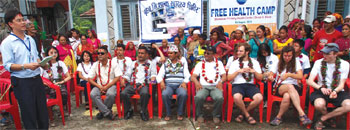
People in rural areas may not have as good access to modern medicine, but they possess a lot of traditional knowledge, which helps them to fight illnesses.
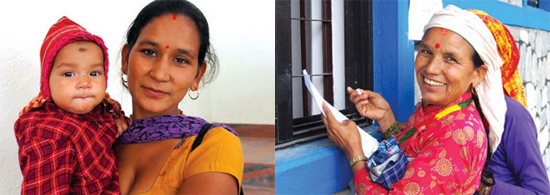
The health camps are also social gatherings where villager meet friends and relatives they haven’t seen in a long time. People put on their best clothes and are proud of showing how much their children have grown.
Read also: Coming out time, Sunir Pandey