
 |
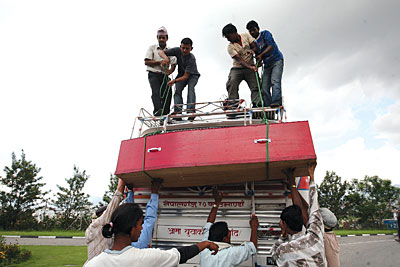
It's a depressingly familiar scene. But you'd be challenged not to shed a tear at the sight of a coffin being wheeled out of Tribhuvan International Airport and loaded onto a Tata Sumo. A woman wails as she is held back by sombre relatives, "What am I going to tell your daughters?"
Last Tuesday, the Guardian posted a video online titled 'Nepali Slaves in the Middle East'. In it, Pete Pattison c harts the plight of Nepali migrant workers, a 1000 of whom leave the country each day. It's hardly a new story, but it remains a compelling one.
There's no doubt that despite the hardship of working in climes where you "sweat from the soles of your feet", many feel it is worth the risk. Millions of Nepalis work abroad, after all, and the billions of rupees they make are keeping the economy afloat. Is it not to be expected that some will fall into the cracks, and inevitably, make the news with their misfortune?
Yet the circumstances of those who are duped by agents and, in the case of Lila Acharya, killed for trying to escape exploitation and beatings, are heartbreaking. So too are the nullified prospects of the emaciated men who, stranded in the UAE en route to Afghanistan without work, passports or visas, cram into a filthy flat and while away their days. Even the better off are undeniably exploited thanks to the lack of protection accorded to them in countries yet to demonstrate that they believe in human dignity for all, never mind the lack of respect at home.