
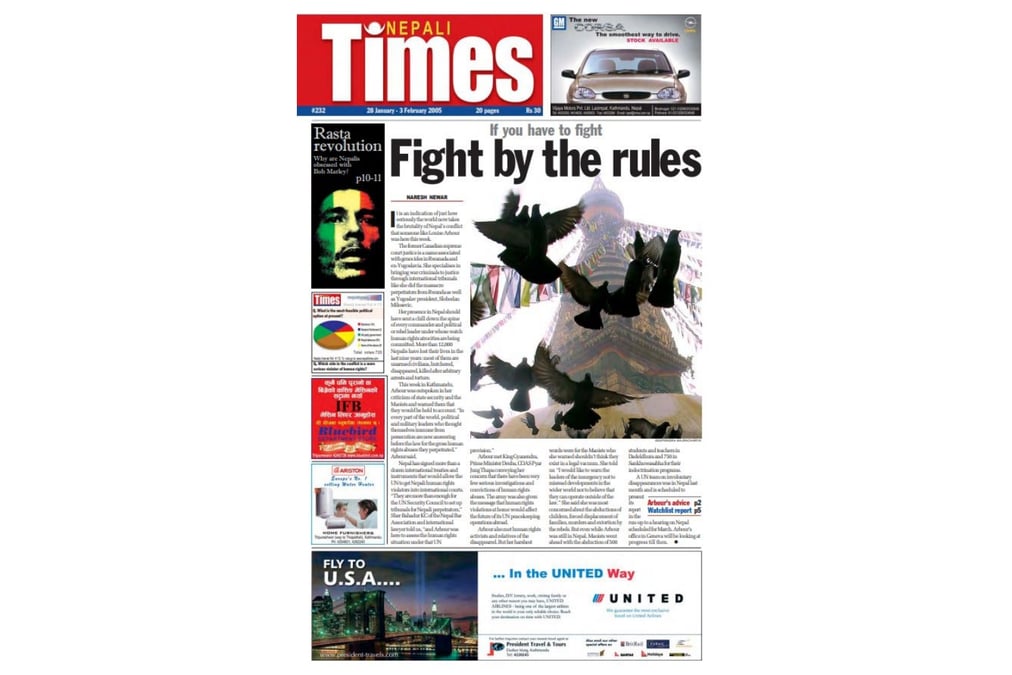
Twenty years ago, on 1 February 2005, King Gyanendra staged an army-backed coup. A few days before that, we had written in an editorial that Nepal was running out of options: even moderates were being pushed to be radically republican or radically royalist. There were also signs of infighting within the Maoists, including desertions and resistance.
The coup did not protect Gyanendra. Within 14 months he was sidelined and a peace accord to end the Maoist insurgency was put forward. In another 3 years, the monarchy would be abolished by the Constituent Assembly.
An excerpt of the editorial published in issue #232 28 January – 3 February 2005:
King Gyanendra…is now down to just two options: consolidate his takeover and scrap the constitution once and for all, or roll back October Fourth and restore a semblance of democracy. The international community has reportedly sent unambiguous signals that he desist from the temptation to go it alone. By now, it must be clear even to him that the musical chairs game of Article 127 can’t go on. The king therefore needs a face-saving way out, and the only one we see is for him to join hands with a rejuvenated political process.