After a jam packed 2006, Nepal’s nascent democracy cautiously inched forward under an interim constitution and eight parties going into government. However, there were concerns that the alliance were making no effort to listen to the needs of the Madhesi, Dalit, and indigenuos communities.
The Madhesi were in particular incensed, because they felt that the new political system was not being fair to them.
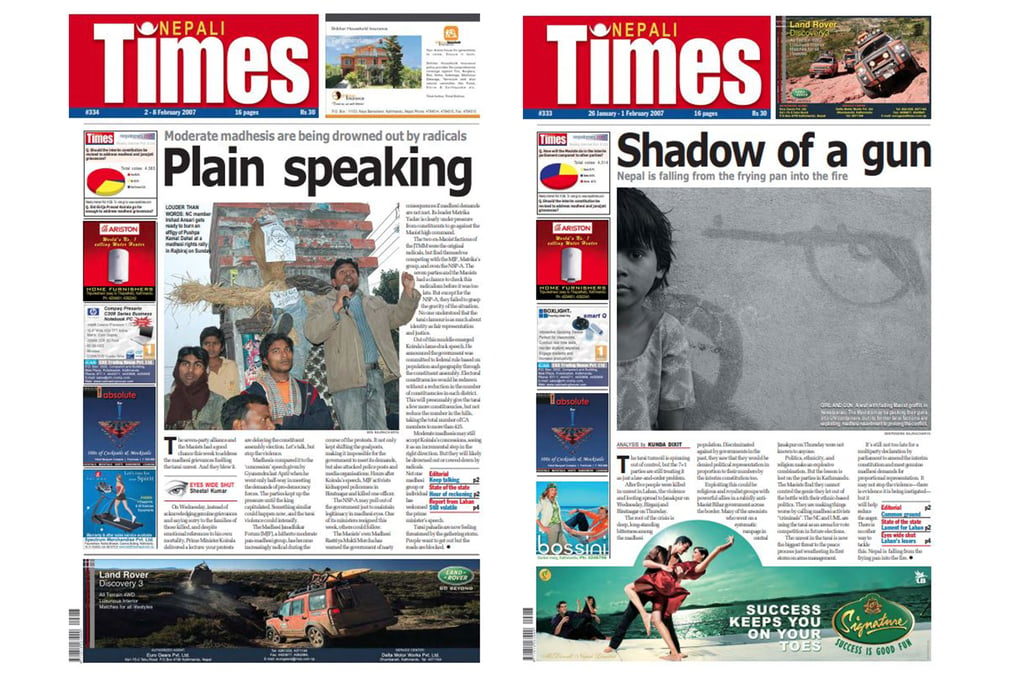
“Discriminated against by governments in the past, they saw that they would be denied political representation in proportion to their numbers by the interim constitution too,” wrote Kunda Dixit on the front page of issue #333.
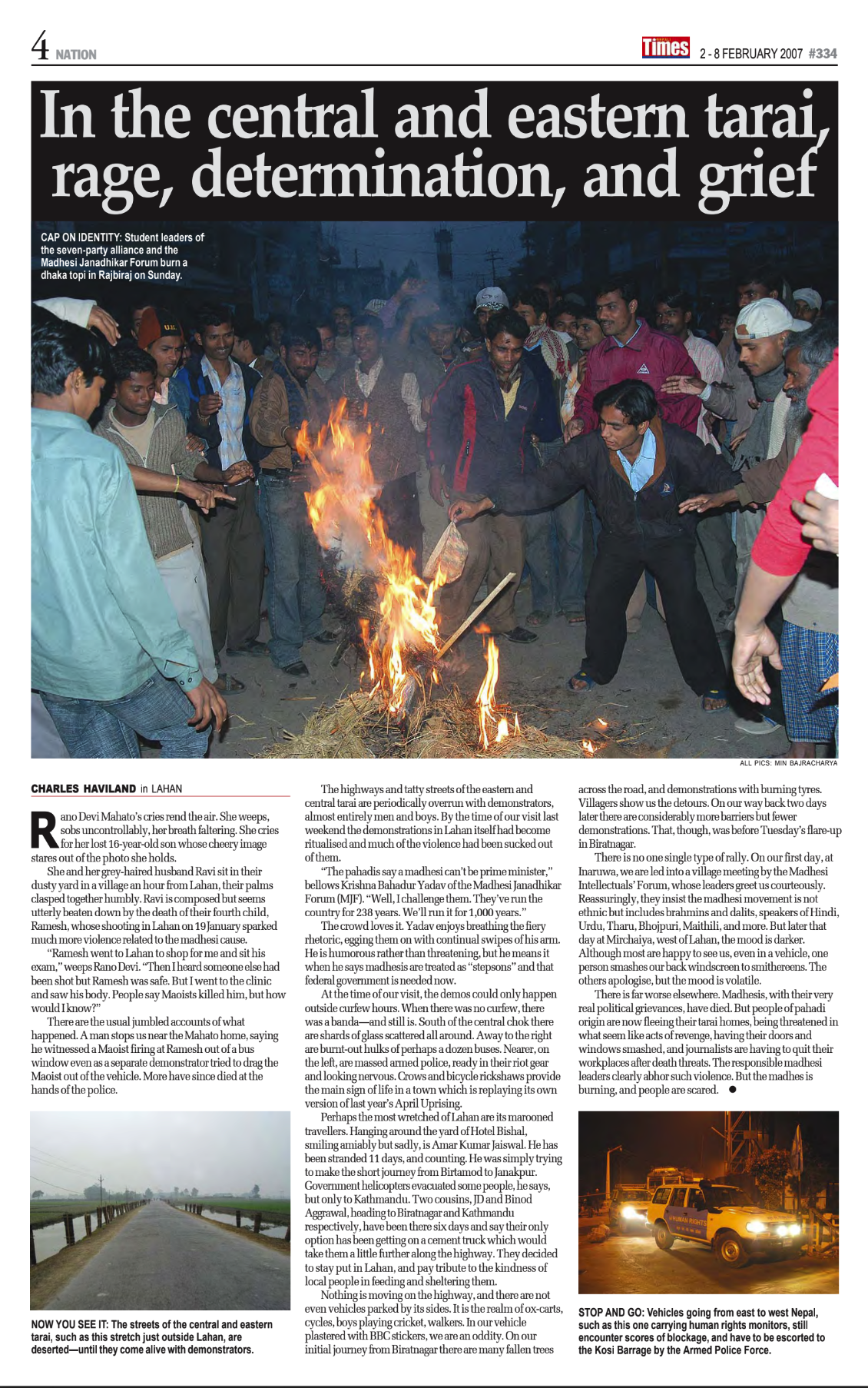
Five people had been killed in unrest in Lahan, and there had been violence and looting in Birganj, Biratnagar, and Janakpur.
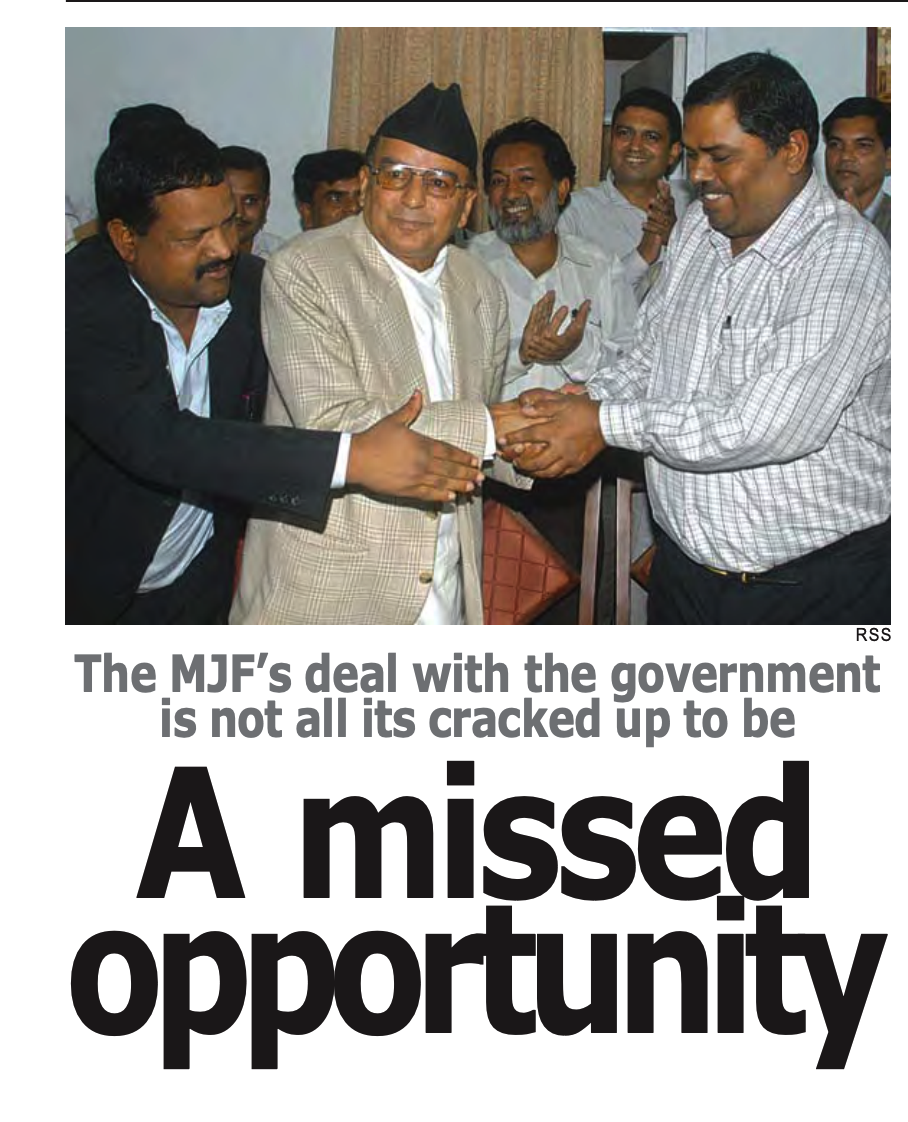
The Maoists found they could not control the genie they let out of the bottle with their ethnic-based politics. The radical Janatantrik Tarai Mukti Morcha (JTMM) had splintered from the Maoists and was demanding n independent Madhes, and there were other groups that were willing to hold talks with the alliance in Kathmandu.
Generally, the three main Madhesi demands were a federal state, proportional representation, and re-demarcation of electoral constituencies to take into account population density in the Tarai.
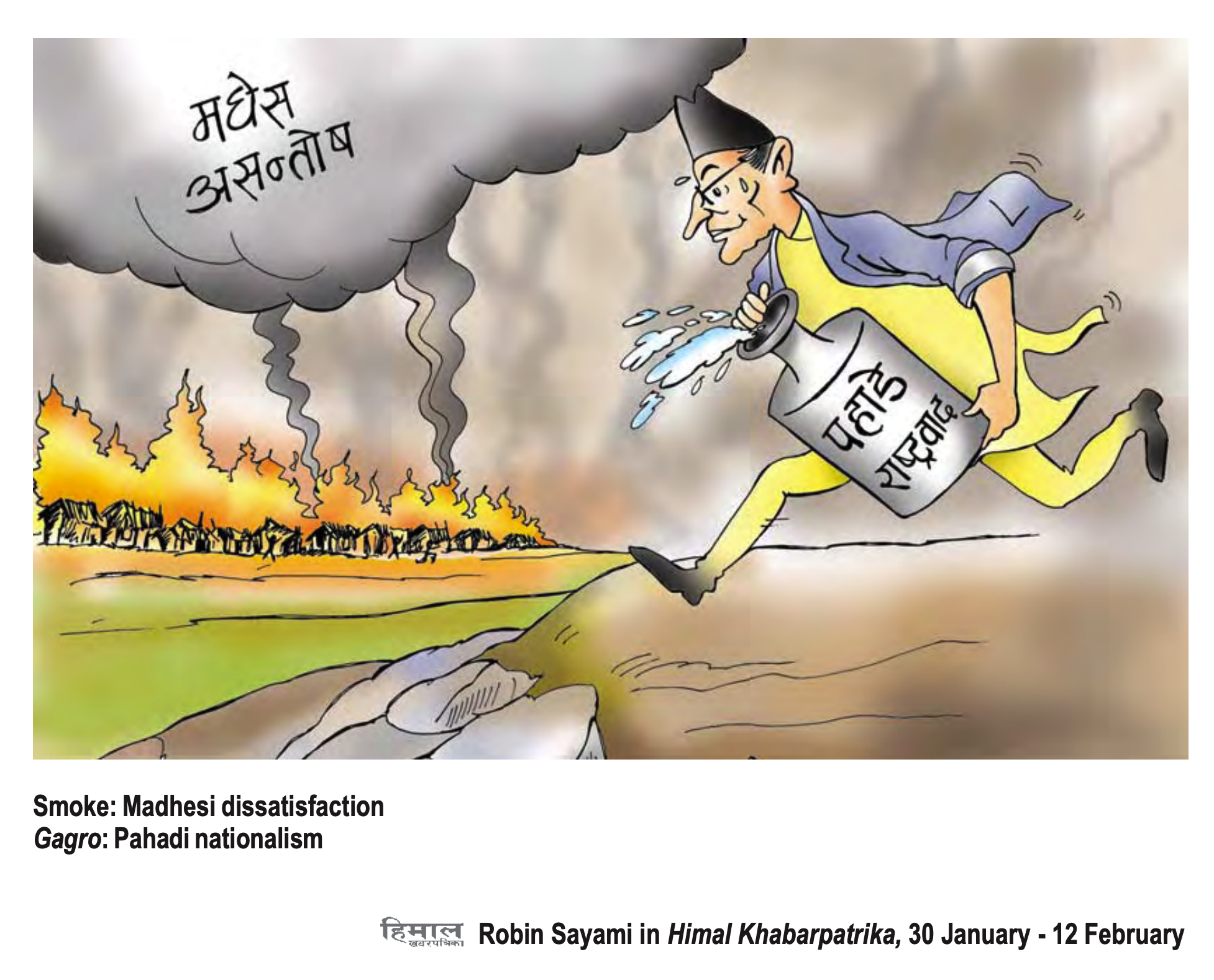
“It’s time for the parties to start looking at the tarai as more than just a vote bank, and to seriously begin to redress historical wrongs,” read the editorial in #334. Yet there was speculation that dismissed the violence, as a plot by royalists to subvert CA elections, or Maoists inciting hatred between hill annd plains and pahadis to keep themselves in power.