
They were hiding in the forest above the river. Bruised and in total shock. Five-year-old Kirti Tamang watched as her mother and sister were swept away by the angry flood. She was flung onto the slope and survived, and was later found in the forest with two other children.
Kirti has not been able to speak. Another boy from her school, Biswas Tamang, is even more badly bruised, his school ID around his neck. His schoolteachers, who found him, use the information on his ID to get ahold of his mother, who lives in a neighbouring district and had sent her child to attend an English-medium public school in Betrawati.
I sat looking at these scenes. The emotion swept over me like the flood itself. I did not take my camera out of its case, it seemed disrespectful. All I could do was bear witness, and share in the pain and sorrow.
We had left Kathmandu at 4AM on our motorbikes, and it was dawn when we got to the top of the pass at Tokha. We stopped for a quick tea along the way, and moved on.
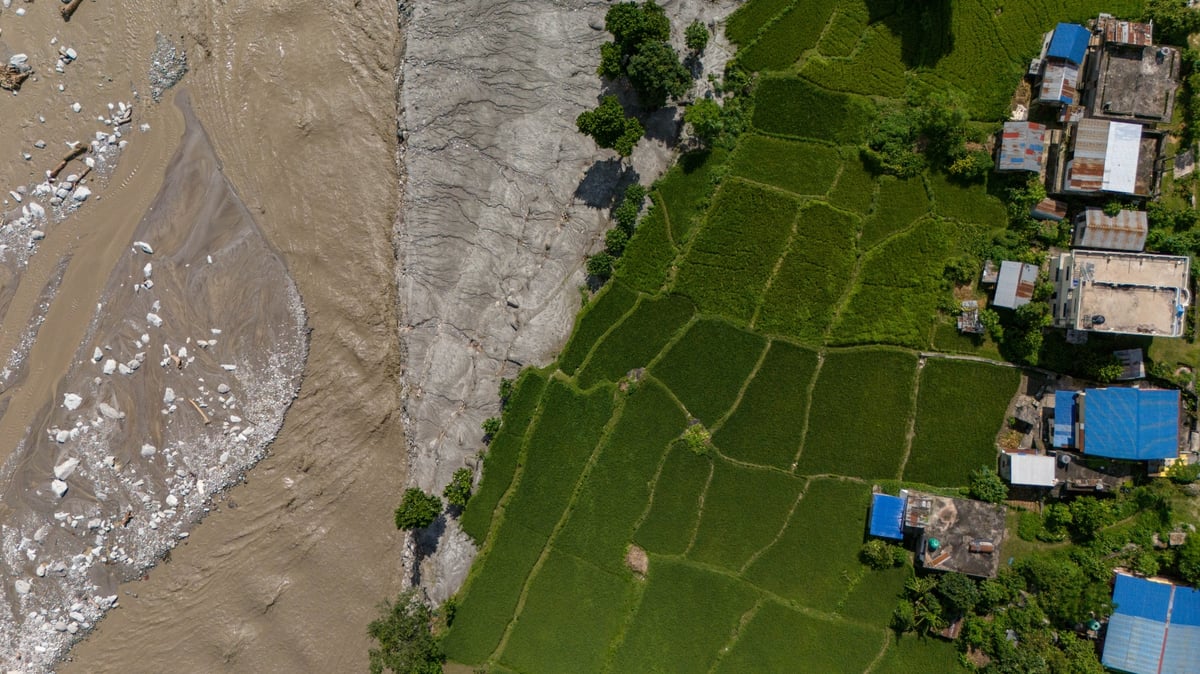
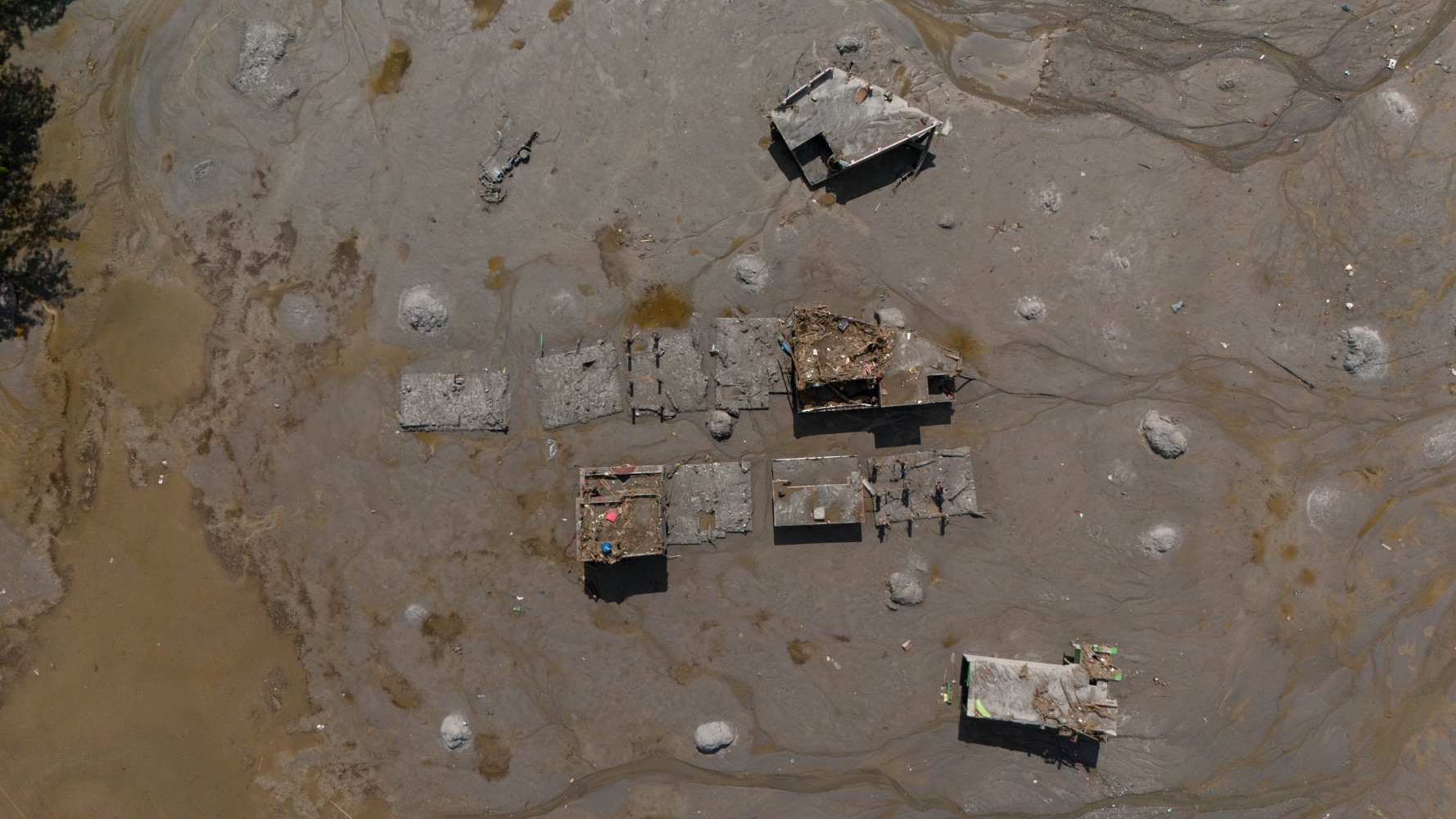
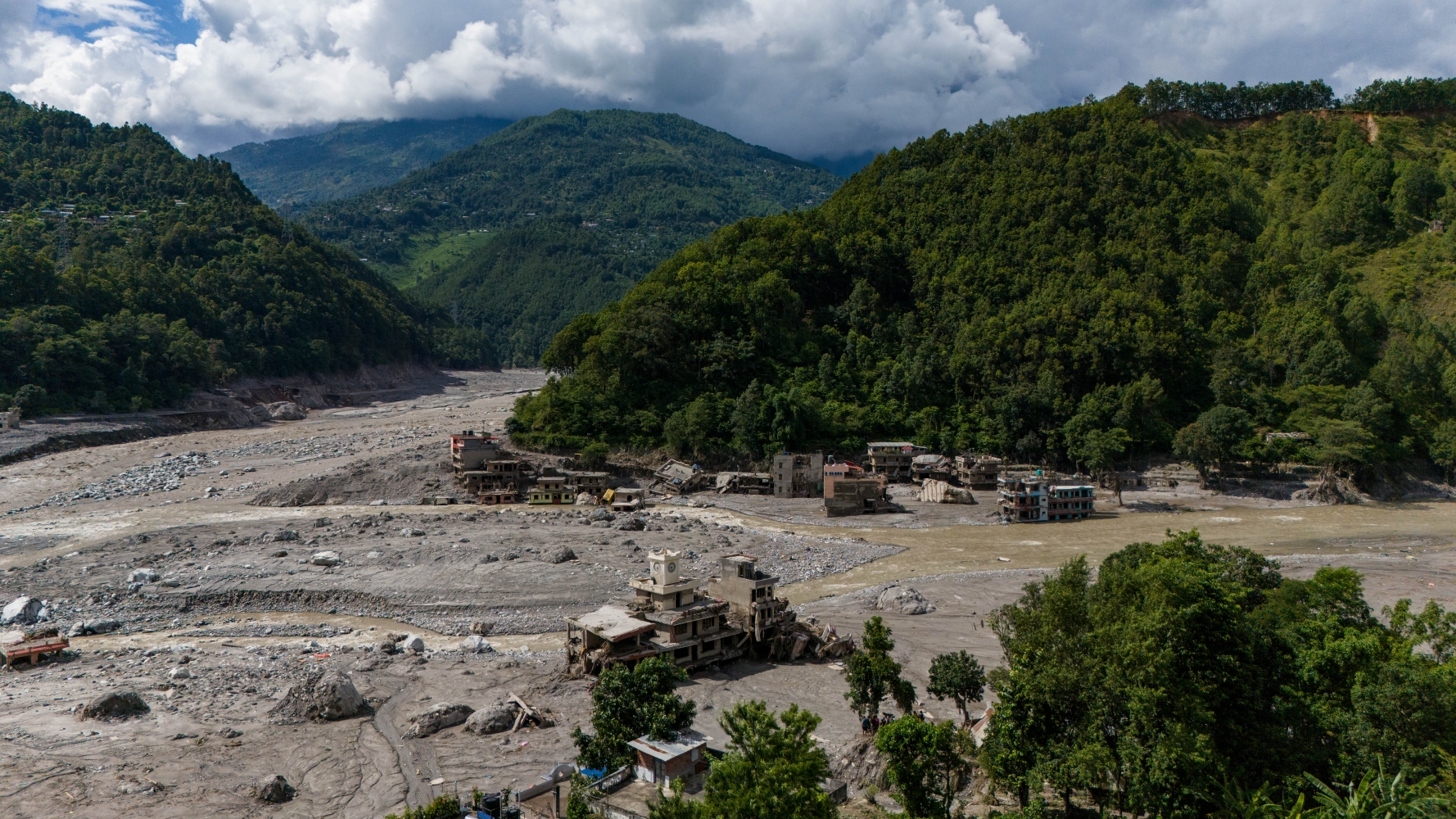
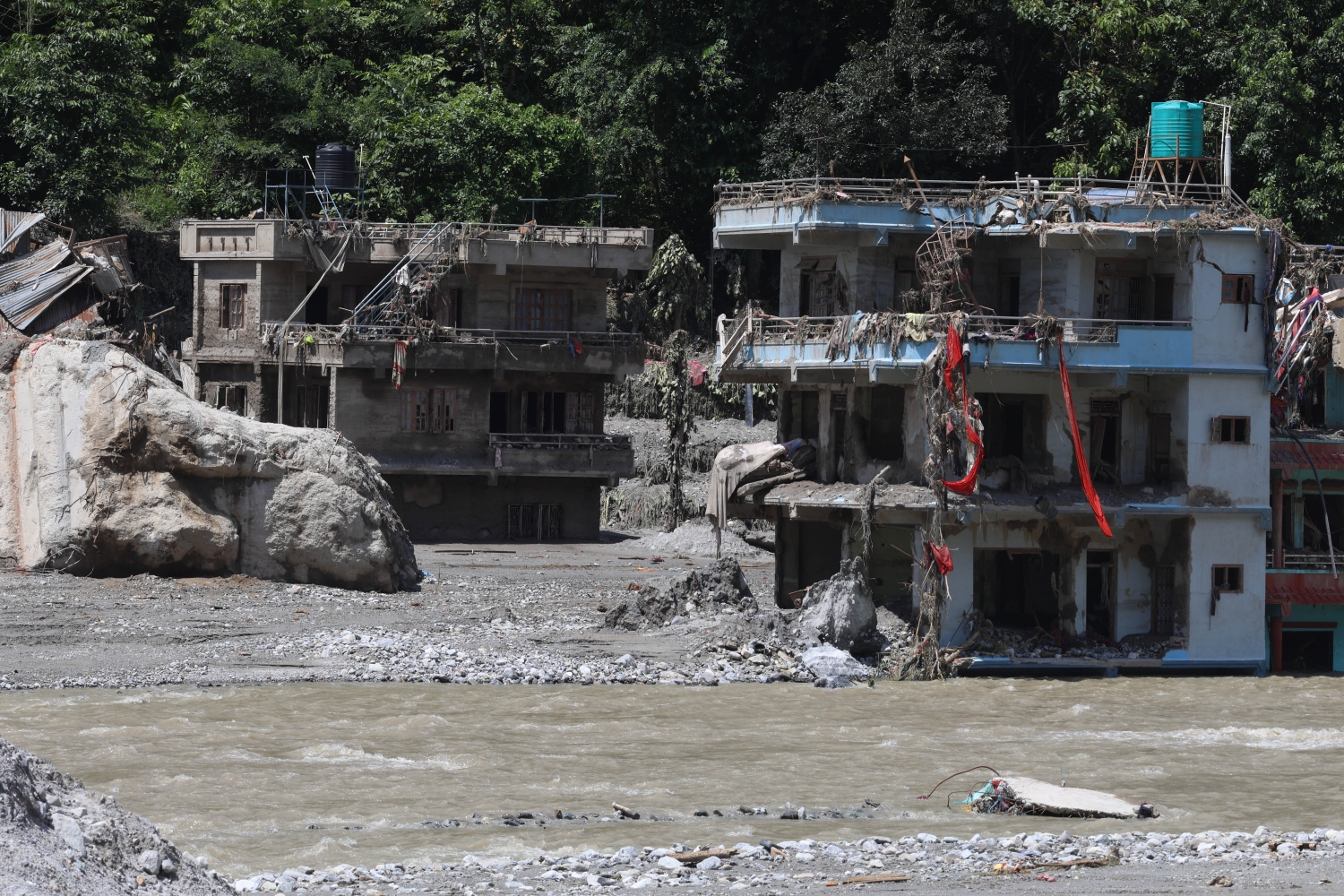
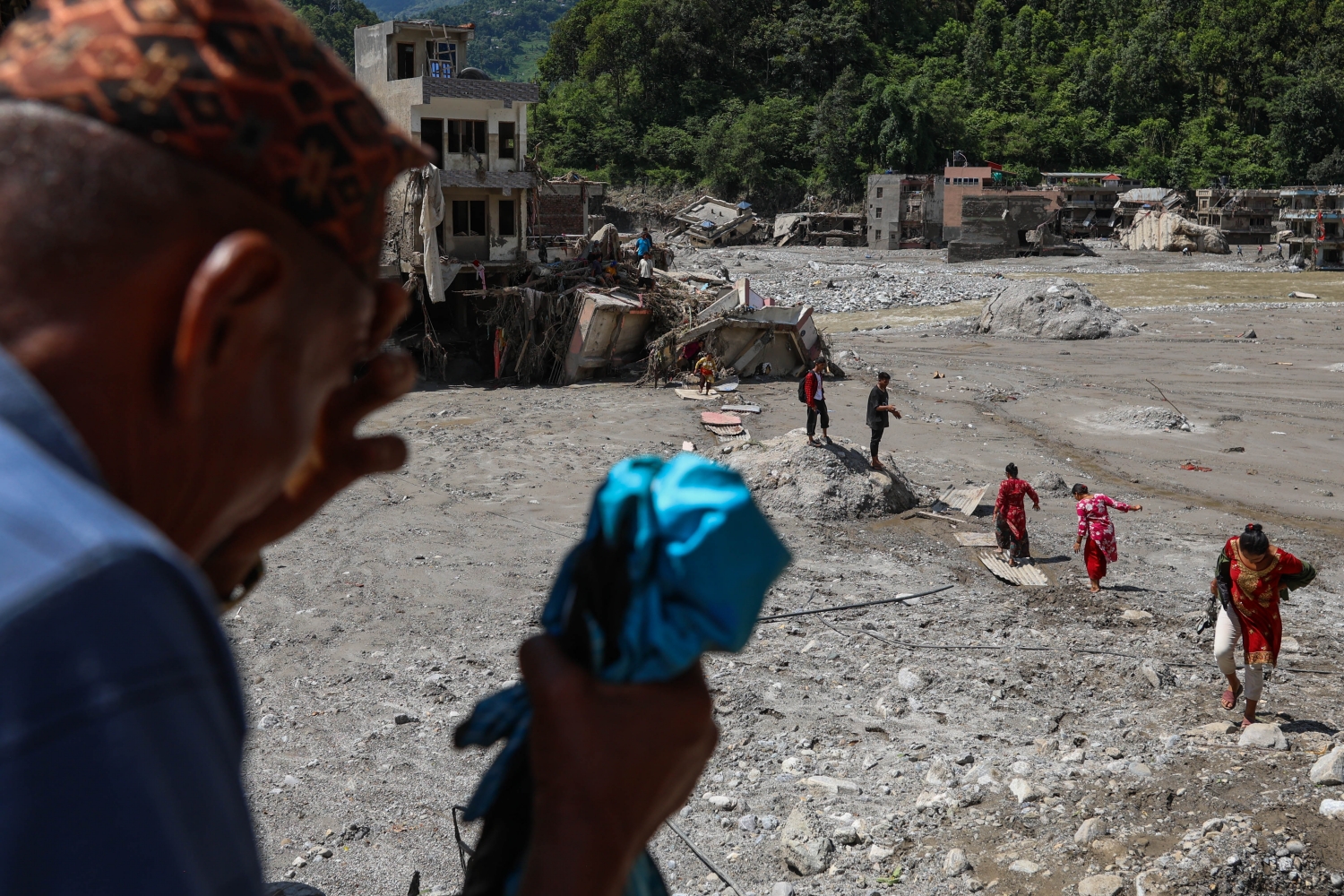
The first signs of death and destruction were soon visible: scars where the river had engulfed entire towns 24 hours before. Edges of forests flattened with muddy trees unbelievably high on either side of the river. Debris dangled from the roofs of buildings three storeys up that still stood. Overturned and half-buried tipper trucks.
Trisuli Bazar was gone. Devighat was gone. The road further up to the Chinese border was gone. We pushed our bikes through forest trails to reach Betrawati at 1PM. A distance of 10km I had done before in a few minutes took five hours.
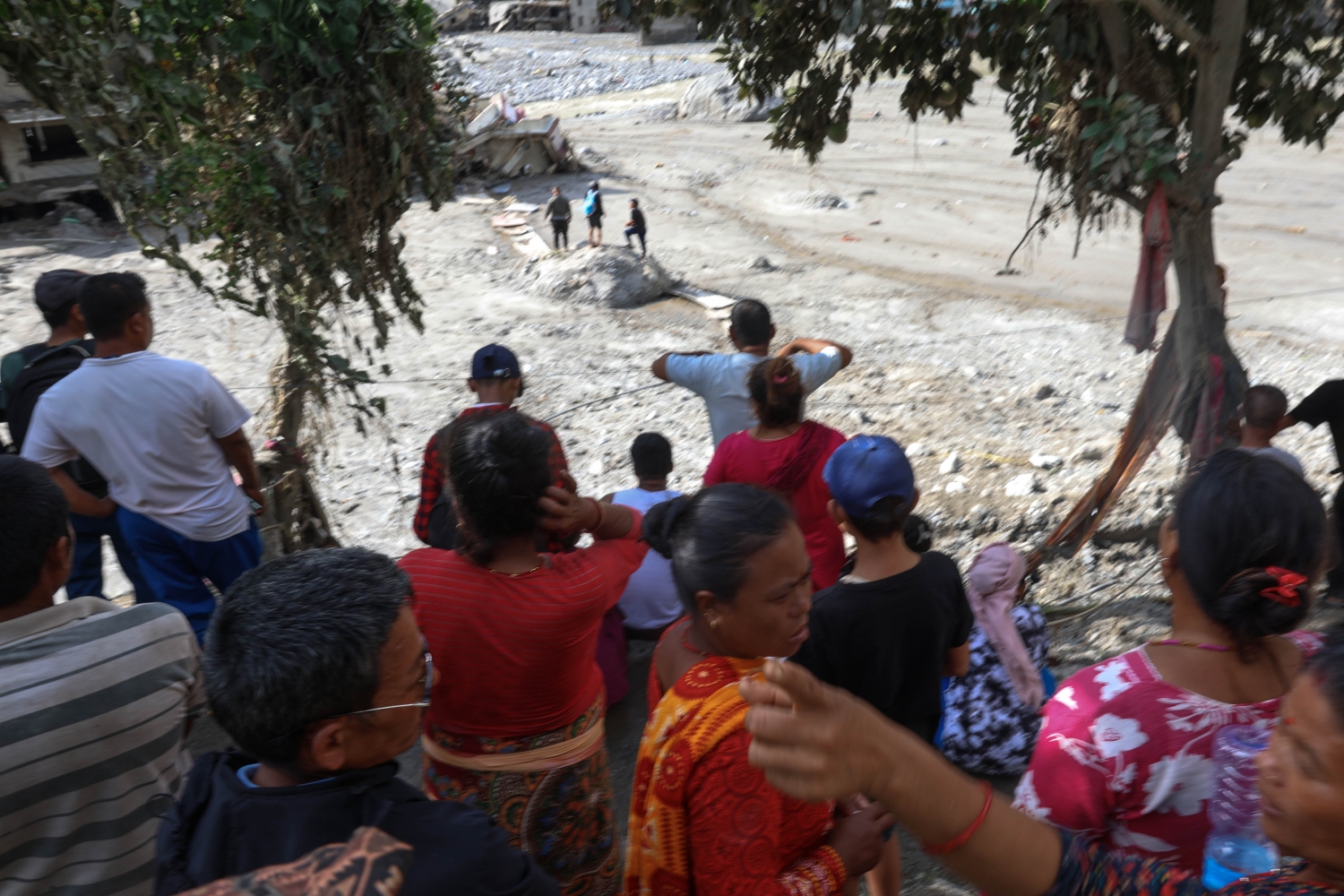
We fell off our bike many times as it slid in the sludge. All along there were streams of people walking down, peering at the muddy banks of the river for signs of relatives carried away by the flood. There were some Chinese, looking for co-workers from a hydropower plant.
Then we saw the bodies. I sat in the shade of a tree, and could not lift my camera. There was a young woman, perhaps 35, covered in sediment outside the walls of what used to be someone’s home.
Her body had been hastily covered. She had painted toe nails.
People milled around to see if she was someone they knew. They covered their noses and mouths with shawls, shook their heads and moved on down.
Finally, a man came. He was her husband. He collapsed silently on the dirt, and was helped by those accompanying him.
COLLOSAL CALAMITY
This loss is colossal. It is a national calamity, sure. But these are also tragedies of thousands of families. You had to be really lucky to survive, or fit enough to out climb the raging brown waters.
Even the ones who can find the bodies of their relatives and friends are lucky, most cannot trace family members they shared tea with that morning. Or sons, daughters, sisters, or parents they held on to until the torrent of mud took them away.
This catastrophe is too big even for the most efficient and well-resourced post-disaster relief organisation to tackle. And even if food arrives and temporary shelters are set up soon, how will so many people ever come to terms with what they have witnessed: the loss of family members, homes, fields, livestock, and property?
I covered the 2015 earthquake, but this tragedy is on a different dimension. I told my editor, I could not do this as a journalist assignment it had to be deeper than that, a situation where what I saw changed me and my outlook on life itself. The impermanence, the feeling of how the universe can vanish in an instant.
The desk asked me to take pictures, interview people, find out their names, ages and how they felt. I could not bring myself to ask those questions. I did finally muster the courage to click some shots with a long lens.
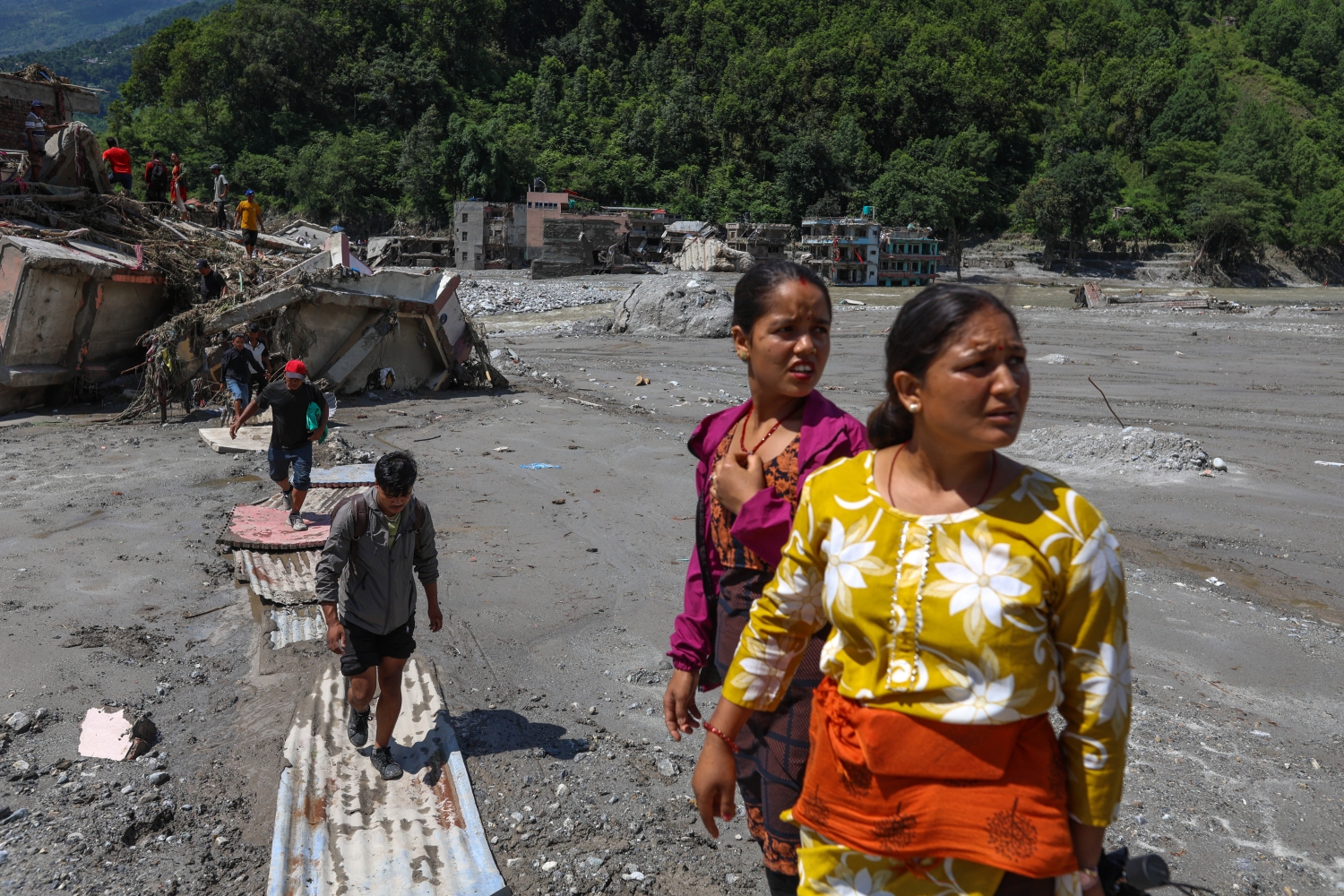
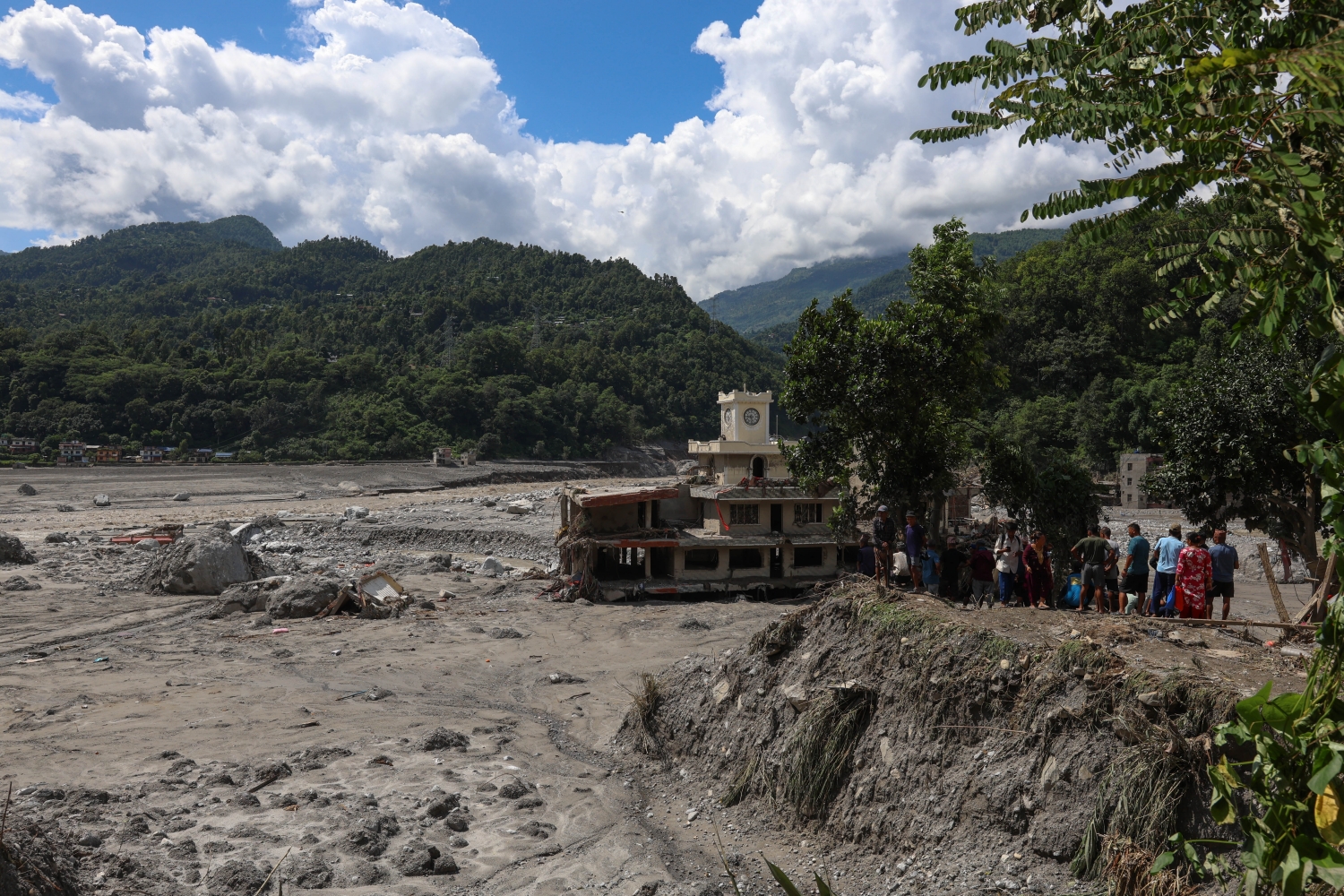
“We had no warning, no one called from up the river to tell us a flood was coming,” said one woman survivor to no one in particular. “One second it was up there, and the next it was here. It moved so fast.”
One thing that struck me was that in all the villages we passed, there were mostly women, children and the elderly. There were very few men — proof of the massive outmigration of young men to the cities and abroad. Some of them are returning to find their homes and families gone.
My guess is that most of those who perished here will be women. And children getting ready to go to school on Wednesday morning.
A Ward Chair came around making a list of survivors. The dead will be subtracted from the list of the living. He had also lost colleagues.
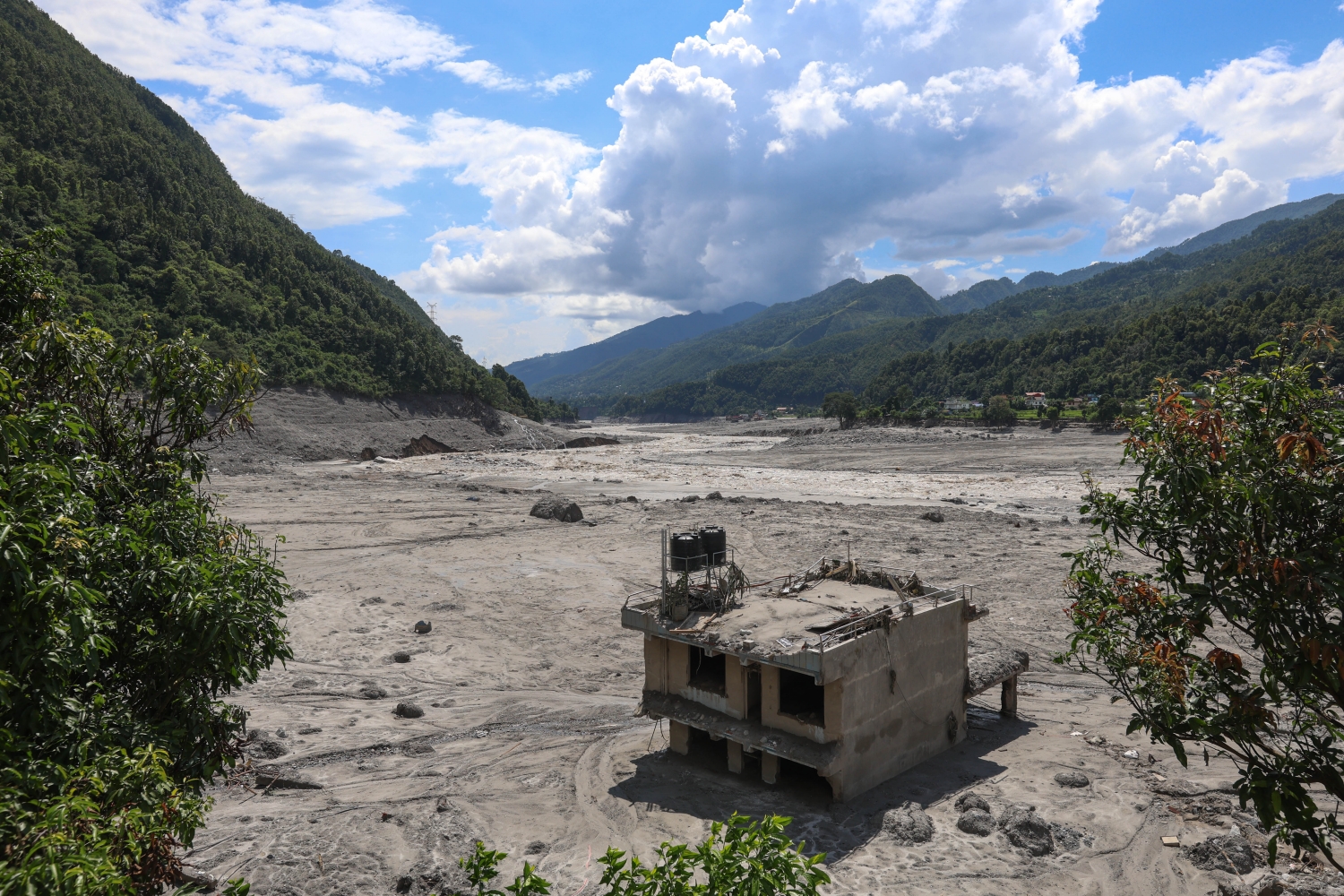
Army trucks arrived, bringing some supplies, helicopters flew back and forth all day long in the deep blue sky. Amidst all this there were pilgrims taking the high road to Dhunche on their way to Gosainkunda for the full moon Janai Purnima festival on Friday. Life, it seems, goes on.
It would soon be dark, so we gunned our bikes to head back to Kathmandu. Local volunteers were preparing to set off on their motorbike, to finally reunite a distraught Biswas with his mother. On the way we saw survivors, trying to find where their home used to be.
If you are looking to support communities affected by the flood in Nepal, donate to the Prime Minister's Disaster Relief Fund here. Additional information here.