
A different diet this Dasain

Controlling your diet and avoiding high protein food will help you enjoy a gout-free Dasain and Tihar

DHANVANTARI by BUDDHA BASNYAT, MDLife Times, Dhanvantari

Thirty-eight-year old Tiwari woke up one night during Dasain with a red, tender, and swollen big toe. The pain was so excruciating that even the weight of a light blanket hurt. Tiwari, an avid golfer, is an occasional drinker and like many Nepalis indulged in meat delicacies over the festive season. He went back to sleep with great difficulty and mistakenly believed he may have banged his foot while playing golf. Next day he was surprised to learn from the doctor that he had gout.

Gout, sometimes non- specifically called baath in Nepali, is a very painful type of arthritis which often starts at night and is caused when uric acid crystals form in the joints. Although not always a reliable test, uric acid in the blood is often checked to diagnose gout.

The condition is very common among Nepalis and younger Nepalis (less than 40 years) have a greater predisposition to it than people of similar age in other countries. The reason for this anomaly is not yet known. Gout cases sky rocket during Dasain and Tihar when there is heavy intake of alcohol (beer in particular), soft drinks, red meat, organs, and pulses.

Eliminating most high protein food will help, but may not always be practical and won't help avoid gout attacks all together. Some medicines like diuretics (water pills) and some diseases like diabetes, obesity, and kidney problems may also lead to gout. So avoiding these medicines, keeping yourself well-hydrated and making sure these diseases are under control will help. Moreover, gout is not always associated with dietary indiscretions. Even vegetarians and teetotalers may sometimes suffer from gout. 

If you get more than two or three gout attacks per year, it may be wise to consider taking long-term medicines to prevent gout and other related complications such as kidney stones. Effective drugs like allopurinol which have been tried and tested over many decades are available, but they need to be used under proper supervision of a competent doctor.

Published on

Share:

Comments (Archive)

  • Hange

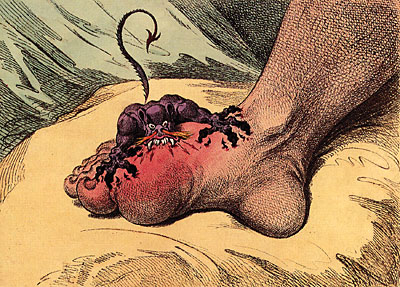
    Image nicely captures the pain associated with gout. Any idea of who the artist is?

  • Sameer

    @ Hange It's a caricature by James Gillray.

  • PG

    A caricature published in 1799 England, captures a contemporary public health concern in Nepal. We have lots to do and a long way to go.