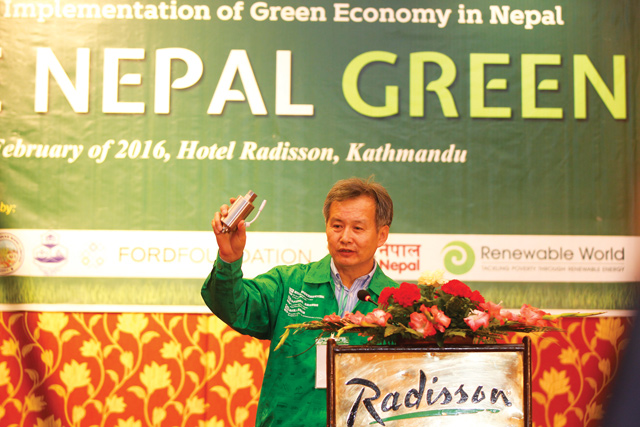
Chinese solar entrepreneur, Huang Min. Pic: Gopen Rai
It was always important for Nepal to have environmentally-sustainable development, but there is an added sense of urgency because of the earthquake and blockade as the country rebuilds.
Which is why self-reliance and renewable energy development were key themes of the ‘Make Nepal Green’ conference in Kathmandu this week.
The conference piggybacks on a reunion of recipients of the The Right Livelihood Award (also known as the Alternative Nobel Prize) that recognises individuals who have pioneered groundbreaking solutions to national problems. It was first presented in Sweden in 1980, with subsequent awardees in fields such as environmental protection, human rights, sustainable development, education and health.
Shrikrishna Upadhyay, himself the first Nepali recipient of the award in 2010, hosted the event. He was honoured for a lifetime of work on micro-credit and rural development through his NGO, Support Activities for Poor Producers of Nepal (SAPPROS).
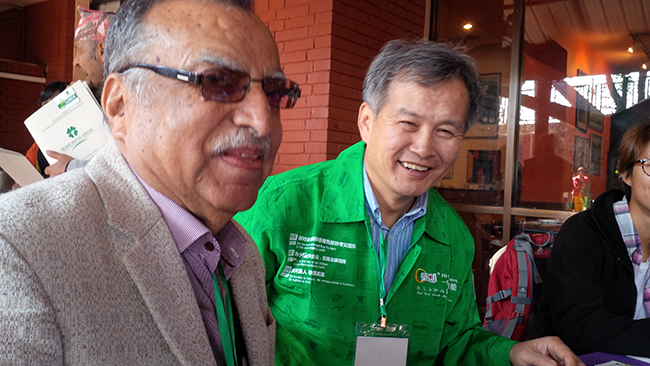
Shrikrishna Upadhyay (left) with Chinese entrepreneur Huang Ming. Pic: Kunda Dixit
“It is a great honour for us to be holding this conference, and our Kathmandu Declaration will send out a strong message that being green is not an alternative anymore, it is a mainstream concept,” Upadhyay said.
Also present was noted Chinese solar entrepreneur, Huang Ming (pic, above) who won the Right Livelihood Award in 2011. Recipients like the Ladakh Ecological Development Group and the Seikatsu Club Consumer’s Cooperative of Japan were also represented.
“If China develops with the same energy-intensive economic model as the West, we would need the natural resources of five planets to sustain it,” Huang told Nepali Times in an interview at the sidelines of the conference. “The future is in decentralised solar systems that address wastage of energy as well as renewable energy generation.”