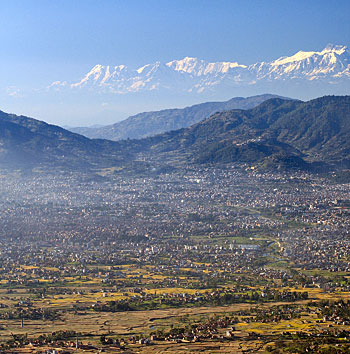
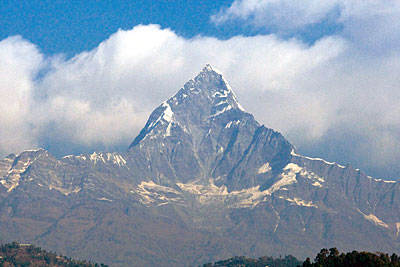
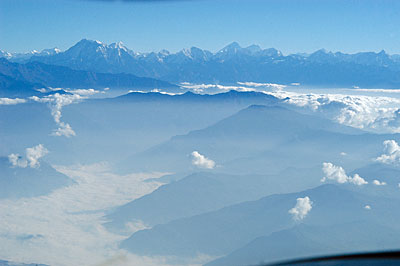
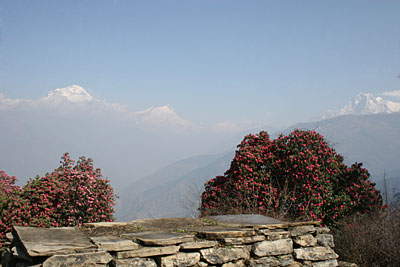
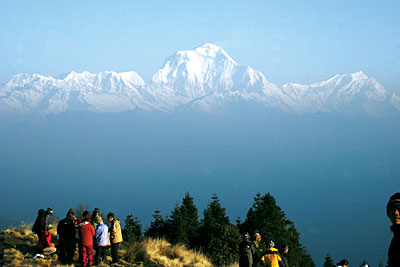
 HIMALAYAN MAP HOUSE SMOKY MOUNTAIN: A curtain of pollution haze from the Indo-Gangetic plains up to 3 km high covers the Kali Gandaki Valley and veils this spring view of Dhaulagiri from Poon Hill. |
To the better-known threats to tourism in Nepal like global economic downturn or filthy cities, add a new one: the winter smog over the Indo-Gangetic plains that is obscuring mountain views in Nepal during the peak trekking seasons.
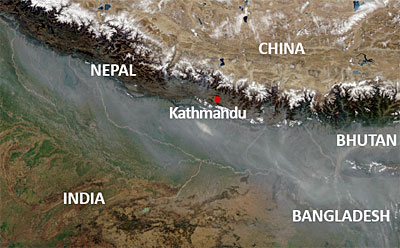
North India is one of the most-densely populated regions on earth and steadily getting more affluent, which means more cars burning fossil fuels and more coal-fired thermal power plants generating electricity. In winter, the soot is trapped in an inversion layer 3 km thick, wafted across the border and up to the mountains by prevailing westerly winds.
The United Nations Environment Programme (UNEP) has been investigating this Atmospheric Brown Cloud and found that most of it is from man-made emissions. It is particularly heavy and noticeable from November-April when rains that would otherwise scrub the dust is scant. The contaminants can move halfway around the world within a week.
A similar bloc of particulate air referred to as 'Asian Dust' is present over East Asia carrying smog from Chinese industry as well as fine sand particles from the Gobi Desert. The combined effect of these masses of airborne pollutants in Asia is huge. People in Nepal, India, Bangladesh, and Pakistan use smoky fuels like wood, charcoal, coal, and kerosene for domestic cooking. Waste, including plastics, are often incinerated outdoors. The practice of setting fire to fields after harvests, brick kilns with smoky stacks and forest fires are other sources of soot.
Haze from the Indo-Gangetic plains covers 10 million sq km and stretches out into the open Indian Ocean. This dark layer of smog has worsened winter fog over the plains, and the haze spoils views of Nepal's well-endowed, world-renowned scenery in winter and spring. The thawing of Himalayan glaciers is happening faster than in the polar regions, partly because of soot deposits melt ice and snow faster.