
Biomass has been serving as Nepal’s indigenous energy source for centuries. Firewood, agricultural residue, and dried dung are still widely used for heating and cooking, even in urban areas.
According to one estimate up to 80 per cent of the energy needs of Nepalis is actually met with biomass. Nepali industries are also increasingly using biomass for thermal energy: for drying in tea estates and as combustors in other thermal applications. Yet, nowhere in Nepal has biomass been harnessed for rural electrification.
There are economic and ecological considerations that determine the use of appropriate energy. With concerns about fossil fuel burning that emits sequestered fossil carbon into the atmosphere, biomass energy has suddenly become a much more attractive proposition. Countries rich in fossil fuels do not consider the biomass energy option unless their reserves start to deplete or environmental regulation controls and the increasing toll on the environment due to the usage of fossil fuels begin to weigh down heavily. There are also countries that are still using coal-based power plants for generating large power (100-1000 MW), which are unlikely to switch to biomass based power systems.
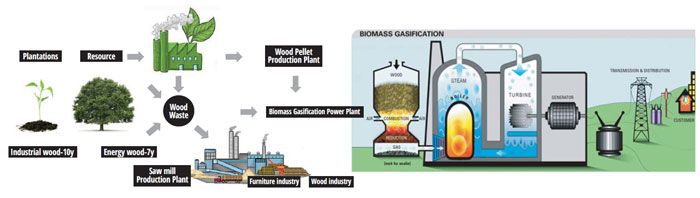
There are two considerations for using biomass for generating electricity. Biomass availability should allow a sustainable demand-supply chain throughout the year. For example, the sugar industry can be a source of bagasse and sugarcane leaf for a medium-size thermal power plant for up to 50 MW. The second aspect is the size of the population or community to be served. The availability, procurement, and processing of biomass poses problems in countries with large population centres.
But here in Nepal biomass energy technology is most likely to succeed because we are heavily and increasingly relying on imported fossil fuels to offset our power shortage. Our demographic distribution is ideal for biomass generated electricity – especially in the Tarai where microhydro is not feasible and there is an abundance of biomass from fast-growing Ipomoea and Eucalyptus plantations.