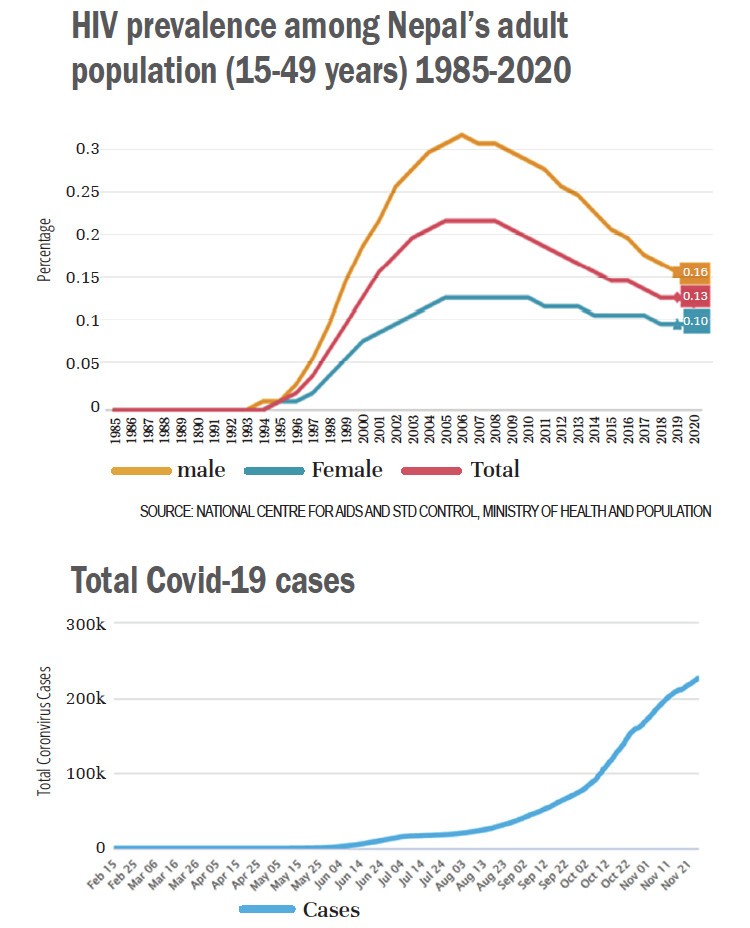
Nepal is facing a rapidly spreading Covid-19 contagion somewhat similar to the surge of HIV/AIDS during the 2000 decade, and the country’s success in reducing the scourge has important lessons for fighting the current pandemic.
Given the epic dimensions of this emergency, there is a need for the kind of national unity and solidarity for concerted action that we saw 20 years ago to tackle the socio-economic challenges of the coronavirus pandemic.
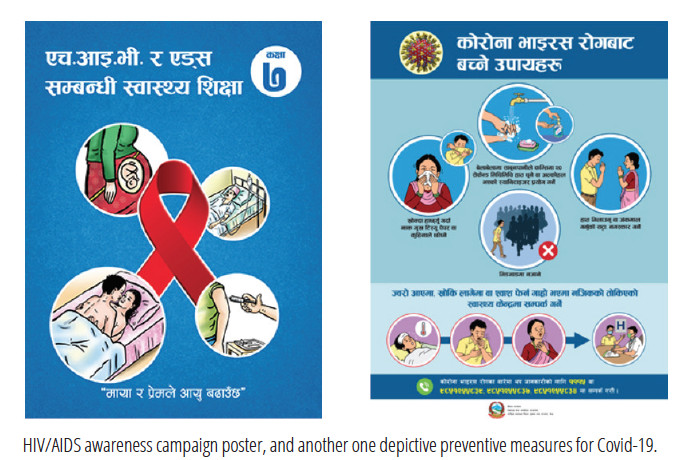
Just as with HIV, SARS-CoV-2 is having a severe impact on the most vulnerable communities. While one virus is air borne, and the other spreads through the exchange of bodily fluids, getting the message out on prevention and safety measures are important for both diseases.
In addition, the current pandemic crisis threatens to undo a lot of the progress that Nepal has achieved in reducing the prevalence of HIV/AIDS from 0.3% of the adult population in 2007-8 to 0.13% today.
Nepal’s AIDS response worked because of effective partnership with civil society which was crucial to find local solutions while we waited for the anti-retrovirals to become available. The free distribution of this therapy also set an important precedent for Covid-19 in providing Nepalis with access to vaccines and treatments when they are ready.
As in HIV/AIDS, Covid-19 response should place affected communities at the centre. More importantly, it should be a rights-based approach grounded on equity and justice. These lessons from the HIV response provide critical insights for governments and development partners to build resilient health system which will be as effective, accountable and inclusive.
The first HIV case in Nepal was diagnosed in 1988. After this, the epidemic evolved from low prevalence to a concentrated epidemic. Key populations such as sex workers, injecting drug users, migrants, prisoners, transgender people, and gay men and other men who have sex with men are at high risk of acquiring HIV infection. Discrimination and social exclusionmakes them more vulnerable.
Despite global progress, millions of people around the world are still at risk of contracting HIV infection, and AIDS remains a leading cause of death among women of reproductive age and young adolescents.
Nepal has made remarkable progress in its HIV response over the past decades. According to National Centre for AIDS and STD Control (NCASC), an estimated 29,503 people are currently living with HIV in the country. Despite the reduction in the prevalence rate, much more needs to be done.
In order to further reduce the incidence of HIV infection among key populations, a range of development partners and civil society organisations are reaching out to key populations with prevention, treatment and care services across the country. Community-based HIV interventions are largely guided by National HIV Strategic Plan (2016-2021) that focuses on scaling up innovative prevention services to young key populations.
Despite impressive progress, HIV still continues to be a public health challenge because services are still limited in remote districts. People living with HIV still do not have easy access to treatment and care in health facilities.