In the aftermath of the Nepal earthquake, the iconic image of 5-month-old Sonish Awale being rescued after being buried for 22 hours under the rubble went viral. The baby caked in dust being lifted up by rescuers spoke to thousands affected by the earthquake and quickly became a symbol of hope to a country ravaged by destruction.
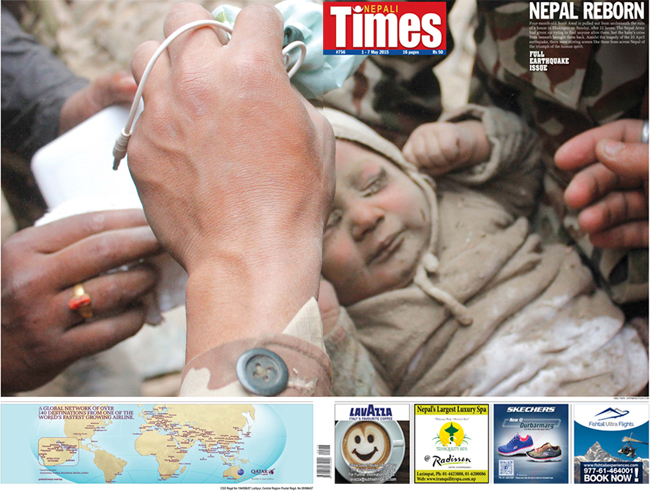
Front page cover of Nepali Times' earthquake issue
Yet, lack of exposure and training, weak design sense and poor motivation has meant that much of Nepal’s legacy journalism remains text-heavy and dull, making them unable to compete for eyeballs with the spread and impact of multimedia content online.
“Powerful visuals such as the earthquake baby evoke emotions and speak to your stomach,” says Thomas Borberg, photo editor-in-chief of Danish newspaper Politiken who was in Nepal last month for the Photo Kathmandu festival. “When we scan through a newspaper, images are the first thing to catch our attention. A good picture talks directly to our emotions and can be just as valuable in telling a story.”
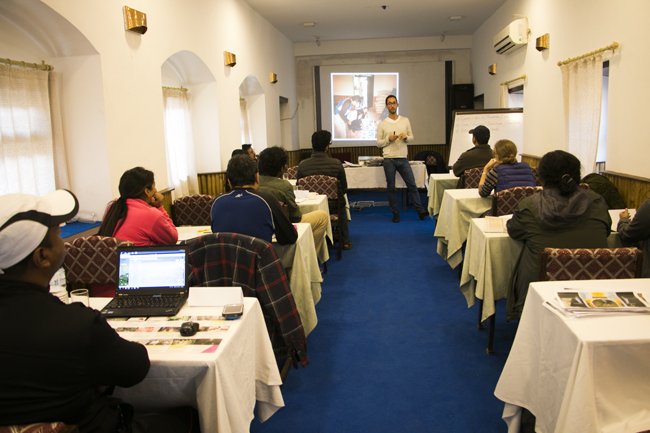
All photos: Pawan Joshi/ Photo Kathmandu
International media outlets such as The New York Times, Reuters and Politiken have remained benchmarks in incorporating visuals in their storytelling online. Through their immensely popular photo blogs to long-form multimedia pieces, they have seamlessly transitioned into digital platforms and enhanced the art of photojournalism itself.
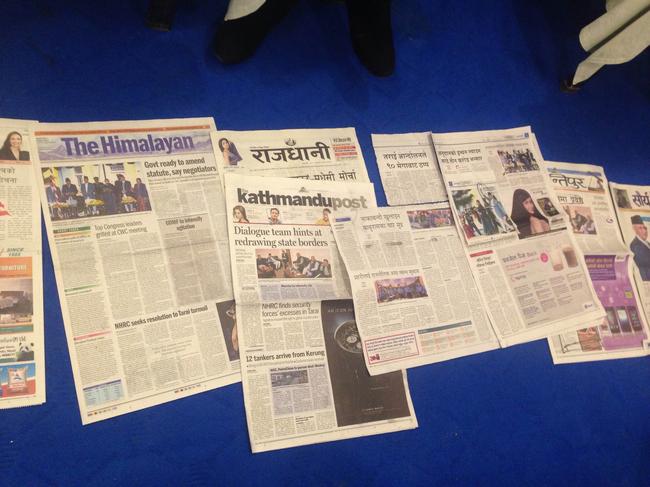
Borberg conducted a weeklong workshop in which he dissected Nepal’s broadsheet newspapers and critiqued their layout and design, use of images, and general aesthetics and readability. Needless to say, some of his comments were scathing. In most papers, the text does all the talking. Reporters ‘tell’, rather than ‘show’. The concept of white space is almost non-existent and pages are congested with grey text. Visuals are afterthoughts.
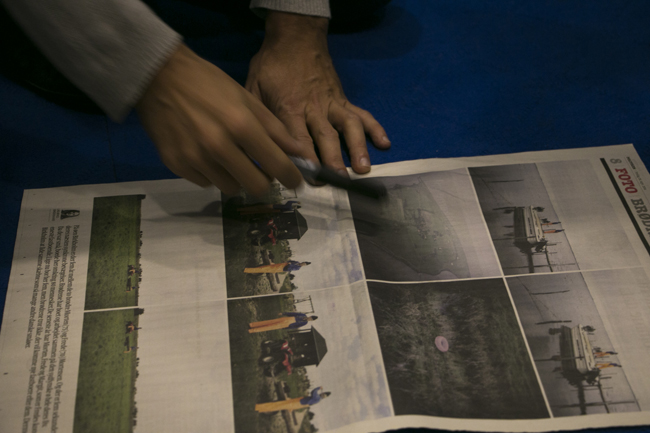
“There is a lack of priority for images in the Nepali media. Editors needs to stop using visuals as just hole fillers and photographers need to be able to communicate what they want to photograph and how it is used in newspapers,” Borberg told an attentive group of editors, reporters and designers.