

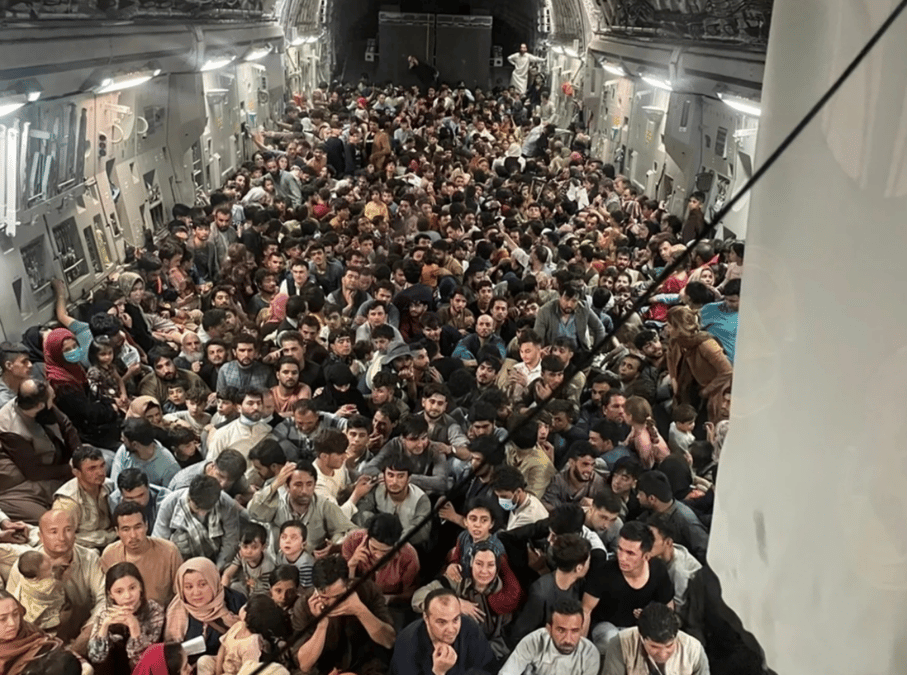
Two years since Nepali workers were evacuated from Afghanistan after the Taliban takeover, it is important to remember the experience of the evacuees, and how they can shape the future of labour out-migration from Nepal especially in countries with conflict like Ukraine.
Work in Afghanistan was different from other destination countries. Migration there tends to be less researched and have more legal ambiguity due to complicated permit policies and multiple periods throughout the war when work in Afghanistan was banned by the Nepal government.
As elsewhere, migrant workers often had to go through recruitment agencies that connected them to the employer in Afghanistan, but there was also a lot of irregular migration through labour brokers.
According to the Department of Foreign Employment, some 12,500 Nepali migrant workers had received first-time labour permits since 2021 for Afghanistan. This number does not accurately represent the true number of people who have migrated there for work.
Nepali people were hired for many different positions in support of foreign government operations in Afghanistan. Although, partly due to the Gurkha legacy, they were predominantly hired as security guards to protect compounds and embassies.
At the beginning of the war, security companies in Afghanistan exclusively hired retirees of the Nepal and Indian Army who already had combat experience and training, so they were well-prepared to work in a country in conflict. Ex-soldiers of the Nepal Army actually saw action during the Maoist conflict.
Guards interviewed by the authors who had served in both the Nepal and Indian Army explained that pension was not enough to live off of. One guard said, “खान मात्रै पुग्छ” (It’s only enough for food). Another stated, “पेन्सनले थाम्न साक्दैन”(You can’t live off the pension). Going to Afghanistan meant giving their families a life that they otherwise would not be able to afford.
The salary came with risks. There were frequent and unexpected bombings in Afghanistan, there was no freedom of movement. Nepali workers rarely ventured outside their compounds and workplaces.
As the Taliban took over, Nepali security guards were not formally informed by their workplace or employers about the changing situation in the country. Many had to make their own inferences from watching the news, speaking with locals and coworkers, and witnessing changing operations at their workplace. They were told only hours or days before their evacuation that their job was suddenly coming to an end.
Except for those working at the US Embassy in Kabul, all of the guards interviewed reported being the last to leave their workplace. Some were terrified, others were more worried about losing their employment than making it back home to Nepal safely. On top of the abrupt loss of income, almost all of the guards lost their luggage in the process. Only some received compensation.
Some guards were not satisfied with the evacuation, and organised a Facebook group to discuss and advocate for their needs, which led to a formal complaint they collectively filed to the Ministry of Foreign Affairs in Nepal with three demands.
First was to find new employment in Nepal or in another country, since all of them had abruptly lost their income and were no longer at the age where they could find new employment. The other two demands were for compensation for both their lost income and luggage.