

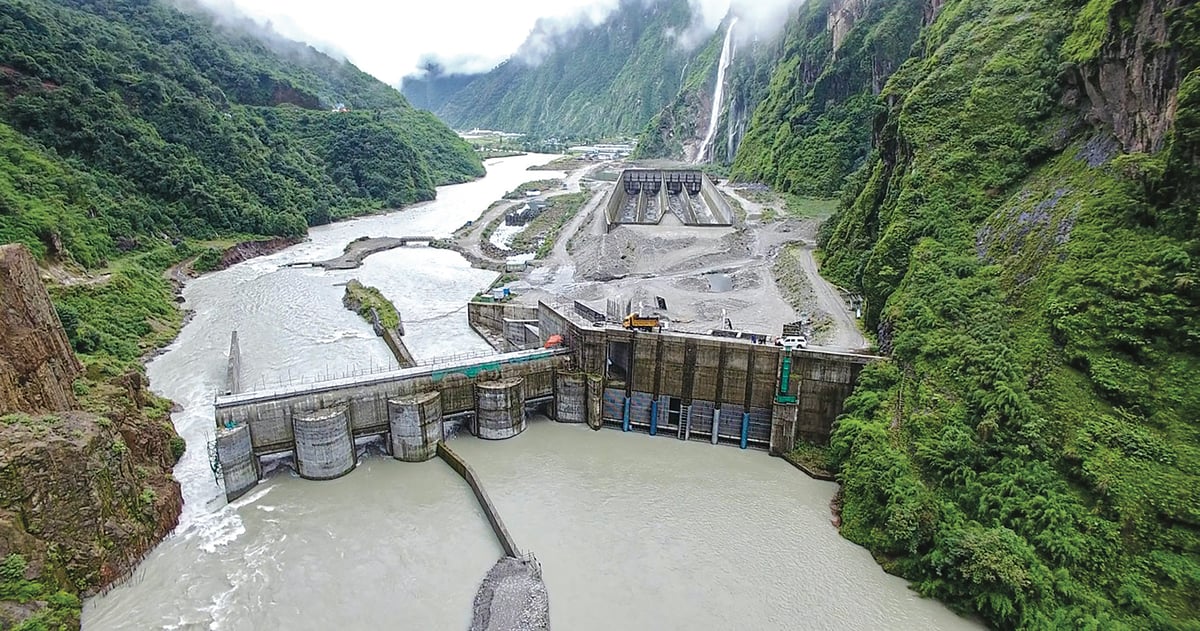
The catastrophic flood of 26 August put Nepal’s dependence on hydropower under scrutiny, with some suggesting a fundamental rethink. There should certainly be an evaluation, but the disaster is unlikely to bring hydropower development to a halt.
Construction will continue but at a slower pace and under a more demanding technical, regulatory, and financial conditions.
Hydroelectricity has become too important a part of Nepal’s economy to simply stop. Some 260 hydropower projects are currently under construction, and another 360 are in various stages of feasibility assessment, design, financing, or licensing.
Tens of thousands of Nepalis depend on the sector. Cement and steel factories, steel pipe and gate fabricators, suppliers, engineering firms, transporters, consultancies, environmental specialists, insurance companies, banks, and retirement funds all have a stake in the continued construction of hydropower projects.
A sudden halt would have economic consequences extending far beyond the power sector itself.
Nepal has spent the past 25 years building a domestic base of hydropower expertise with engineers, hydrologists, geologists, project developers, environmental specialists, tunneling experts, and construction contractors capable of adapting designs to emerging risks.
Nepali engineers are not starting from scratch. They have long been required to account for hazards such as GLOFs and landslide dammed flash floods. The latest disaster has introduced a third even more deadly category of extreme mountain hazard: floods caused by the collapse of glaciated slopes.
Better data, more rigorous studies and risk assessment, increased monitoring and reliable early warning, safer siting criteria for intake structures and power plants, improved planning for emergencies, and stronger protective infrastructure can reduce risk from all these threats.
These changes will increase costs and development timelines, but the most attractive projects will proceed. Expanded climate-risk assessment, hydro-meteorological modeling, more stringent engineering standards, and rising insurance premiums will all raise investment costs.
Many marginal projects in the pipeline may no longer prove financially viable. Yet, Nepal still possesses an enormous portfolio of attractive hydropower sites. Projects with strong resource characteristics, ready access, manageable risks, and favourable economics will continue to attract developers and financiers.
The hydropower sector has expanded at extraordinary speed over the past decade, with annual additions often exceeding 20% of installed generation capacity.
Nepal enjoys an electricity surplus during much of the year, creating space for regulators, developers, and policymakers to take stock and implement reforms without facing the immediate pressure of energy scarcity.
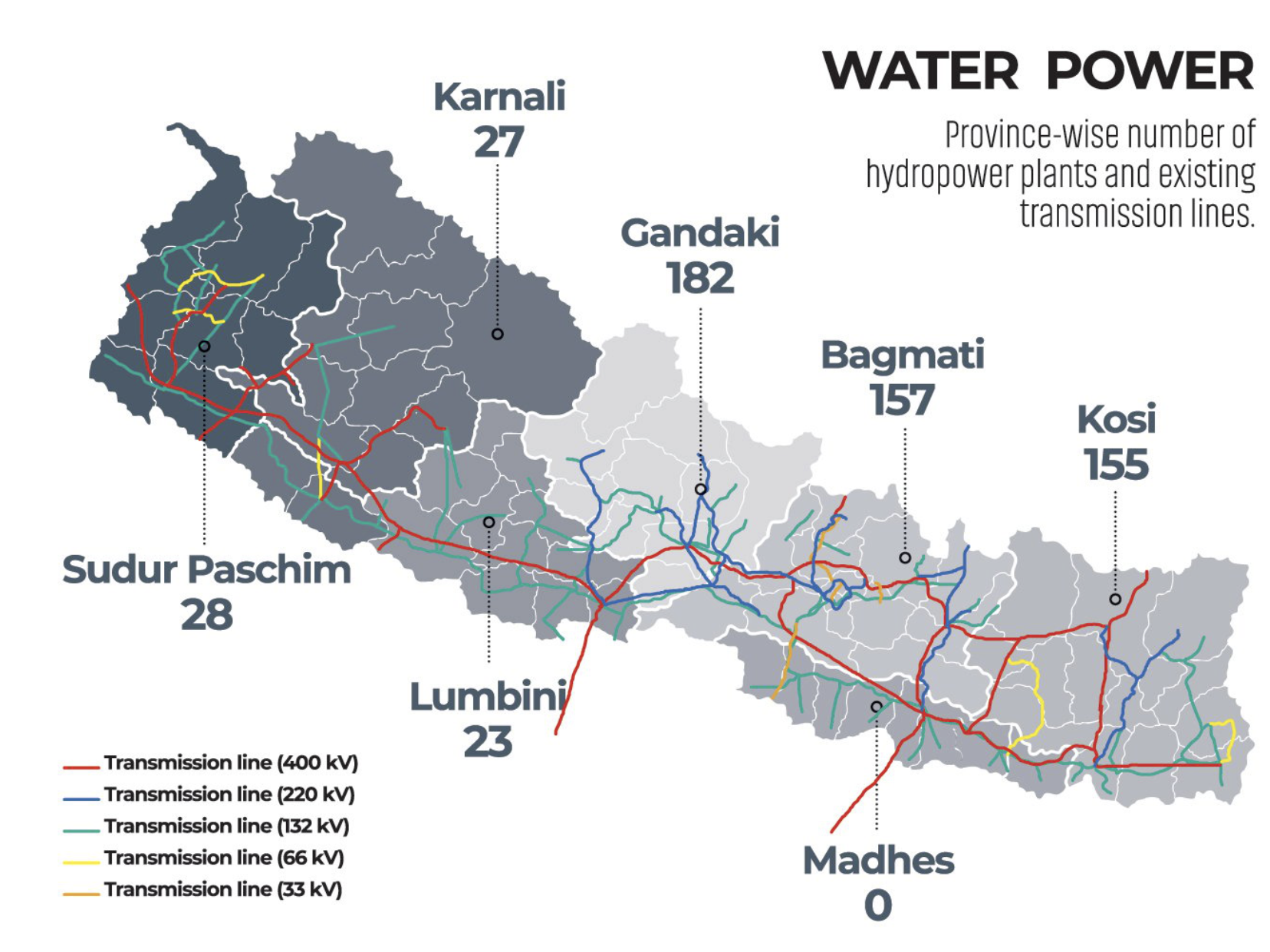
Hydro and solar projects have spread across 54 districts, not centralised sources. If a majority of this generation capacity was along a single river valley, a flood of this magnitude would have collapsed the entire power infrastructure with few prospects of recovery.
Nepal can build on this proven strategy based on risk mitigation through decentralisation, increased diversification, and allocating risk mitigation responsibilities to the government, project developers, and financing institutions in specific areas where they are most capable of managing those risks.
Nepal’s Nationally Determined Contribution (NDC) currently commits to 15% of electricity generation from non-hydropower renewables by 2035. This target now needs to be reconsidered.
There is solar and wind energy potential, particularly in trans-Himalayan districts with high solar irradiation, low cloud cover, good wind energy, and relatively low exposure to flooding hazards that affect the south of the Himalaya.
Solar and wind generation costs have declined dramatically worldwide and could compete with hydropower in Nepal if the government invests in road and transmission line access to attractive sites in the relatively remote districts like Mustang and Dolpo where resources are most plentiful and land for siting projects is relatively inexpensive.
A higher target, of a quarter to a third of power being generated by non-hydropower sources by 2035, would improve energy security by reducing the country’s exposure to climate-related hydrological risks.
A distinction must be made here between projects that depend on glacier-supported rivers, and those exposed to glacier-related hazards. Most hydropower projects in Nepal larger than 10MW benefit to some degree from glacier and snowmelt contribution to river flows.
A subset of these has significant glacier-hazard exposure in projects located in basins containing large glacierised catchments, unstable glacial lakes or hanging glaciers.
The Ministry of Water Resources and Irrigation must therefore identify and map river basins for glacier-hazard exposure. Such information should be made publicly available and pro-actively utilised in basin-level planning and hydropower licensing.
Investors should not have to independently reconstruct hazard assessments that government agencies are better positioned to undertake, and are uniquely positioned to utilise as part of their responsibility to regulate the sector.
100-YEAR FLOODS
Developers have to design and build more secure projects. The era of relying on historical flood records has ended. If so-called ‘100-year floods’ are now occurring every decade, hydrological models and infrastructure design must reflect that reality.
Each project must carry out its own Climate Risk Assessment along the drainage basin before the project is approved. They will need to account for increased frequency of extreme rainfall events as well as those of GLOFs, landslide-dam failures, and glacier-collapse floods.
As the tragic and seemingly futile attempts at rescuing worker trapped in tunnels of Upper Trishuli 3-A (pictured, left), 3-B and Rasuwagadi show, every hydropower project must be required to have Emergency Action Plans by regulation, particularly covering the period during construction when there can be hundreds of workers on site, but also during operations.
Conservative assumptions and proactive safety measures will increasingly become a commercial necessity rather than simply a regulatory compliance issue.
Banks and insurers are likely to demand it. Projects that can demonstrate robust risk assessments and resilient designs should be rewarded by them with lower financing and insurance costs. Those that cannot do so may face significantly higher premiums, regardless of their location.
Engineering adaptations will also become more common. Future powerhouses may need to be located farther above river level, accepting some loss in hydraulic head and power generation capacity in return for safety from flooding.
Critical electrical equipment and substations may need additional protection. Projects facing elevated hazard exposure may require gates capable of isolating headrace and tailrace tunnels during extreme events, preventing floodwater and debris from inundating critical infrastructure. Early warning systems, remote monitoring technologies, and emergency shutdown procedures are also likely to become standard practice.
None of these measures will eliminate risk entirely. Nepal is, located in one of the world’s most dynamic geological and climatic environments. But they can substantially reduce vulnerability.The lesson from the 26 August tragedy is not that hydropower development should stop. It must evolve.
Bikash Pandey is Director of Clean Energy and Circular Economy at Winrock International. People Power is his regular column in Nepali Times.