
 GOPAL GARTOULA |
In this climate of mistrust, you have to wonder if Nepal's high and mighty agree on anything at all.
Surprisingly, there is one such issue: not bringing human rights violators to book.
We have had four governments (including the two headed by the late GP Koirala) since the success of People's Movement II in 2006. But no sincere attempt was made to form an effective Truth and Reconciliation Commission and a Commission on the Disappeared. All we have seen are cosmetic attempts by each of the governments towards setting up the commissions.
Both sides involved in the decade-long Maoist insurgency have found something in the draft bill or its terms of reference (ToR) to object to, thus thwarting the exercise to deliver justice to victims. The most recent activity regarding these two bodies (that is, bills on them) was in April this year, when parliament was discussing the drafts.
It suits both the Maoists and the national army to scuttle any move towards the formation of any such body, or to limit it to an ineffectual commission that will not be able to deal with gross abuses of human rights and crimes against humanity, finding the whereabouts of those forcibly disappeared by the state and the Maoists, and recommending action against the perpetrators.
The stance of the Nepali Congress and CPN-UML is not surprising either. Their fear of the Maoists' not-so-hidden-goal of imposing one-party rule in Nepal has rendered them unable to take concrete steps to punish those who committed human rights abuses by the state. They are under pressure from the army top brass to either ignore or go slow when it comes to addressing human rights violations.
So all we have is lip service.
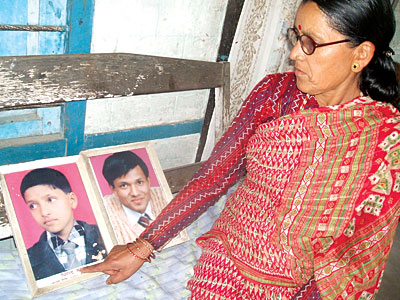
There are hundreds of families who want to know what happened to their loved ones who never returned home, people who want to know whether any punishment will ever be meted out to those who killed their kith and kin by terming them either Maoists or spies of the government.