This is the 37th instalment of Diaspora Diaries, a regular series in Nepali Times with stories of Nepalis living and working abroad.
Tilak: I always valued education despite my humble beginnings in Ramechhap. In Grade 3, my English teacher had mentioned to us several times that he had a bachelor's. It felt like a lot of years of education to get that degree, but as an impressionable kid who ranked first in class, I resolved to follow his footsteps.
And I did. I completed my Bachelors degree although the journey was full of challenges. Going from my village school to Dolakha after Grade 8, and to Kathmandu after my SLC was especially difficult. I took up Intermediate of Arts (IA) in English, but was simply not able to grasp anything, no matter how hard I tried.
I had to rely on the English dictionary for every other word and simply could not keep up. I switched to Nepali instead but I also took private English classes to catch up and completed a second IA in English. The same institute would also later hire me as an English language instructor.
Influenced by people in my Patan neighbourhood, I also got a job as a stone sculptor. With no background, I had a long way to go before I could transform stones that cost less than Rs500 to artefacts that would sell for 100 times the amount.
Read Also: Return of the native, Lek Yonzon Tamang
My first assignments were to just wipe stones, but slowly I started getting orders to carve idols of gods and goddesses. I did not understand the theory behind sculpting, but I was quick with my hands as I carefully carved details on stone. Even now, some of my sculptures are on display in the shop where I worked.
Between teaching English classes and carving stones, I was earning around Rs15,000 rupees a month, which at that time was quite remarkable.
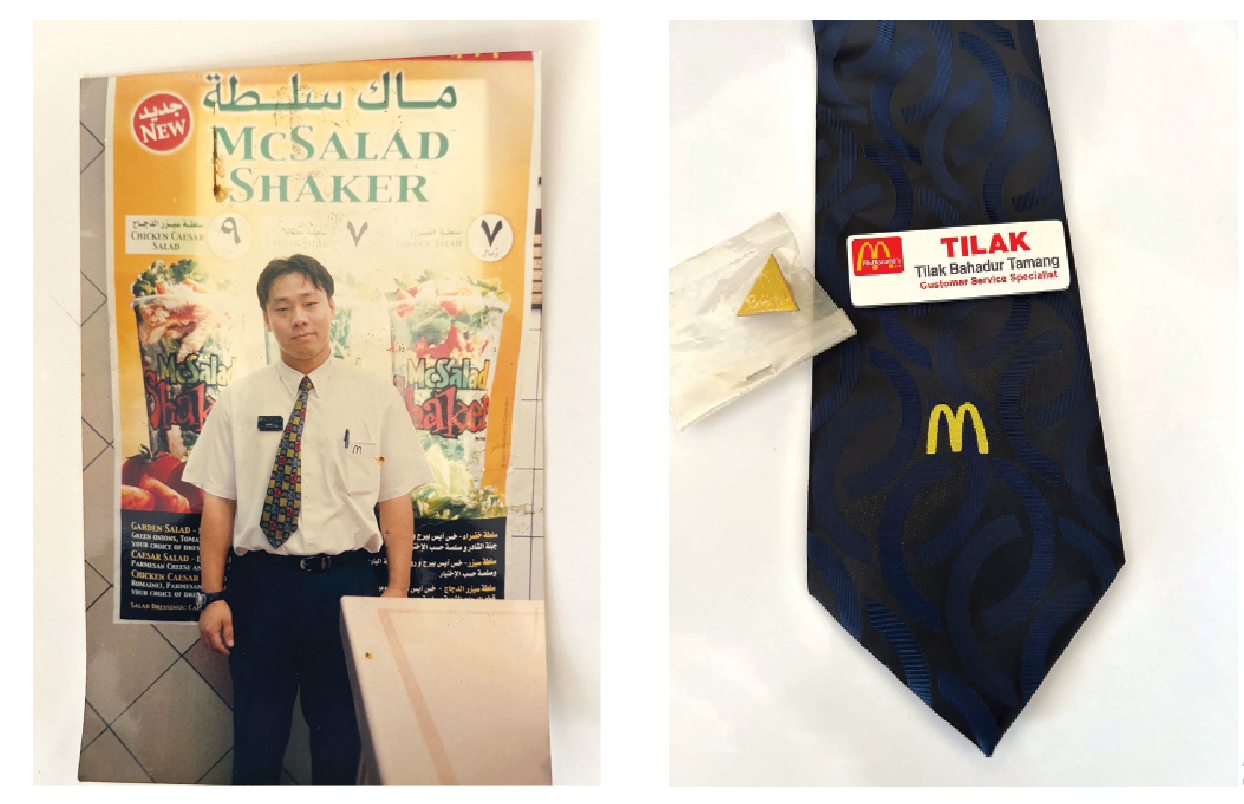
One day in 2001, I received an email from my acquaintance in Saudi Arabia about a potential job at McDonald's. I had never heard of the restaurant chain, and was unsure about life in Saudi Arabia, or the kind of work I would be doing. But I was young and excited about seeing the world so took up the job offer even though the salary was Rs16,000, just about what I was making in Nepal.
When the plane took off from Kathmandu, it suddenly hit me that I was leaving behind my home and my family, and I felt a chill run through my body. I traveled via Pakistan to Riyadh and Jeddah. The number of South Asians on the plane decreased after each flight, until the final domestic flight had only Saudis in their white robes.
Read also: Tale of a modern day lahure, Uday Bahadur Baniya
The heat on the tarmac in Riyadh was overpowering, unlike anything I had experienced before. I am not sure why, but I still vividly remember feeling very low and lost walking away from that plane. I already doubted that I would make it through my 2-year contract. I was to spend the next seven years there.
At our accommodation, we were welcomed by colleagues including Nepalis. They brought us food, McDonald burgers and fries, which smelled nice. I recognised the golden arches on my burger box which I had seen on my contract document.
I had never seen or tasted a burger before. Little did I know that my first burger would determine the course of the rest of my life.
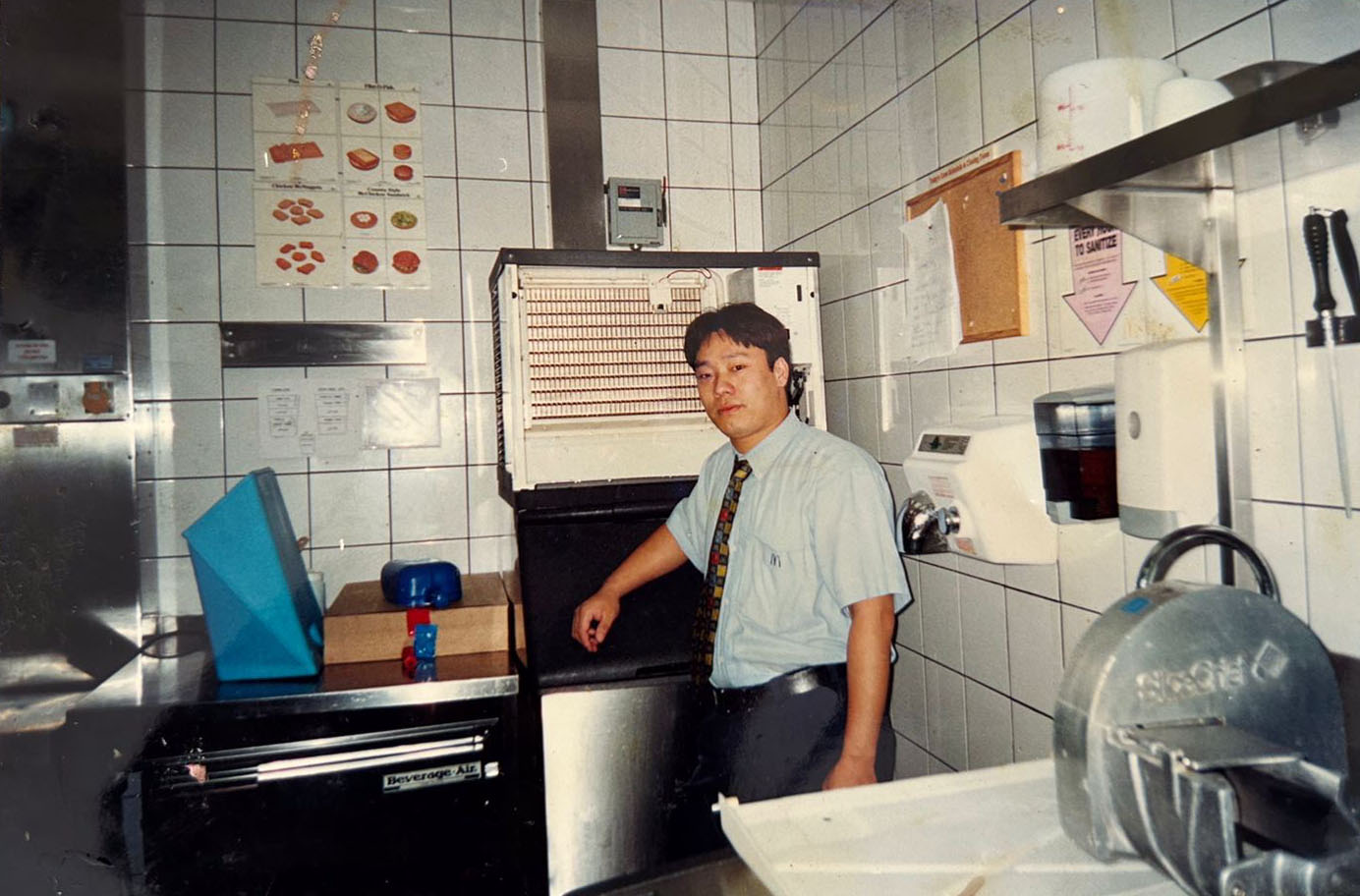
Amik: I was part of the first cohort of Nepalis hired by McDonald's in Saudi Arabia in 1999. I come from a farming family in Kavre, and have been living in Kathmandu since Grade 7. I was working at a hotel in Thamel and was a second-year Bachelors' student when I had the possibility of working at McDonald’s in Saudi Arabia. I thought McDonald’s was a five-star hotel.
I remember getting off the plane in Qatar en route to Saudi Arabia. Just a couple of minutes in the heat, and I was completely drenched in sweat. I was nervous whether I would be able to survive in such an environment. But then again, if others could, why not me?
Two years before Tilak came to Saudi Arabia, I too was welcomed at my accommodation in Jeddah with McDonald’s burgers and fries. Even though I had worked in hotels in Thamel after completing my SLC, this sandwich was unfamiliar to me. I liked the taste, but it was not filling like dal bhat.
We were allowed to buy 15 riyals equivalent to food and drinks at work, so my diet was mostly burgers in the beginning. But soon the taste got monotonous, and I started using the allowance on coffee while spending out-of-pocket for kabsa meals from outside.
Read Also: Finding a niche in Nepal, Babare Bahadur Bomjan
During my initial years there, my Nepali friends and I used to sit closely to people speaking Nepali and eavesdrop. At that time, there were few Nepalis and everyone from Nepal felt like family. There was an instant bond and a desire to build lasting friendships. All that changed, and within a few years every other person we met in Saudi Arabia would be Nepali.