
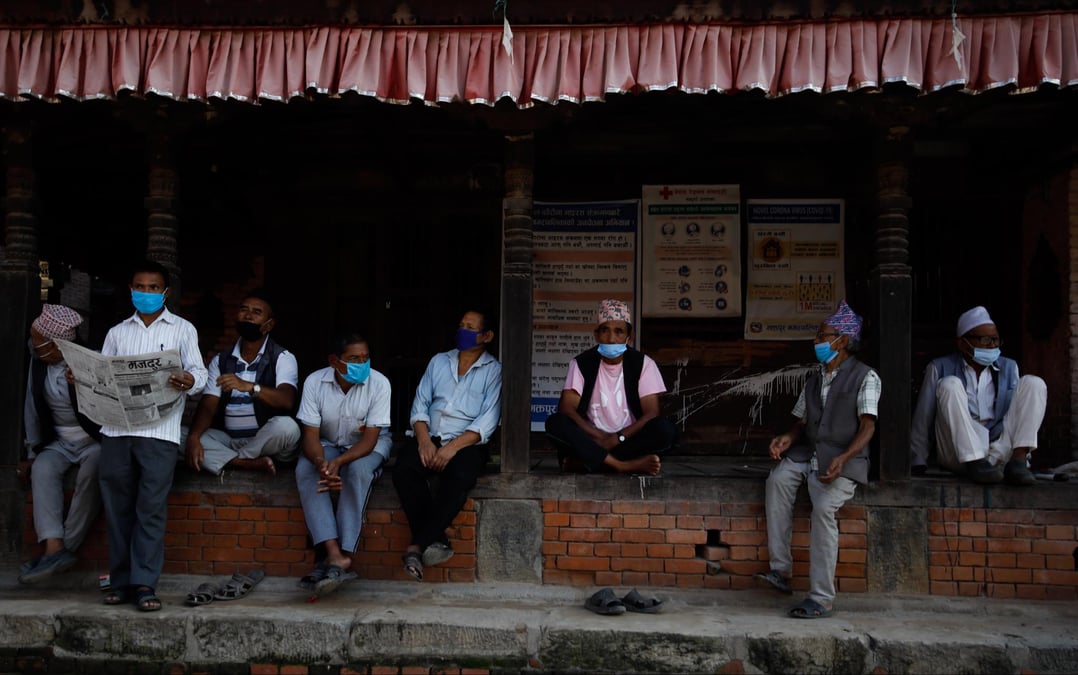
Fever accompanied by chills, body aches, runny nose, sore throat or cough? You probably have Covid, and are likely over it.
After only recording a handful number of new Covid-19 cases for the last few months, Nepal registered nearly 400 in the last week. But these are only the official figures, doctors say there are flu-like cases recovering in almost every family.
The latest surge is once again in line with the rise of cases in India where the new sub-variant of Omicron has been found to be responsible. On 4 April, there were 3,637 new reported Covid-19 cases across India and seven deaths in the past 24 hours. Some 60% of the new cases have been attributed to the new variant circulating in the country, XXB.1.16, a subtype of the Omicron variant.
“This is proof that when it comes to Covid-19, we are not out of the woods yet, it is a reminder that we need to continue to be careful, especially with the elderly and populations with comorbidities,” says Buddha Basnyat, physician at Patan Academy of Health Sciences.
However, unlike in India, it is not yet known which strain is driving the new infections in Nepal. A genome sequencing in last 2022 found that there were 17 sub-variants of Omicron circulating in Nepal.
At Teku Hospital, virologist Sher Bahadur Pun has been observing a gradual increase in the number of Covid cases and old-age patients being admitted. Most symptoms are mild, but interestingly many are complaining of a lack of smell and taste, which was typical of pre-Omicron cases. Over time, Covid-19 symptoms have also gradually changed.
“What I’m seeing are breakthrough cases, these are people who have taken three shots, including a booster dose. This means we are likely to see a large number of such breakthrough cases in the near future,” explains Pun.
He adds: “This could very well be a new variant, a hybrid of these that were already circulating or XXB.1.16 like in India given there are no restrictions preventing the strain from travelling.”