
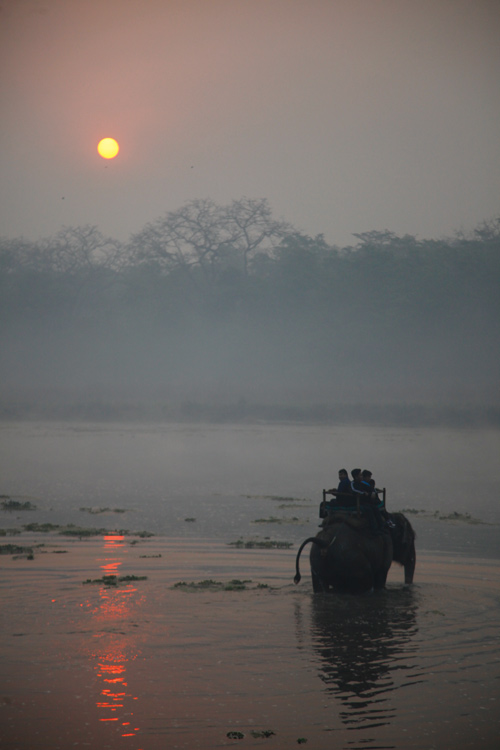
One achievement that Nepalis can justifiably feel proud of is nature conservation. In a country where a vertical topography bestows such a stunning spectrum of biodiversity, preserving nature is Nepal’s contribution to protecting the global environment.
The foundations of conservation in this country were laid during the much-vilified Panchayat, and it was royal patronage that saved our national parks from the devastation that has been seen in India and elsewhere.
In earlier times, the jungles of the Tarai were decimated by trophy hunting. In 1850, Jang Bahadur Rana infamously killed 30 tigers in just one hunt. In 1911, Nepal’s rulers hosted King George V in Chitwan, and the 600-elephant hunting expedition massacred 36 tigers, 18 rhinos, and innumerable leopards, bears and even porcupines in a day of bloodshed. That gory record was broken by Juddha Shamsher who personally slaughtered 433 tigers from 1933 to 1940.
Nepal’s royal families later turned from being avid hunters to ardent conservationists. But, by then there was an even more lethal threat to wildlife: habitat loss caused by national policy of transmigration of hill peoples to the plains during King Mahendra’s reign.
The tide turned in 1973 when enlightened Nepali environmentalists and the royal government set aside what was left of Chitwan into a 923 sq km national park and a World Heritage Site. The tiger and the rhino were rescued from the brink of extinction, and there are now over 200 tigers and 500 rhinos in Chitwan alone. Gharials released into the wild from a breeding centre in Nepal have been found as far downstream as the Ganges delta in Bangladesh.
After the democratic transition, however, political interference and corruption threaten to undo past achievements. Wildlife poachers with political protection thrive amidst Nepal’s unstable transition. There is demographic pressure as the population of the Tarai explodes. The proposed East-West Railway alignment bifurcates Chitwan, jeopardising the park’s integrity. Pollution, overfishing and dam construction on the Narayani endanger aquatic fauna and the reptiles and birds that depend on it for food.
Despite all these hazards, Chitwan survived because of the pragmatism shown by Nepal’s early conservationists in partnering with local communities. The antagonistic ‘people vs park’ practice seen in other nature reserves was replaced by a ‘people for park’ approach. Community forests were set up in the buffer zone, villagers were allowed in to cut thatch once a year, and in return they helped by providing intelligence about the activities of poachers.