Walking through the rustic countryside on the outskirts of Tikapur under gathering monsoon clouds threatening rain, it is difficult to imagine the horror of what happened here on 24 August 2015. Hundreds of protesters carrying spears and knives set upon unarmed policemen, killing eight of them and shooting a baby.
Here, beside a maize field and a small pond, was where Tharu activists chased a policeman, and burnt him alive. Further down the road, they fired on a policeman’s house, killing his two-year-old son.
The country was still in shock after the earthquake, and the government in Kathmandu was trying to ‘fast-track’ the Constitution amidst intensifying protests for self-rule in the Tarai. The fires that were lit here in Tikapur spread across the plains the following months leaving more than 50 dead and leading to the Blockade that ruined the economy. A report later found that four senior politicians had incited the protesters.
There is little to remind visitors of the carnage here as Tikapur Municipality prepares to elect its own local government in elections next week. The candidates are all in campaign mode, and Tharu leaders say their ultimate goal is still autonomy in a separate Tharuhat province, made up of parts of Kailali and Kanchanpur districts from Province 7 to be grafted into Province 5, where Tharus will make up 40% of the population.
The violence deepened the divide between Tharus and hill settlers like never before, but it appears that most people are trying to forgive, forget and re-establish social harmony by participating in the election on 28 June.
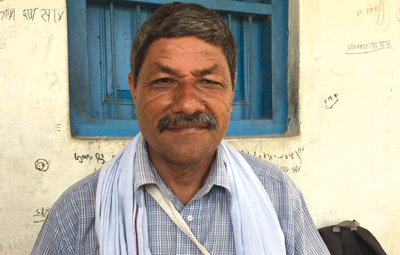
“The situation is completely different when everyone is preparing for the local election. People have already forgotten what happened here two years ago,” says Bhim Bahadur Raji, an eyewitness to the lynchings.
Publicly, all of the candidates are saying the right things: they will ensure the rights of Tharus and restore social harmony. They’re also confident that voting will be peaceful.
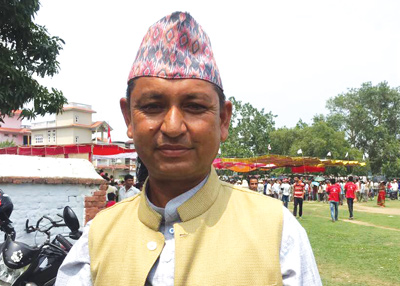
Local MP Janak Raj Chaudhari sees the polls as an opportunity to bridge the gap between Tharus and Pahadis. “We are still fighting for an autonomous Tharuhat state, but we don’t want that to intrude on the local election,” says Chaudhari, who is also State Minister for Federal Affairs and Local development.
Voting to forget
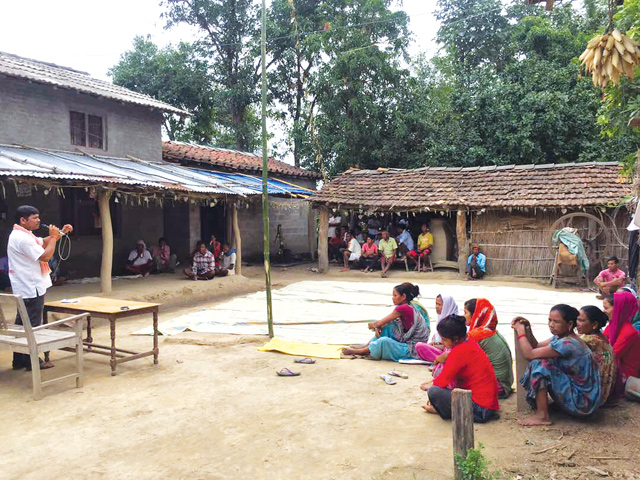
Campaigning on Tuesday near where the policemen were lynched two years ago, local MP Janak Raj Chaudhari says the election is an opportunity for Tharus to increase their access to state power. Nepali Congress candidate Jung Bahadur Saud was going door-to-door in a Tharu community, while the UML candidate was addressing a gathering nearby.
The UML’s Bhim Rawal, whom many Tharus blame for opposing the demand for a Tharuhat province, addressed the gathering in Tikapur. Home Minister Janardan Sharma and IGP Prakash Aryal flew in on Tuesday to observe the security situation.
Following the Tikapur incident, police detained at least 25 Tharu leaders, including Laxaman Tharu who is still in jail (see box below). Many other accused, including Resham Chaudhari, fled to India. Despite that, however, he was awarded Rs 17 million in compensation, causing outrage in the media. The government compensated hill families whose houses were set on fire, even though many homes of Tharus were also destroyed in the counter-violence after the killings.