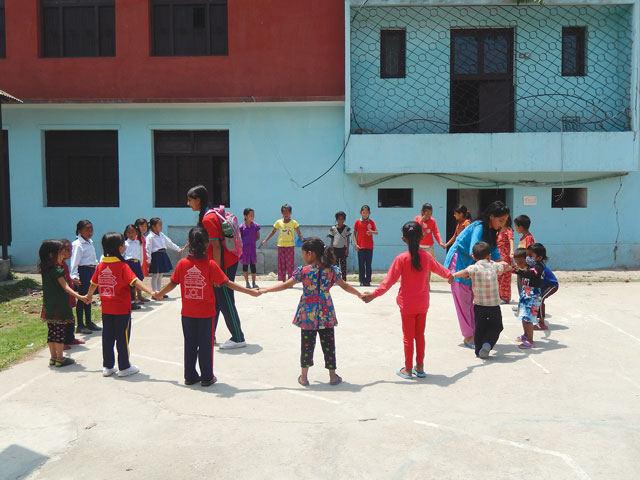
The earthquake on 25 April had already damaged the four walls of the Basu Higher Secondary School in Bhaktapur, and then the 12 May aftershock brought down one of the classrooms. While the upper floors look fine, the ground floor has cracks and the floor of the auditorium was raised half an inch.
Since the school has earthquake resilient buildings the beams and pillars are still intact, but Principal Ambika Nyaichyai says the school’s labs are now too unsafe to use. She is unsure how to restart classes for the 1,000 students enrolled here. The government had said schools would restart on Friday, but have been put off by two more weeks after the aftershock on Tuesday.
PICS: UNICEF
Even so, there will be many schools in Sindhupalchok, Gorkha, Nuwakot that will not be able to open because 90 per cent of them have been completely destroyed. Eighty per cent of schools have been razed in Dhading, and in Kathmandu Valley many schools are serving as temporary shelters. The government estimates that 24,000 classrooms were destroyed, and if the 25 April quake had struck on any other day besides Saturday, a lot of students would have lost their lives.
“It will take time to rebuild and repair the buildings but more than that it will take time to get the fear out of children’s mind and get them back to school,” says Nyaichyai. “My niece’s school has already reopened but she refuses to go back out of fear and parents are also unsure whether their children will be safe.”
UNICEF Nepal estimates that almost a million children will not be able to return to school immediately, but says going back to class and meeting friends again is important for children to overcome their fears.
“Going back to school will help children cope better,” says Tomoo Hozumi, Nepal Country Representative of UNICEF, “it also helps them recover from stress, which when left unattended can lead to trauma in children.
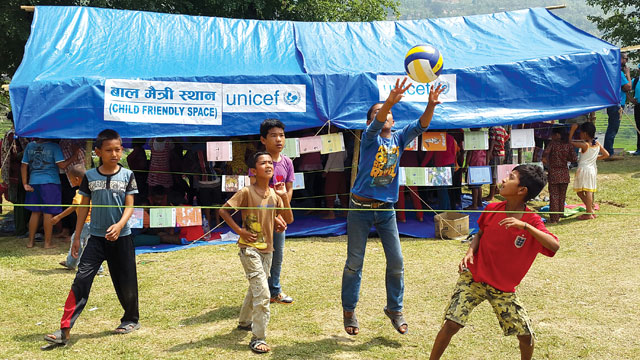
Since most of the learning materials at home and school are gone, UNICEF and its local partners are working to replenish these and restart classes as soon as possible in Temporary Learning Centres and child-friendly spaces in 14 districts, most affected by the quakes.
“In these safe spaces children have an opportunity to come and be children. They can play and interact with their friends and peers. These spaces also give us an opportunity to provide key messages to children as well as caregivers,” says Marilyn Hoar, UNICEF’s Education Chief.
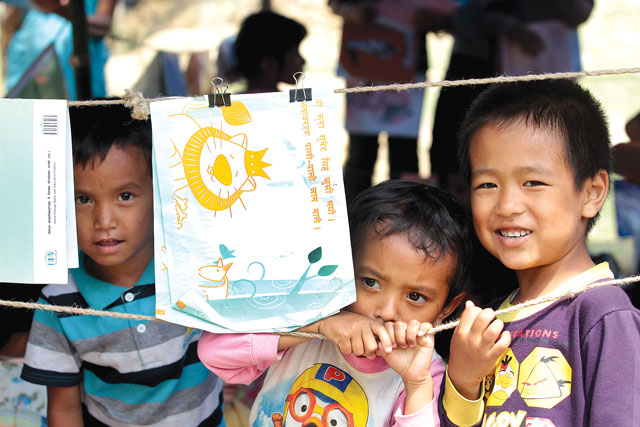
Child friendly spaces set up in Kathmandu and Lalitpur offer children a chance to be involved in colouring, playing games, singing songs and engaging in activities where they can have fun together. After the government announces date for reopening schools, these spaces will transition into learning centres where classes will come together with their teachers.
“It also allows caregivers to have a place where they know their children are safe and looked after, and that they can go deal with other needs including food and in some cases finding missing family members,” says Hoar.