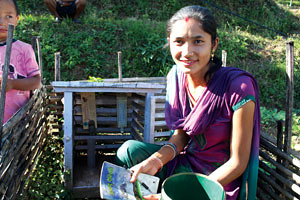
 PICS: BHRIKUTI RAI WEATHER WOMAN: Saraswati Khulal at the mini weather station in Bhanjyang, Ilam. |
The climate conference in Doha last month was another missed opportunity to stop the catastrophic warming of the planet. Known by its wordy official name, the 18th Conference of Parties of the United Nations Framework Convention on Climate Change (UNFCCC), was also confined to just that: words.
The Doha Climate Summit failed to set significant emission goals and concrete financial commitments to arrest emissions. The future of those countries most vulnerable to climate variability is now hanging by the climate cliff.
Far away from the energy-intensive desert capital of Qatar, the world's largest producer of natural gas, here we are in the lush mountains of the eastern Nepal district of Ilam. Farmers are already feeling the effects of climate change, with erratic monsoons, unseasonal rains, and freak storms. But farmers cooperatives are working to build resilience so that they can cope with the extremes of weather.
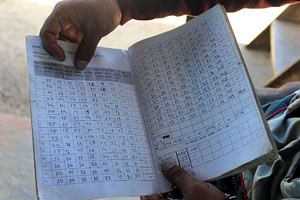
The Namsaling Community Development Centre (NCDC) has formed farmers' groups in the villages of Ilam to build locally managed weather stations that help them keep daily records. The farmers were given short training on the use of the instruments and are now keeping a 'Climate Diary'.
"The farmers are now able to understand the weather patterns and the consequences to some extent without being introduced to the term and concept of climate change," explains Yogendra Lal Shrestha of NCDC that has installed mini weather stations to record temperature, humidity, and rainfall.
Schools in Ilam also have climate diary projects in which they record weather conditions and link it to the health of the students. "We are trying to analyse weather conditions of the months when the students record highest absence from school due to illness," says Chitrakala Baraili of Saraswoti Niwas Lower Secondary School in Kanyam village. They hope that interpretation of data will help students take precautions during certain months to avoid missing school.
The rain gauge, thermometer, and the hygrometer are monitored twice a day by representatives of each farmers' group. At the end of each month they also plot the number of cloudy days, thunderstorms, and rain to discuss at fortnightly meetings.