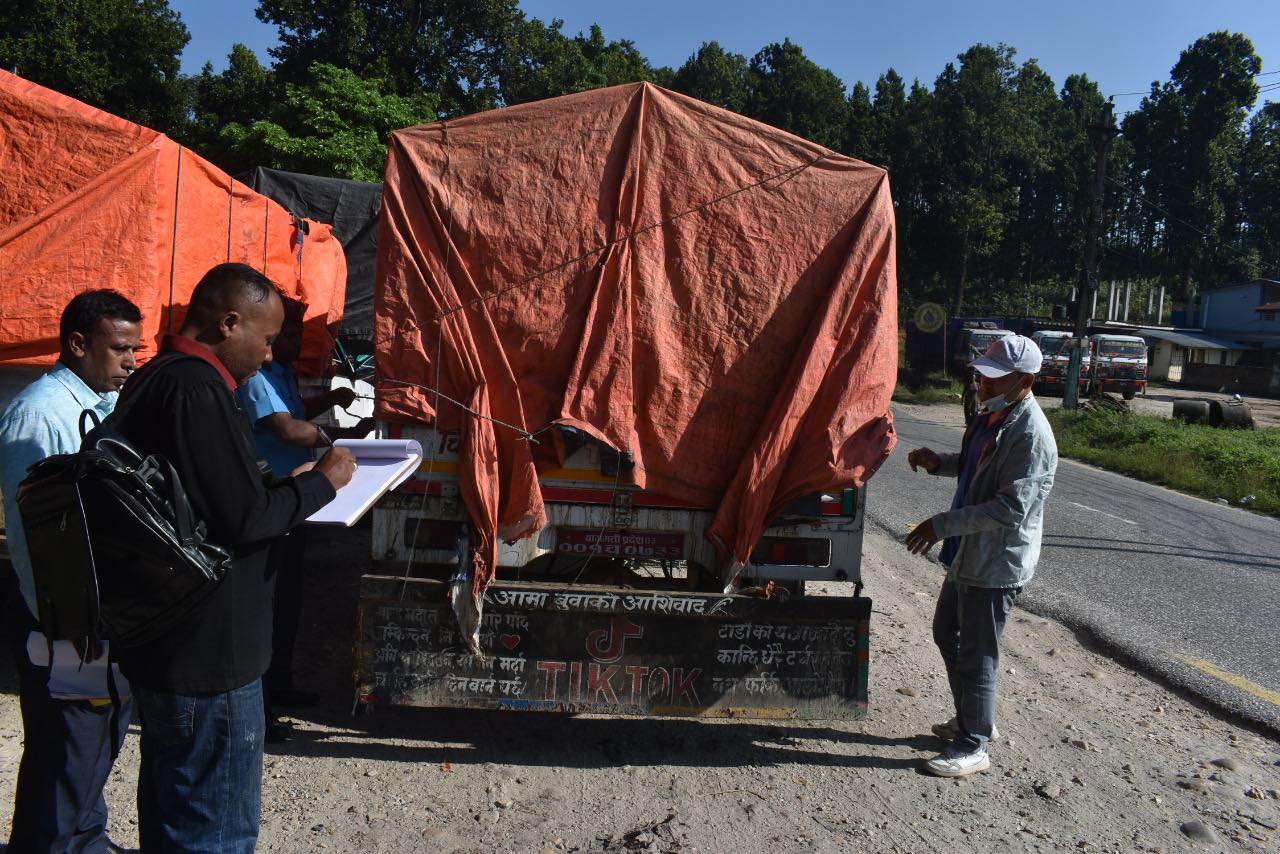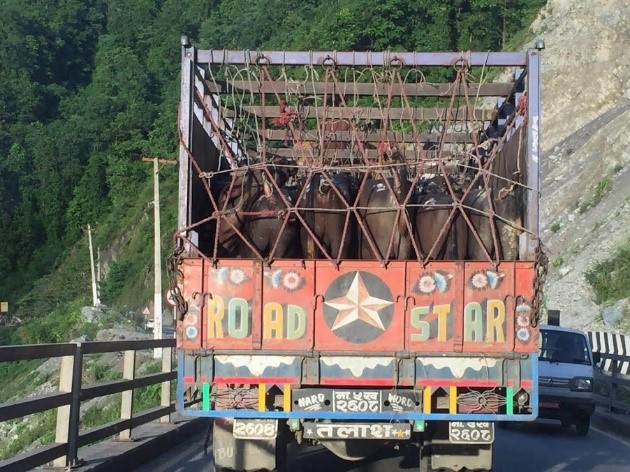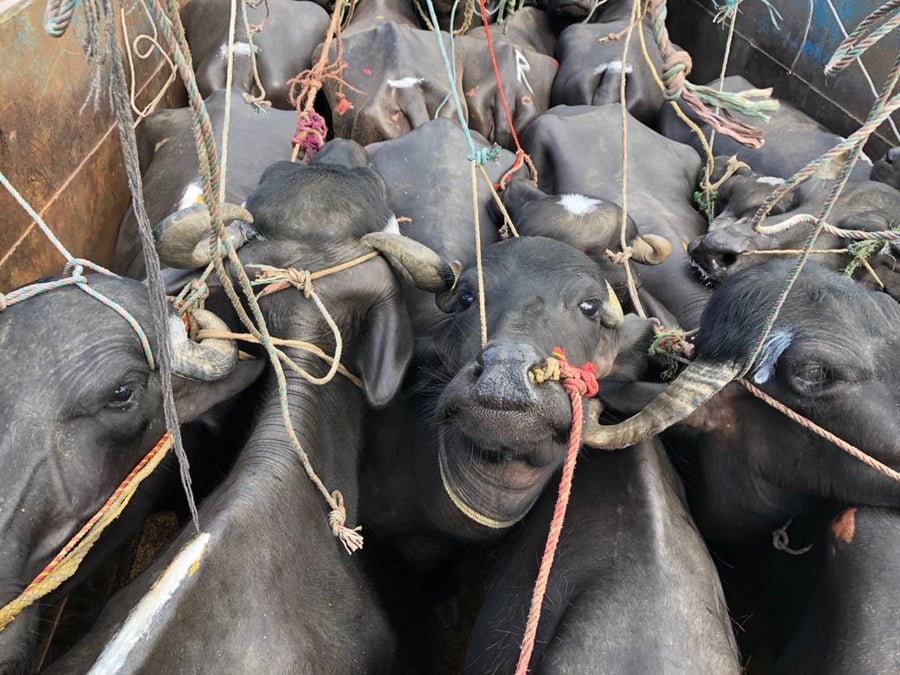
Every day more than 20 trucks loaded with water buffaloes for slaughter make their way to Kathmandu from the Tarai, each packed with up to 35 animals tied tightly with ropes through their nostrils.
The overloaded trucks have a capacity of only 15 animals and most are on the road for up to 20 hours during which the buffaloes have no food or water. Many die along the way.
Chicken are also carried packed in the backs of vans or tied by their legs hanging upside down on motorcycles from poultry farms to market. Often the birds’ beaks are scraping the asphalt.
Seven years ago, the government introduced the Animal Transportation Standard-2064, a comprehensive set of guidelines designed to regulate and ensure the safe and humane transportation of animals. Compliance is not only encouraged but also legally mandated.
The regulations underline the need to be compassionate during the transportation of livestock and poultry with adequate floor space to move comfortably, protecting the animals from harsh weather, providing adequate food and water, and making rest stops during the journey.
The law also requires that precautions be taken to prevent animals from causing harm to each other during transit. It also says that animals should not be on the move for more than eight hours at a time.
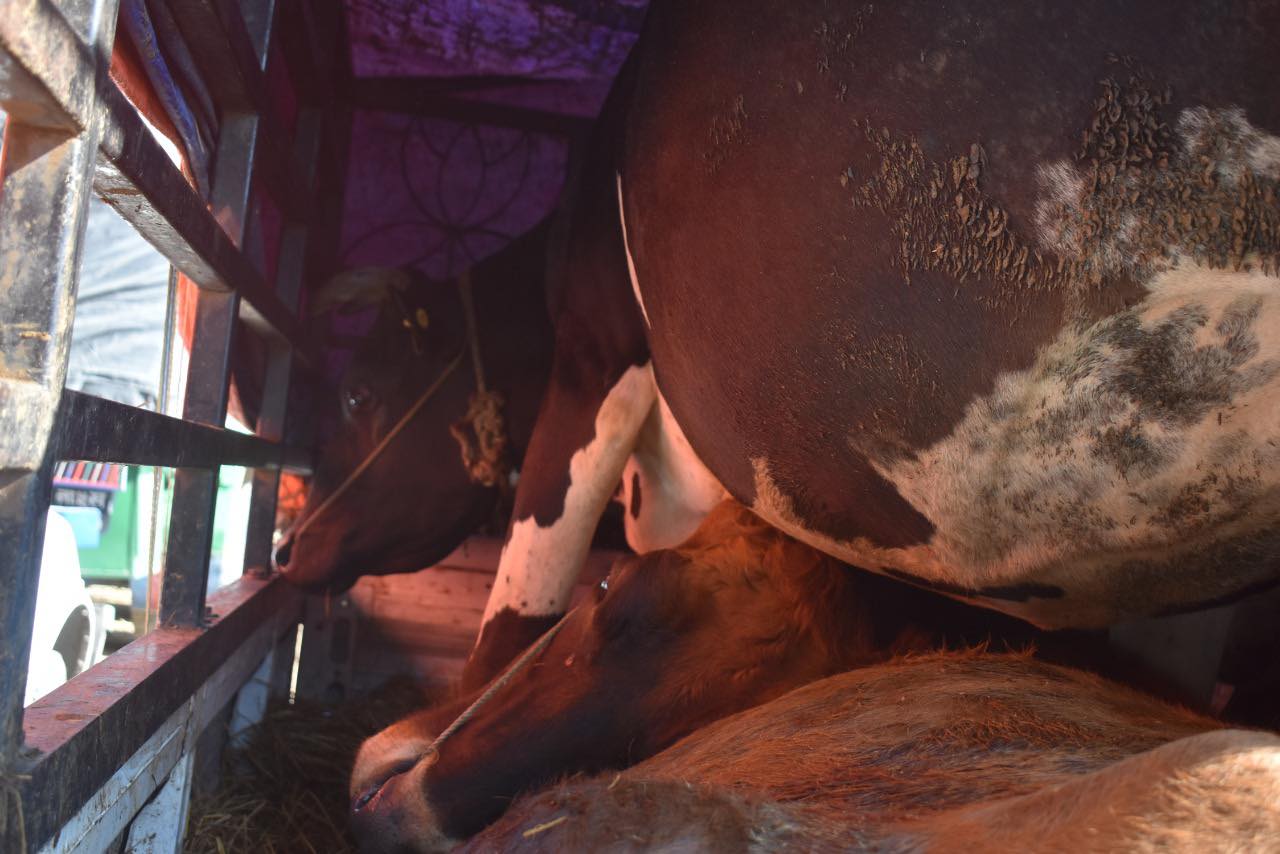
Any indication of distress or harm to animals such as bruising, stress, sunburn, bloat, exhaustion, poisoning, injury, or dehydration, are considered reckless endangerment of animal rights and a direct violation of established standards. Besides transportation, the regulation also stipulates that lactating animals should be milked twice a day, and special attention paid to proper nourishment of young animals.
Many of these rules, like many others in Nepal, are ignored, and not enforced.
Despite government claims that the country is now self-reliant in buffaloes for meat, most of the animals are imported from India where they are not eaten. However, there are no holding centres for livestock along the highways that join the Tarai with the rest of the country, including the capital.
Read Also: Saving Chari
Transporters are also wary of stopping anywhere to give the animals some food and rest because of local protests.
Holding centres are not the priority, and real estate along the highways are expensive. Ramnagar in Chitwan last year received a budget to construct a holding centre, but the money was not enough to pay for the land.