
 |
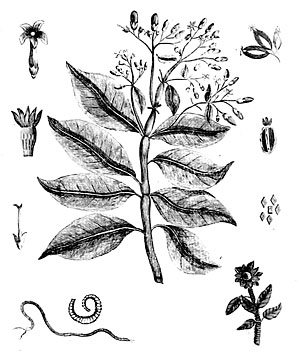
The term 'Jesuits' Bark' does not denote Catholic priests mimicking dogs. Rather, it is the bark of a tree (quinine, see pic), originally from Peru, that revolutionised the treatment of malaria. In the 17th century, Jesuit missionaries in Peru realised that the bark of the cinchona tree, used by the Peruvian Indians, was very effective for the treatment of malaria. The Jesuits introduced the plant to Europe, where its efficacy was hotly debated by Protestant England. It would go on to be a key component of malaria treatment, including in southern Nepal today.�
Malaria is commonly seen in Nepal during the summer, though it is usually confined to the hot and humid Tarai. Although it is the benign variety (vivax malaria) that is predominant here, outbreaks of the life-threatening falciparum malaria have occurred almost every summer. Falciparum malaria, which is known to affect the brain of its victims, kills more than a million children a year in Africa alone, and is also a concern for the Nepali UN peacekeeping forces stationed in the Congo and Burundi.