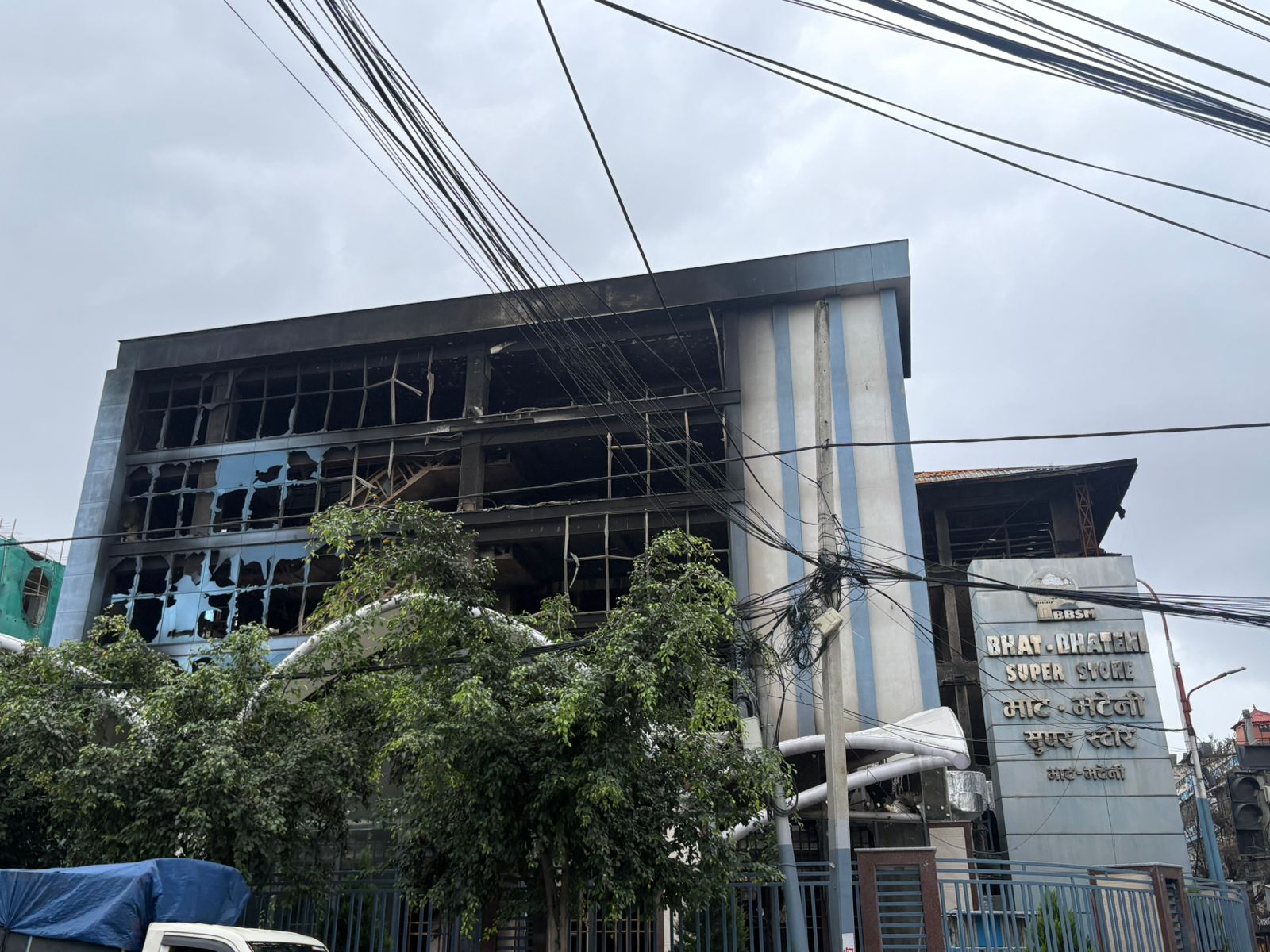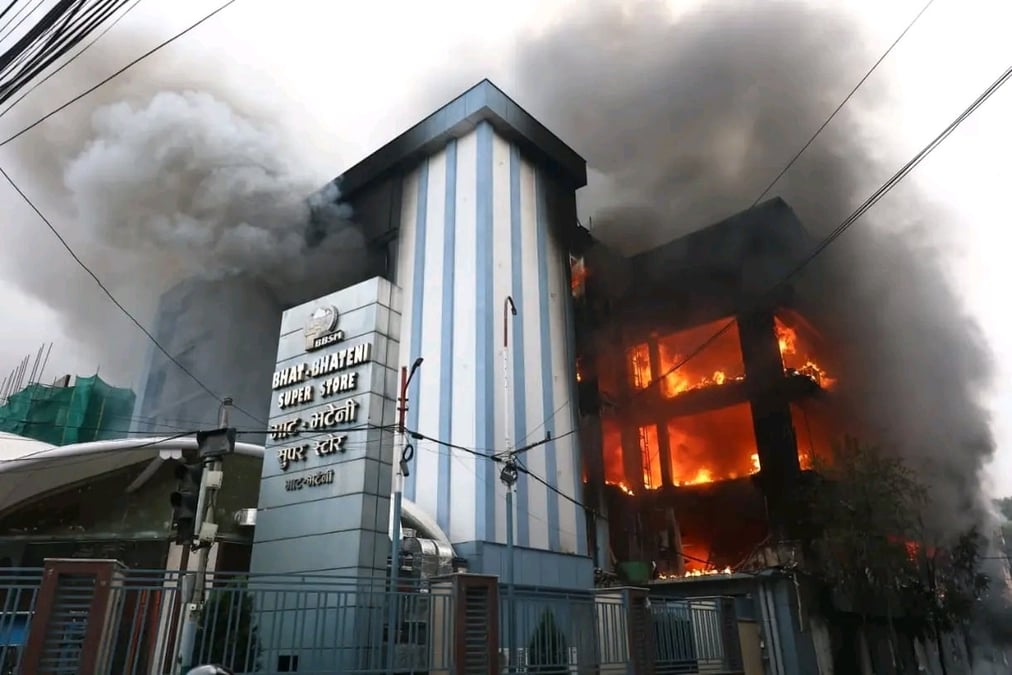
A security guard with Bhat-Bhateni Supermarket pleads with attackers not to destroy the store. In the widely-shared YouTube video, the mob can be seen surging ahead to ransack and set fire to the store anyway.
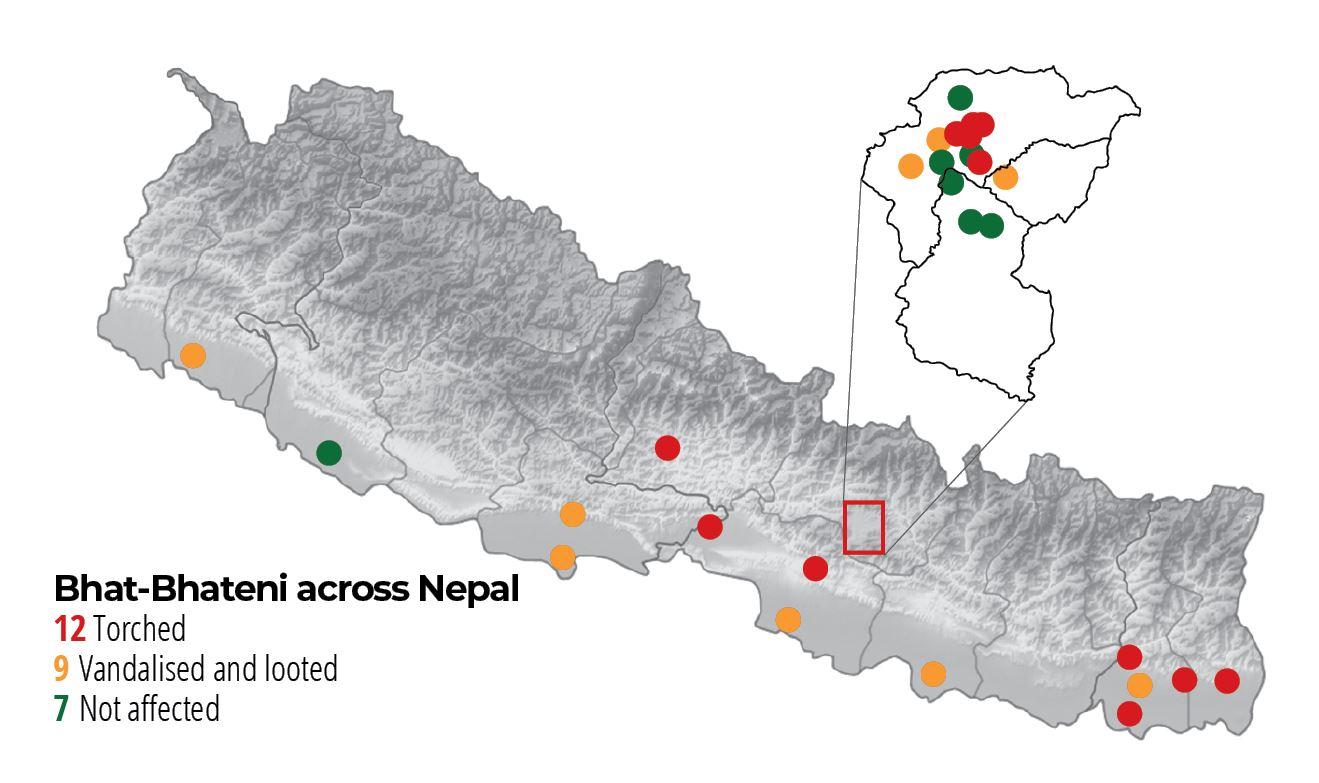
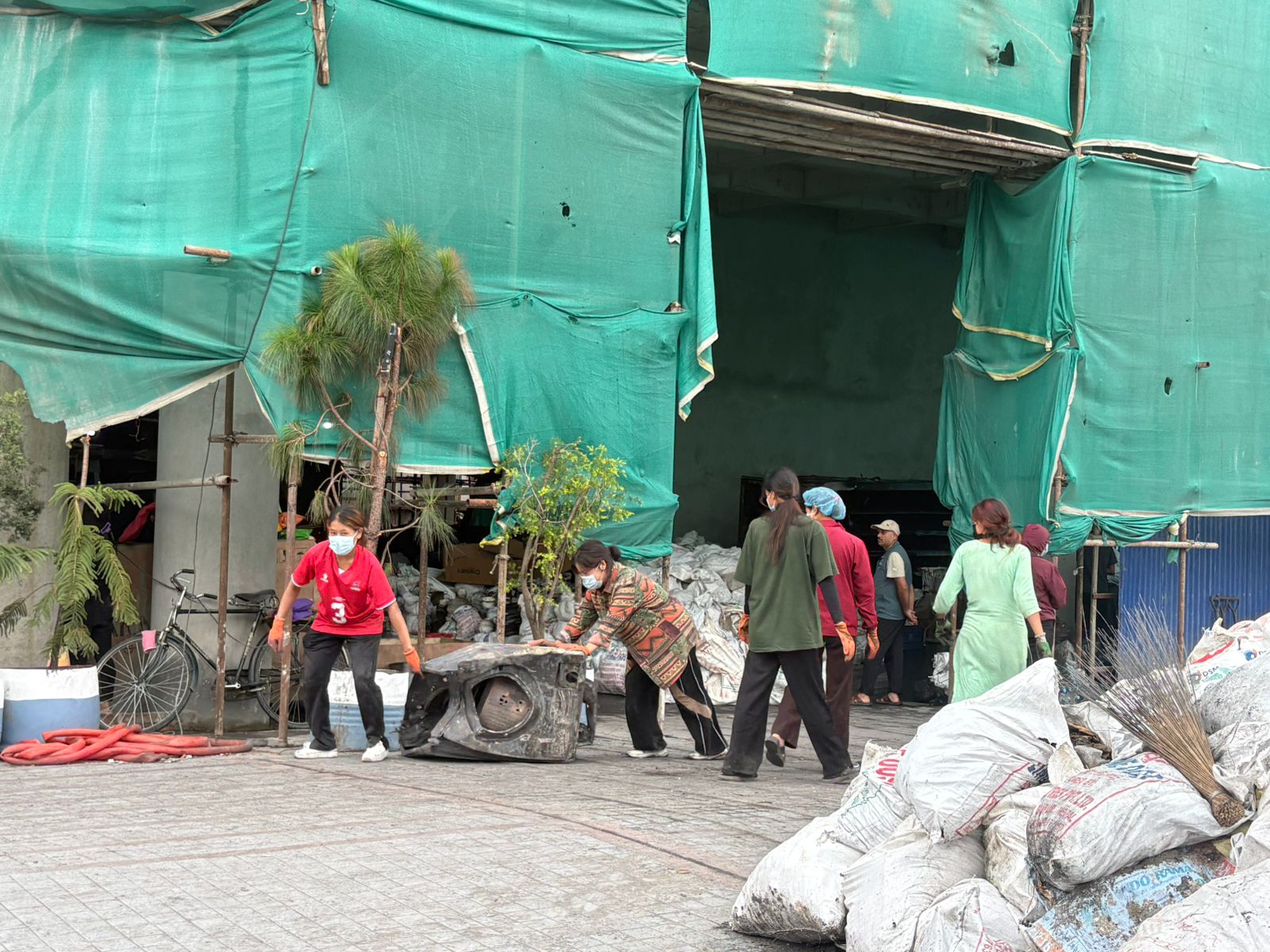
Twenty-one of the 28 Bhat-Bhateni outlets nationwide were vandalised and looted, 12 of them were completely gutted. The one at Boudha was smouldering for three days till 12 September.
Nepal’s biggest supermarket chain is a target in just about every political upheaval in Nepal. The Koteswor branch was looted in the royalist protest in March. This time, the destruction was much more complete and widespread.
What began as a youth-led protest against corrupt leaders turned escalated into widespread looting and arson last week, and Bhati-Bhateni’s prominent blue highrise stores became prime targets.
Min Bahadur Gurung toured the ruins of his stores over the weekend, and said: “Watching the buildings burn felt painful to the core of my heart. But we will rebuild, we will rise again.”
Born in Khotang, Gurung came to Kathmandu in the 1980s to open a small grocery. Gifted with a strong business sense, he expanded this into Nepal’s biggest retail empire, employing
20,000 people which became essential for consumer goods all over Nepal. Gurung was also admired as a symbol of success.
A homegrown businessman who has invested in Nepal, creating jobs so people do not have to migrate, Gurung has also donated generously to many charities. He built a 72-bed emergency ward at the Teaching Hospital, funded scholarships for students from remote areas, and recently pledged Rs410 million to Bhagwan Koirala’s project to establish the Kathmandu nstitute of Child Health.
But in Nepal, high profile success breeds envy, attracts threats and demands of extortion. To his loyal supporters, he’s a self-made visionary, but protester last week did not see it that way.

By the evening of 9 September, Bhat-Bhateni stores were in flames inKathmandu and cities across the country. Whatever Gurung’s faults, it is his 20,000 employees, customers, and small vendors who paid the price. At least six bodies charred beyond recognition have been pulled out of the the Boudha outlet and three in Dharan. Some are said to be employees, others could have been looters trapped in the upper floors.
But why does Bhat-Bhateni always end up being in the crosshairs? Some in online discourses say it is a symbol of elite privilege and unchecked corporate power. Others say the arson and looting spree was propelled by envy and greed.
No matter the motive, the fallout is real: cashiers, stock handlers, managers, delivery staff have lost their income. Suppliers, transporters and small vendors lose sales, the national economy is dragged down, and the attacks could also drive more Nepalis to migrate for work.
WIDESPREAD CONDEMNATION
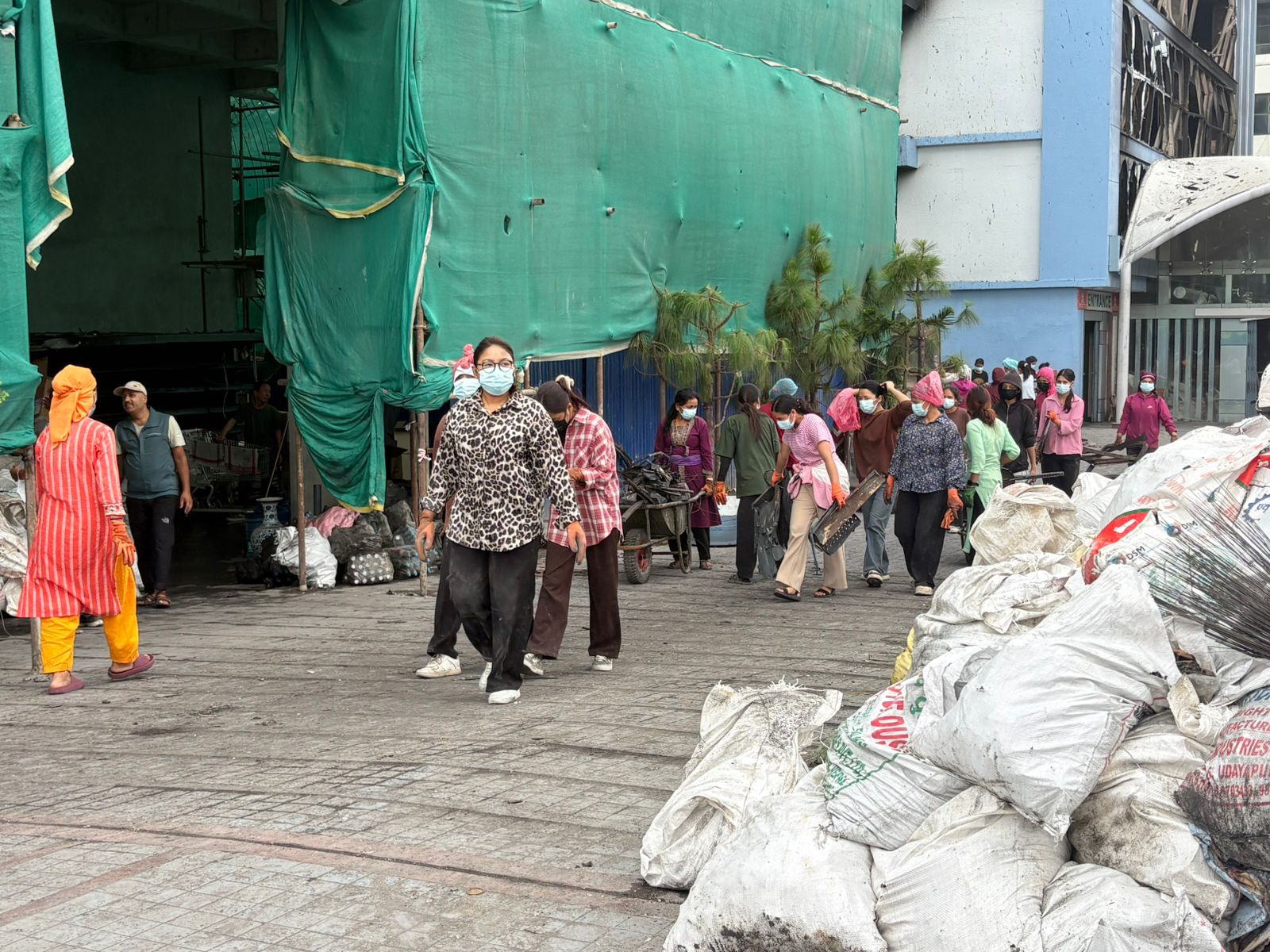
On-site, many Bhat-Bhateni staff cleaning up the debris and ash were reluctant to speak to us. It has been too much of a shock. But online, workers have been puring out their distress.
From Biratnagar, store employee Smritee Joshi shared a haunting video of the outlet still burning the morning after, writing: ‘This was just a supermarket for some of you, but it was more than home for every employee out there. It sears me to see tears on our team members.’