
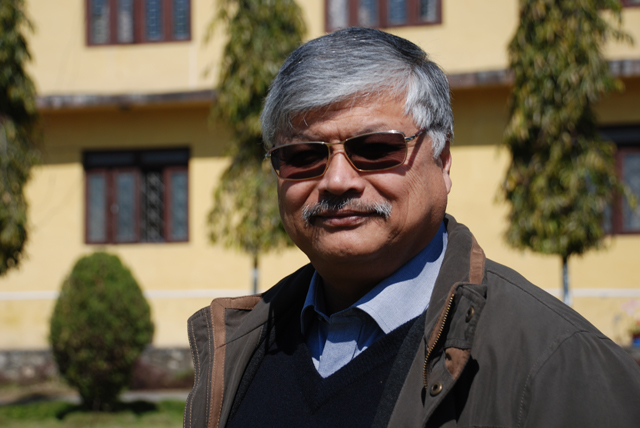
Bhuwon Ratna Sthapit did not believe in telling farmers what to do with their seeds, his laboratory were the terrace fields around Pokhara where he let the farmers guide him.
Sthapit's ideas changed the way agriculture scientists had been working in Nepal, inspiring a whole new generation to involve farmers in their research.
"Farmers possess valuable knowledge, and agriculture scientists can benefit a lot from it," he had told me last year.
Sthapit's participatory agriculture research and in-situ and on-farm conservation of agriculture biodiversity are now internationally recognised. The rice biodiversity that he helped conserve and develop are not just popular in Nepal's mid-hills, but in many countries around the world.
Sthapit started out at the Agriculture Research Centre in Lumle of Kaski district which the British had set up to inspire Gurkha veterans to return to their land after the end of World War II. But the soldiers had lost the interest in farming, and were happy living off their pensions.
In Chomorong Sthapit got to know the wide variety of indigenous seeds adapted to the micro-climate and soil of the mountains and he learnt from farmers about the characteristics of each of them. At altitudes of 1600-2600m, he discovered a nutrients-rich breed of rice that resisted extreme cold and diseases. He named this breed after the village: Chomrong.