
 NARENDRA SHRESTHA |
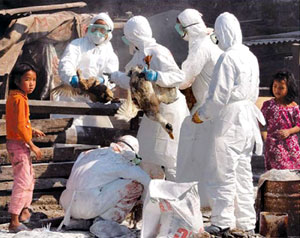
The news from sunsari about culling poultry (pictured) because of bird flu is alarming. There are also reports that crows are dying in Kathmandu in large numbers. This has caused anxiety and raised questions about whether humans are at risk. The first outbreak of bird flu was in May 1997 when a child in Hong Kong died of this illness, perhaps the first known human infection with influenza A (H5N1), or avian influenza (bird flu).
After 18 cases and six deaths in Hong Kong, the virus appeared to be under control and possibly eradicated by the end of 1997. But it returned in 2003, and it has subsequently continued to evolve and spread. The good news is that the Achilles heel of the virus is its inability to cause efficient human to human transmission. The spread is limited to birds, and humans are occasional victims when they come in contact with infected birds. Among the 564 confirmed human cases reported worldwide through August 2011, nearly all were acquired by direct contact with poultry, with person to person spread being almost non-existent. Bird flu is often compared to another avian strain, the agent of the Spanish flu of 1918-1919, which traversed the world in three months and caused an estimated 50 million deaths.