After Girish Giri’s father, Gopal Giri, the mayor of Birganj during Gyanendra's reign was murdered by the Maoists in 2005, his family renounced politics. But as a young idealistic journalist, Giri felt that he could not abandon the town he grew up in.
When Giri visited Birganj recently during the violent street protests and border blockade, amidst all the black marketing and vandalism, he felt he had to do something. The entire country was reeling under fuel shortages, but Birganj and its people were affected more than any other place.
While in Birganj through the turmoil, Giri wrote articles in the online publication, Setopati, describing the protests, analysing the appearance and tone of the demonstrators on the streets, and talking to ordinary people caught up in the violence. The articles opened a floodgate of comments, and Giri remembers thinking that the story of Birganj (and indeed the Madhes could not be told in a few thousand words.
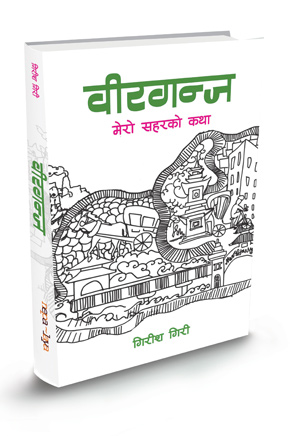
Giri’s new book, Birganj: Mero Saharko Katha (Birganj: The Story of My City) is in Nepali and is the result of his attempt to introduce various dimensions of his hometown to a wider audience. The book is based on the accepted truism that the hills have not understood the plains. Giri, who is from the hills but lived in the Tarai, views the issue differently. His intent in writing the book was to open the minds of those who form opinions about the Madhes while living in the geographically and psychologically distant Kathmandu.
“We have not been able to fathom the pain of the people who have lived in Nepal for centuries and how they feel when they are called Indians,” says Giri, “we call the Tharus ethnic people but classify the Bajjika speaking people as outsiders.”