
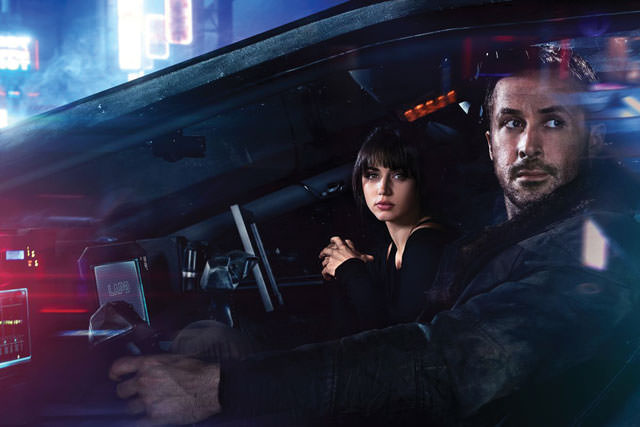
Denis Villeneuve is possibly the only director working today who could take on the enormously nerve-wracking task of making a sequel to the most important science fiction film of all time: the original Blade Runner from 1982. Made by the intrepid, visionary Ridley Scott and featuring a young Harrison Ford as the titular “blade runner,” the first film is a noirish meditation on the moral quandaries involved in hunting down humanoidrogue replicants made to simulate humans. In his futuristic vision for the first film (set in 2019), Scott created an extraordinary, now iconic amalgam of cultures, styles, and aesthetics that combine to show a future that is a simulacrum of our own world – but all smushed together emulating the essence of postmodernism: with many leveled domains on top of each other, sleek art deco buildings housing huge corporations, and a darkness that can come from the dystopia that is inevitable when humans start creating AI that think and feel but are created as slaves.
Blade Runner 2049 continues the story of the replicants’ struggle to realise their own humanity even as the people around them adjust their own to suit this new evolution: there is loathing, but also wonder and fear, a natural but not original trope when encountering an “other” so closely related to us and yet so different.
The plot of the first film weighs heavily on its sequel, and while Ryan Gosling plays another memorable part as “K,” a blade runner who is a replicant himself, there is little in this new film that truly breaks ground. Replicants are still going rogue, and the mantle of generating ever more human-like slaves has been taken on by Niander Wallace (Jared Leto) and his nefarious corporation.