
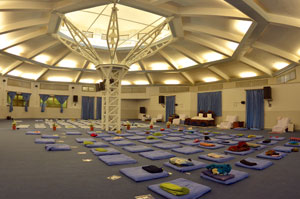
 COURTESY Vispassana meditation is one of the most popular courses pilgrims taken in Nepal. Light and quite rooms are enough for concentration.
|
Those seeking a spiritual experience in Nepal have increased significantly over the last ten years, and meditation tourism is now nearly on par with trekking. Last year, nine percent of all tourist arrivals to Nepal were for pilgrimage purposes compared to 11 per cent for trekking.
A substantial portion of pilgrims came to attend meditation and yoga courses at ashrams and monasteries in Nepal. Among the most popular is Vipassana meditation, even though it involves a strict, ten-day schedule that includes meditating ten hours a day and abstaining from talking.
Angelique van Leeuwen (pic, right), a 38-year-old writer and photographer from Holland, completed a ten-day course in August. "It was tough but do-able," she says, "my mind was on 24/7 overdrive, and Vipassana was intense, but the technique made me more focused, I feel more calm."
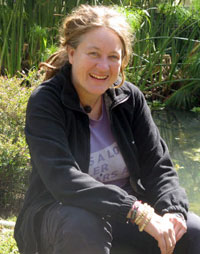 Angelique van Leeuwen from Holland completed a ten-day course of meditation. |
"People are looking for peace of mind," Jyoti explains, "after you sit through a course you can deal with your anger and fear and emotions in a better way, it cleans your mind of all the impurities, and also makes you physically healthy."
Vipassana is an ancient meditation technique taught and practiced by the Buddha 2,500 years ago, and it was revived and popularised in India in 1969. There are now Vipassana mediation centres in 25 countries, and in Nepal they are in Lumbini, Pokhara, Birganj, Chitwan, Surkhet, and Kathmandu.
During a course, students are taught a breathing technique called anapana before progressing to Vipassana which literally means 'to see things as they really are'. The aim is to develop a calm and equanimous mind by observing the breath and sensations in the body to subdue craving and aversion.
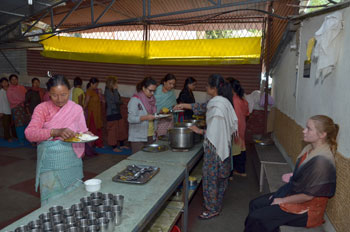
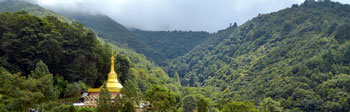 MIN RATNA BAJRACHARYA Last year, nine percent of all tourist arrivals to Nepal were for pilgrimage purposes compared to 11 per cent for trekking. |
They must also abstain from making eye-contact, reading or writing and, perhaps the most difficult for some, maintain noble silence, only talking about the technique with teachers.
 |
"People in their 80s are coming, teenagers, medical doctors, and professionals, males and females, it is very diverse," Jyoti says.
 |
"At the time I was feeling nervous and my mind was very stressed," says Sharma, who meditates daily to better manage stress and attends a ten-day course nearly every year.
Where to meditate
 |
Eight meditation centres in Nepal offer 10, 20, 30 and 45-day, and children's courses.
Cost: By donation, food and accommodation included.
Contact: Jyoti Bhawan, Kantipath +977 1 4250581
nvc@mail.com.np
KOPAN MONASTERY
Seven and ten-day introductory Tibetan Buddhism and meditation courses run monthly March-October at Kopan Monastery, Kathmandu. Other courses available.
Cost: $80/$110 including food and accommodation.
Contact: + 977 1 4821268, kopan@mail.com.np
GANDEN YIGA CHOZIN
Weekend introductory Tibetan Buddhist courses and retreats in
Kaski District, Pokhara.
Cost: Rs 4,500 including food and accommodation.
Contact: +977 61 462923, +977 9846397646
HIMALAYAN BUDDHIST MEDITATION CENTRE
Weekly introductory meditation classes in Mahayana Buddhism and guided meditation classes at Hotel Himalaya Yoga, Thamel, Kathmandu.
Cost: Some free classes, weekly courses Rs 1,000
Contact: +977 1 4700852, +977 9803254704
hbmc.programs@gmail.com
See also:
Now, meditation tourism, DORJI TSERING SHERPA in KASKI
Once is not enough for Dhamma Pokhara's vipassana courses
Meditating in 'Mandu, IRENE PERONI
Spiritual retreats are still one of Nepal's main tourist draws
Navel-gazing in Nepal, SALIL SUBEDI