
After the flood in Nepal last week, many news reports and interviews say the link between the disaster and the climate crisis is ‘unclear’, or still being figured out. Benjamin Horton, dean of the School of Energy and the Environment of the City University of Hong Kong spoke to Reporting ASEAN’s Johanna Son about how we do not need uncertainty reduced to zero before acting.
Johanna Son: Many are saying that the link between the Nepal catastrophe and climate change is ‘unclear’. What exactly does this mean?
Benjamin Horton: When scientists say the connection is “not yet clear”, they are usually referring to the precise attribution of this individual event, not to whether climate change is affecting the Himalaya.
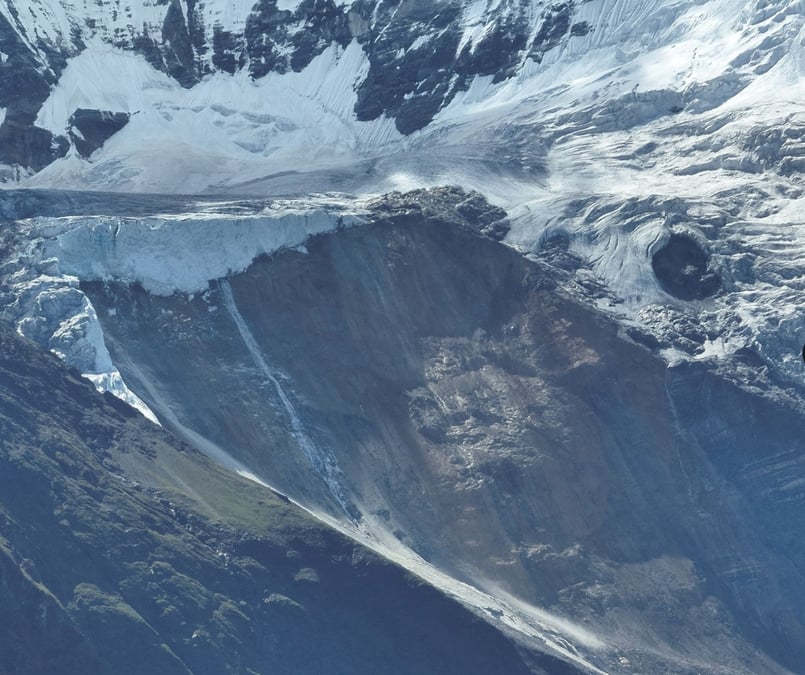
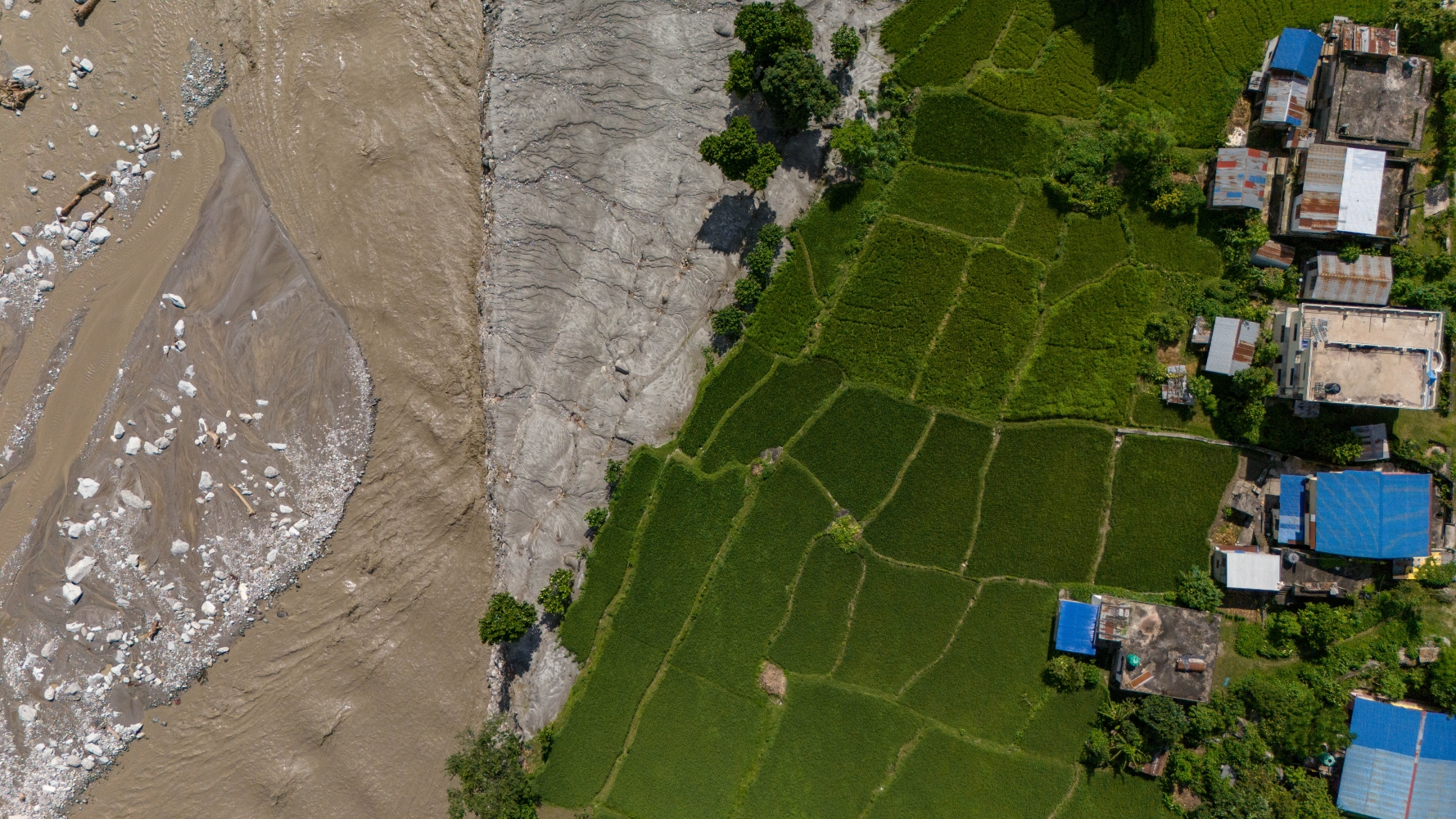
Scientists are still reconstructing the exact sequence of events: how the glacier collapsed, whether thawing permafrost or meltwater contributed, how ice and rock entered the river, and whether a temporary blockage intensified the flood. Satellite observations indicate that an ice-and-rock avalanche descended from a glacierised slope, blocked the Lhende Khola and generated a sudden surge downstream.
But we should not confuse uncertainty about every link in that chain with uncertainty about the wider climate context. The Himalayan region is warming faster than the global average, glaciers are retreating, permafrost is degrading, and high-mountain slopes are becoming less stable. The rate of glacier melting in High Mountain Asia has also accelerated.
We do not require climate change to be the sole or immediate trigger before recognising its role. Smoking does not cause every individual case of lung cancer, but we know it increases the risk. Similarly, global warming is loading the dice toward increasingly unstable mountain conditions.
Can ‘we still don’t know for sure’ undercut the key message then?
Yes, if it is communicated badly. Scientific caution is essential, but caution about one event must not be misrepresented as uncertainty about the climate crisis itself.

Climate change rarely produces disasters through one simple, linear mechanism. It changes the background conditions within which hazards occur. Rising temperatures melt glaciers, thaw permafrost, weaken the frozen material holding rock and ice together, and contribute to the formation or expansion of glacial lakes. A collapse can then initiate an avalanche, block a river and release a catastrophic flood. This is a cascade of interacting hazards, not a single linear connection.
Climate change interacts with exposure and vulnerability. The hazard is being intensified by warming, while communities, roads, bridges, hydropower facilities and other infrastructure are exposed in narrow valleys. Weak warning systems, limited resources and cross-border information gaps can then turn a major hazard into a humanitarian catastrophe.
So, it doesn’t always need to be a linear connection?
Science should not be used to say, ‘perhaps it was something else, so we should wait’. The correct message is that we are still determining precisely how climate change influenced this particular collapse, but we already know that burning fossil fuels is warming and destabilising the environment in which it occurred.
Water is ice at 0°C and liquid at 1°C. Small changes in temperature can produce profound physical changes in a frozen landscape. We do not need uncertainty reduced to zero before acting. If anything, uncertainty about exactly where and when the next collapse will occur is an additional reason for urgency.
What ‘pre-existing conditions’ in Himalayan glaciers increase the risk of a disaster like this?
The tragedy did not occur in a healthy and stable mountain system. It occurred in a cryosphere already under severe and increasing stress.
Himalayan glaciers are retreating, losing mass and exposing steep mountain slopes. Permafrost, which acts like a form of natural cement holding fractured rock together, is thawing. As glaciers shrink, they may also remove physical support from adjoining slopes, while meltwater can enter cracks and further weaken ice and rock. Steep topography then allows a relatively local failure to accelerate into a fast-moving avalanche or debris flow.
Nepal has lost close to one-third of its glacier ice in just over 30 years, while its glaciers melted 65% faster during the most recent decade assessed than during the preceding one.
At the same time, melting glaciers can create or enlarge lakes held back by loose and potentially unstable sediment. The valleys below contain settlements, roads, bridges and hydropower infrastructure. This combination of a deteriorating cryosphere, extremely steep terrain, concentrated development and limited warning time creates the pre-existing conditions for catastrophe.
Can adaptation ever lead us out of the climate crisis?
No. Adaptation is essential, but we cannot adapt our way out of an accelerating climate crisis. Nepal urgently needs better glacier and permafrost monitoring, satellite observations, hazard maps, early-warning systems, evacuation planning, stronger infrastructure and rapid cross-border data sharing. These measures can save lives and reduce vulnerability. Wealthier, high-emitting countries also have a responsibility to provide finance and technology to countries that contributed relatively little to the problem but are experiencing severe consequences.
However, adaptation addresses the consequences. It does not remove the cause. If greenhouse gas emissions continue, temperatures will continue rising, glaciers and permafrost will continue deteriorating, and the hazards will become harder and eventually impossible to manage in some places.
There are physical and financial limits to adaptation. An early-warning system may help people escape a flood, but it cannot prevent a glacier from disappearing, rebuild an entire mountain system or make every exposed valley safe. We therefore need adaptation and mitigation simultaneously: protect people from the warming already unavoidable, while rapidly reducing the burning of coal, oil and gas to prevent far greater warming.
This brings up the issue of climate justice ...
Nepal has contributed very little to the greenhouse gas emissions driving global warming, yet it is experiencing devastating consequences. The countries and industries most responsible for historic and continuing emissions must therefore do more than express sympathy. They must cut emissions rapidly and provide accessible finance, technology and scientific support to vulnerable countries for adaptation, disaster preparedness, recovery, and loss and damage.
What does the Nepal tragedy tell us about our future?
Nepal shows us that the climate crisis will increasingly arrive as a chain of interconnected events. Rising temperatures can destabilise glaciers and thaw permafrost, collapsing ice and rock can block rivers. those blockages can fail, and the resulting floods can devastate communities and critical infrastructure within minutes.
It also exposes the profound inequality of climate change. Nepal is a warning that yesterday’s understanding of risk is no longer sufficient for tomorrow’s climate. Infrastructure built for a relatively stable twentieth-century environment is being tested by rapidly changing twenty-first-century conditions.
But this future is not predetermined. Every fraction of a degree of warming avoided matters. Wealthier and high-emitting countries must rapidly reduce their use of coal, oil and gas while providing vulnerable nations with the finance, technology and scientific capacity needed to protect their people.
If you are looking to support communities affected by the flood in Nepal, donate to the Prime Minister’s Disaster Relief Fund here. Additional information here.